Get Full Government Meeting Transcripts, Videos, & Alerts Forever!
Get email alerts on the Council Policy topic
No spam. Unsubscribe anytime.
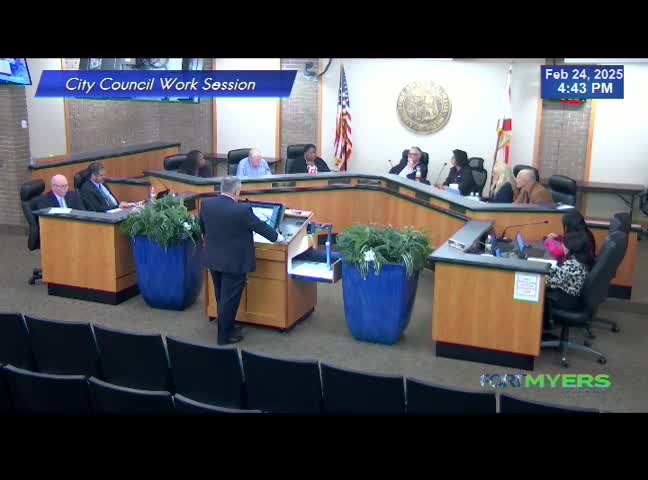
Council discusses draft tuition‑reimbursement policy for elected officials; members ask staff to refine scope
Summary
Council reviewed a draft policy proposing educational reimbursement for elected officials for governance‑related coursework; members asked staff to clarify allowable programs, whether travel is included, cap amounts and whether similar municipal programs exist before returning a revised draft.
City attorneys presented a draft policy Monday that would allow elected officials to seek reimbursement for governance‑related coursework from accredited institutions. The draft followed a request to consider reimbursement for elected‑official education and proposed basic rules including accreditation, relation to government service, a yearly reimbursement cap (left blank in the draft) and a repayment obligation if an official leaves office within a defined period.
Councilmembers debated the concept. Several members supported training tied directly to municipal governance—courses from the Florida League of Cities, National League of Cities or similar governance institutes—but questioned whether taxpayers should pay for degree programs or broader professional study. Councilmembers asked staff to clarify whether travel and lodging would be included in support and whether professional training delivered through League programs should be considered equivalent to accredited institution coursework.
Deputy City Attorney Ron Dente said staff had not found other Florida municipalities with explicit elected‑official tuition reimbursement programs and recommended clarifying the policy to limit eligibility to government‑related training and define reimbursement caps and repayment terms. Several councilmembers asked staff to return with a revised proposal that (1) identifies comparable municipal policies if any, (2) defines the types of eligible programs (for example League training, governance institutes, or accredited degrees), (3) clarifies whether travel is included and (4) proposes a per‑year cap on reimbursable costs.
No policy was adopted at the workshop; staff will research comparable practices and return with a clarified draft.