Get Full Government Meeting Transcripts, Videos, & Alerts Forever!
Get email alerts on the City Administration topic
No spam. Unsubscribe anytime.
Lauderhill commission removes requirement that commission approve job-description changes; measure passes 4-1
Summary
Commissioners voted to let the city manager approve changes to job descriptions to improve operational efficiency, while retaining commission budget authority; one commissioner voted no and asked to wait for a permanent city manager and for added reporting measures.
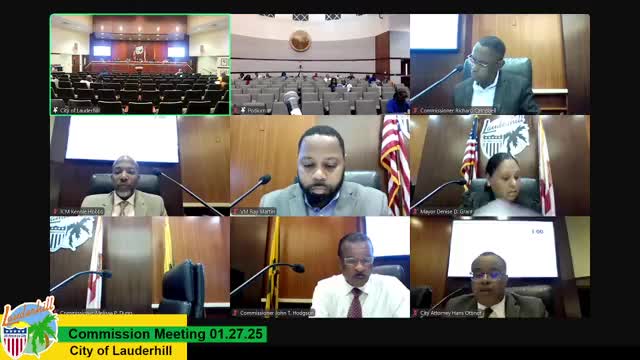
The Lauderhill City Commission voted 4-1 on Jan. 27 to approve Ordinance 25O-01102, removing from the code a 1982 requirement that the commission approve all job-description changes and delegating that authority to the city manager.
Vice Mayor Martin made the motion; Commissioner Campbell seconded. The roll-call vote was: Commissioner Campbell, yes; Commissioner Dunn, no; Commissioner Hodgson, yes; Vice Mayor Martin, yes; Mayor Denise Grant, yes. The ordinance passed 4-1.
Interim City Manager Hobbs told the commission the change is aimed at improving operational efficiency. He said the commission already approves the budget and positions and that the 1982 requirement — adopted under a prior strong-mayor form of government — is not common among neighboring municipalities. Hobbs said the proposal would allow the city manager to make routine updates to job descriptions so hiring and posting proceed more quickly, while the commission would retain budget authority over funded positions.
Commissioner Dunn said she supports efficiency but would vote no and asked the city to wait until a permanent city manager is in place before streamlining this authority. Dunn also requested the city provide an organizational chart and a requirement that staff notify the commission about any new director- or assistant-director-level positions that would increase departmental budgets by roughly 5 percent or more, and to notify the commission if an entirely new department is proposed.
City Attorney Ottenott clarified the ordinance would not change budget approval by the commission and that the manager’s delegated authority under the ordinance would be limited to job-description edits and operational adjustments. Hobbs agreed to provide the requested organizational charts and budget-impact notifications moving forward.
The commission opened the item for a vote after discussion and recorded the 4-1 tally. No public comments were offered during the item.
The ordinance becomes effective immediately and is intended to shorten hiring timelines by allowing the city manager to update descriptions without returning routine edits to the commission, while preserving the commission’s budget and position-approval role.