Get Full Government Meeting Transcripts, Videos, & Alerts Forever!
Get email alerts on the Transit Demand Response topic
No spam. Unsubscribe anytime.
Commission asks MPO to review demand‑response transit analysis after consultants warn of rising costs
Summary
Consultants told commissioners an analysis of the regional transit system’s ADA demand‑response service shows rising costs and several management options; the commission voted to forward the report to the Metropolitan Transportation Planning Organization for broader regional review and next‑step planning.
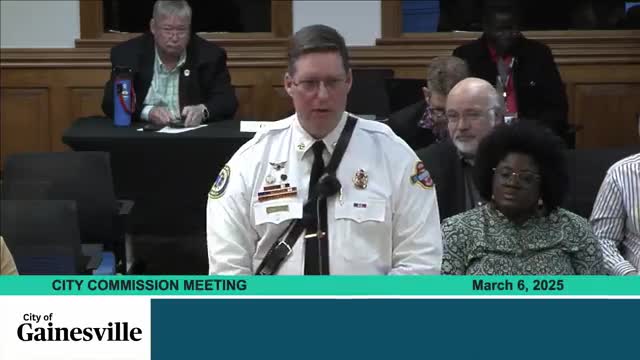
The City Commission received a study March 6 that examined the regional transit system’s demand‑response operations — the Americans with Disabilities Act (ADA) complimentary paratransit and related coordinated services — and voted to forward the analysis to the Metropolitan Transportation Planning Organization (MTPO) for further review.
Consultants from the Center for Urban Transportation Research (CUTR) at the University of South Florida presented the report, which found that demand‑response trips and operating costs have risen substantially. The analysis showed ADA calls rebounded after the COVID dip and the cost increase between 2022 and 2023 was material; consultants said costs continued to rise into 2024 driven largely by higher labor and vehicle costs.
Presenter Martin Catala and lead analyst Rob Gregg said ADA complimentary paratransit is among the most sensitive transit services because of eligibility and hands‑on customer needs. Gregg described several management models to slow cost growth: maintain the current outsourced operations with added oversight, bring scheduling/dispatch/customer intake in‑house while contracting vehicle operations, or consider a larger governance change such as changing the community transportation coordinator (CTC) arrangement. "Commingling services to customers under eligible programs is the most efficient way," Gregg said, noting coordinated service between ADA, the Transportation Disadvantaged program and other social service trips can lower unit costs.
Why it matters: The city’s ADA paratransit program is operated under contract and coexists with a state‑funded Transportation Disadvantaged (TD) program that covers countywide trips. The study found that rising per‑trip costs and long apparatus lead times are straining budgets and recommended a multi‑year process, using a mobility coordination task force and MTPO engagement, to analyze governance and procurement choices before a contract renewal cycle in 2027.
Key findings and options - Cost trends: The consultants reported a notable uptick in total ADA trip costs from 2022 to 2023 and further increases in 2024, driven principally by higher labor rates, parts, fuel and vehicle lead times. City staff said the FY23 ADA operations cost had grown to roughly $3.1 million. - Management models: The report evaluated three broad strategies: 1) modest changes to the current contract with added oversight, 2) a hybrid model that brings reservations/scheduling/dispatch into RTS (city) control while contracting vehicle operations, and 3) pursuing a full role as the CTC or joining a regional transit authority for longer‑term governance change. CUTR recommended using a task force to coordinate stakeholders, review the TD program implications and consider pilot projects for mobility‑on‑demand and software‑as‑a‑service platforms that can dispatch TNCs or micro‑transit options for some trips.
Commission action and next steps Commissioner Willets moved and the commission seconded a motion to forward the CUTR demand‑response service management and delivery analysis to the MTPO for discussion and potential action. The motion passed unanimously; the record notes Commissioner Engle was absent.
Context and community impact Consultants emphasized that choices about whether to consolidate ADA service with TD trips, alter the CTC designation, or adopt new mobility‑on‑demand tools have budget, access and equity implications; changes could affect how rural and outlying trips are prioritized and how low‑income or medical trips are served. Staff and consultants recommended regional engagement because the TD program is a state‑driven funding stream and many stakeholders including the county, the university and human‑service agencies must be at the table.
Ending With the commission’s referral, the MTPO will receive the CUTR report for consideration; consultants recommended creating a mobility coordination task force and running pilot programs before any contract or governance changes take effect in the 2027 renewal window.