Get Full Government Meeting Transcripts, Videos, & Alerts Forever!
Get email alerts on the Municipal Finance topic
No spam. Unsubscribe anytime.
Temple Terrace and Country Club agree on monthly payment date; discuss streamlined contract and oversight
Summary
At a March workshop, city officials and Temple Terrace Country Club leaders agreed the club will deliver monthly payments on the 15th and provide prior-month financial statements; council and club discussed simplifying their long-standing agreement and options for oversight of club finances.
The City of Temple Terrace and leaders of the Temple Terrace Country Club agreed at a city workshop to set a recurring monthly payment date and a schedule for financial reports, and discussed revising the decades-old written agreement that governs the city–club relationship.
In the workshop, the club’s president, Jane Chafer, said, “It is our position that the club is in solid financial condition, is, not, is able to meet their obligations, financially, and, for the most part have done so, and have cleaned up a lot of things off the books.” Assistant treasurer Ken Bowles told the council the club could meet a fixed payment schedule: “we don't have any problem at all setting a date, establishing a date each month for us to send the payment to you and drop it off.” City leaders agreed the 15th of each month will be the payment date and that, on that schedule, the club will provide the prior month’s financial statements.
Why it matters: the city and the club share a long, interwoven financial and property relationship that includes a city-held loan and a property lease. City officials said clearer, consistent reporting will help forecasting and public accountability, while club leaders said the course’s revenue has stabilized and paperwork has been cleaned up.
Workshop details and agreement
Council members and club officers spent most of the meeting on three main points: (1) a recurring monthly payment day and timing for financial statements, (2) clarifying and consolidating the multiple amendments and addenda in the existing agreement into a single, readable document, and (3) how the city should monitor the club’s finances going forward.
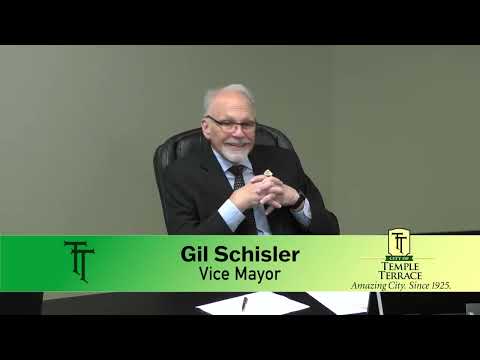
The parties agreed that the club’s monthly payment will be due on the 15th and that the club will provide financial statements covering the prior month (the payment may reflect the most recent revenue while the full statements will lag one month). Ken Bowles explained the timing constraint comes from his preparing the club’s books on a volunteer basis: “Financial statements usually take, as Gil knows, sometimes a little bit longer, because I am doing it again in my free time.” Council members said they welcome a later change if the club brings on temporary accounting support.
Financial context and numbers discussed
Both sides described progress on the club’s finances. Jane Chafer said recent dues increases and operational changes will raise monthly revenue and that the club had caught up on property taxes and other obligations. The council noted the revenue-share formula has changed over time: it was 5% while back taxes were being covered and has since moved to 7% on gross golf revenue. City staff and club representatives discussed the components of the club’s monthly obligations: a debt-service piece the city historically covered (about $10,300 per month in the discussion), property taxes (about $2,300 per month referenced in the meeting) and utilities (described as ranging “anywhere from 3 to 5” thousand dollars depending on season). Participants framed the percentage approach as a way to let payments float with seasonal revenue.
Discussion about the long-term agreement and oversight
Council members proposed consolidating “War and Peace”-length contract materials into a single, clear agreement that reflects current practice and responsibilities. The mayor (name not specified in the workshop transcript) suggested the agreement is difficult to parse now: “It just needs to be cleaned up. ... I don't know that you or I, either one, have a good idea without doing a day's worth of reading.” The parties said they would coordinate on a simplified draft and involve legal staff as needed.
Council members also discussed eliminating the Strategic Advisory Committee (SAC) and instead placing a city designee on the city finance committee (or otherwise creating a mechanism) so the city can monitor finances without imposing on the club’s internal governance. That proposal prompted debate: Councilmember Fernandez said she was uncomfortable with a government body having a representative inside a private entity’s committee, while others suggested a nonvoting, staff, or finance-department designee could serve as a liaison. City staff recommended the council consider the proposal under new business at an upcoming council meeting rather than finalizing it at the workshop.
Future obligations and the loan payoff
City staff and council members discussed the outstanding debt arrangement that has, in the past, replaced rent and that is scheduled to sunset decades from now. Staff noted that when the city-held debt payments end (participants referenced 2043 as the sunset point), the parties will need to decide whether a rent obligation or other arrangement will replace the debt-service payment and how property taxes for the property would be handled.
Community and next steps
Both sides emphasized improved communication: the mayor and council members praised recent progress and said they want clearer, public-facing documents so citizens can understand the relationship and tax implications. The club agreed to provide the 15th-monthly payments and prior-month financials going forward and to coordinate on drafting a consolidated agreement. Council members said the proposed change to SAC and any bylaw amendments will be discussed at a future council meeting and would require appropriate notice to club members if the club must vote on bylaw changes.
Ending
City and club leaders closed the workshop noting that establishing a consistent monthly payment date and clearer reporting is a step toward resolving long-standing paperwork and public-perception issues. The parties set follow-up steps: the club will deliver payments and statements on the 15th, and staff will draft options for a consolidated agreement and for the council to consider a finance oversight designee at a formal council meeting.