Get Full Government Meeting Transcripts, Videos, & Alerts Forever!
Get email alerts on the Elections topic
No spam. Unsubscribe anytime.
Council explores term limits and districting as ways to boost civic participation
Summary
Council members discussed term limits and the possibility of electing some members by districts to encourage more candidates and improve neighborhood representation; no action taken — staff and council requested more research and possible citizen committee input.
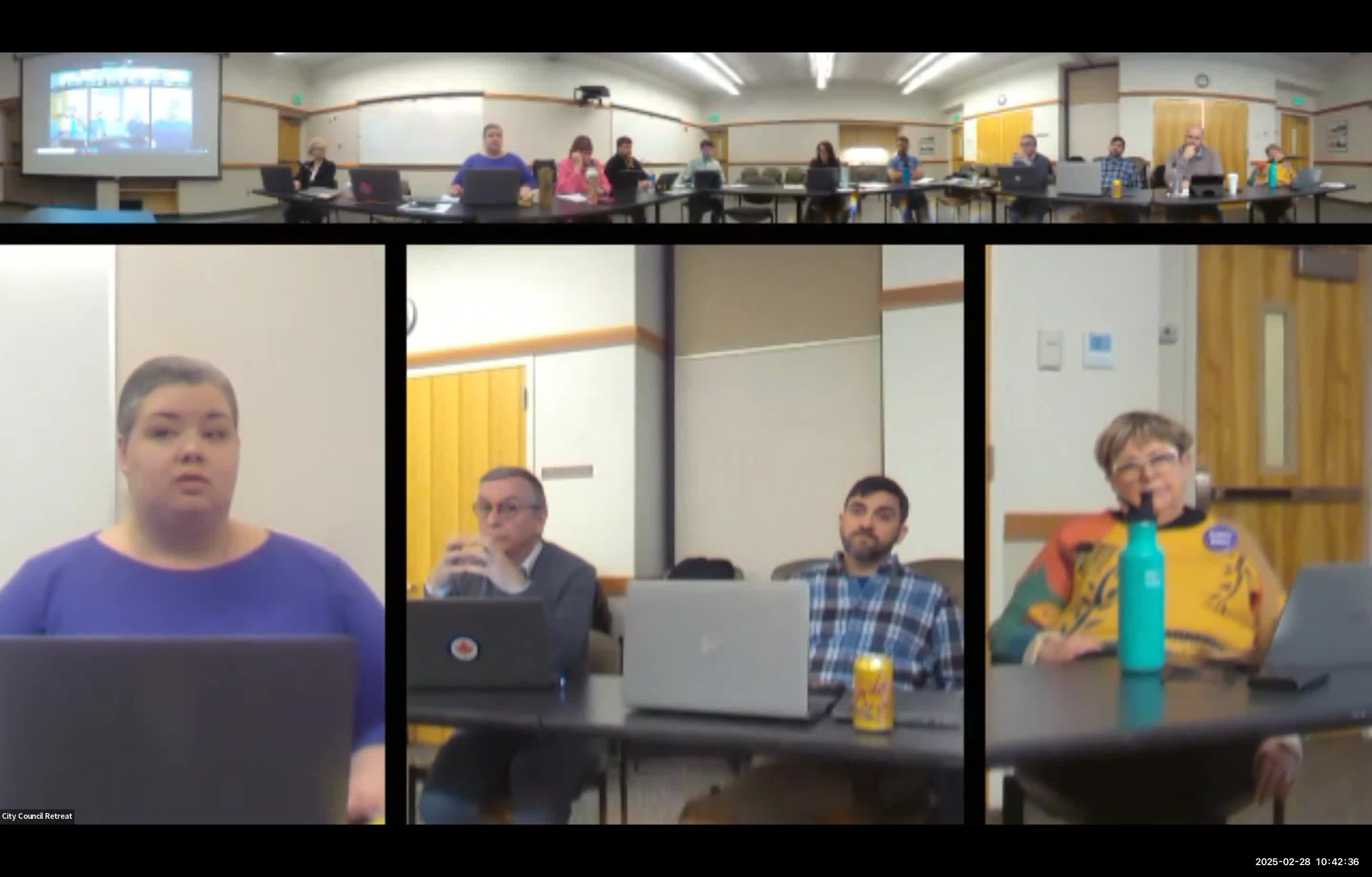
Gig Harbor — At their Feb. 28 retreat, councilors debated two ideas aimed at increasing turnover, representation and civic engagement: term limits for council members and electing some members by district rather than at‑large.
Term limits
One councilor proposed a limit of three consecutive four‑year terms (12 years), followed by a required break of one term before running again. Supporters said limits might open seats for new voices; opponents warned that institutional knowledge and relationships — such as the ability to negotiate intergovernmental funding — could be lost. Staff noted term limits can be enacted by local ordinance but that details (consecutive years vs. seat‑specific limits, handling of mid‑term appointments) raise legal and implementation questions.
Districting
Council discussed a concept to create three geographic districts (for example, North/Uptown, Central, South) with at least one at‑large seat remaining. Under one model staff described, a primary could be voted on by residents of the specific district, while the general election would be citywide. Members raised concerns about whether districting would increase or reduce turnout, whether it would produce more neighborhood representation or make it harder to recruit candidates, and whether redistricting would be required every 10 years. Staff also noted county and state procedures and that Pierce County could assist with population rebalancing.
Outcome and next steps
Council did not adopt policy changes. Members asked staff to collect research material on local and peer‑city experiences with term limits and districting and to return with options. Council expressed interest in convening a citizen advisory group if the council decides to explore the topic more formally.
Why it matters
Changes to the electoral structure would affect how residents are represented and could change the political dynamics of local decision‑making. Council sought more research before deciding whether to proceed with ordinance language or a citizen process.
Ending
Staff will return with research on legal mechanics, examples from other jurisdictions and a proposal for next steps, which could include forming a citizen advisory committee.