Get Full Government Meeting Transcripts, Videos, & Alerts Forever!
Get email alerts on the Planning Transportation topic
No spam. Unsubscribe anytime.
Council reviews transportation and capital facilities chapters of Gig Harbor comprehensive plan
Summary
Community Development Director Eric Taylor and consultants presented an updated transportation element and short- and long-term project lists tied to the six‑year TIP; council reviewed goals, traffic modeling, and next steps for public review and related studies including a Transportation Impact Fee update and active-transportation plan.
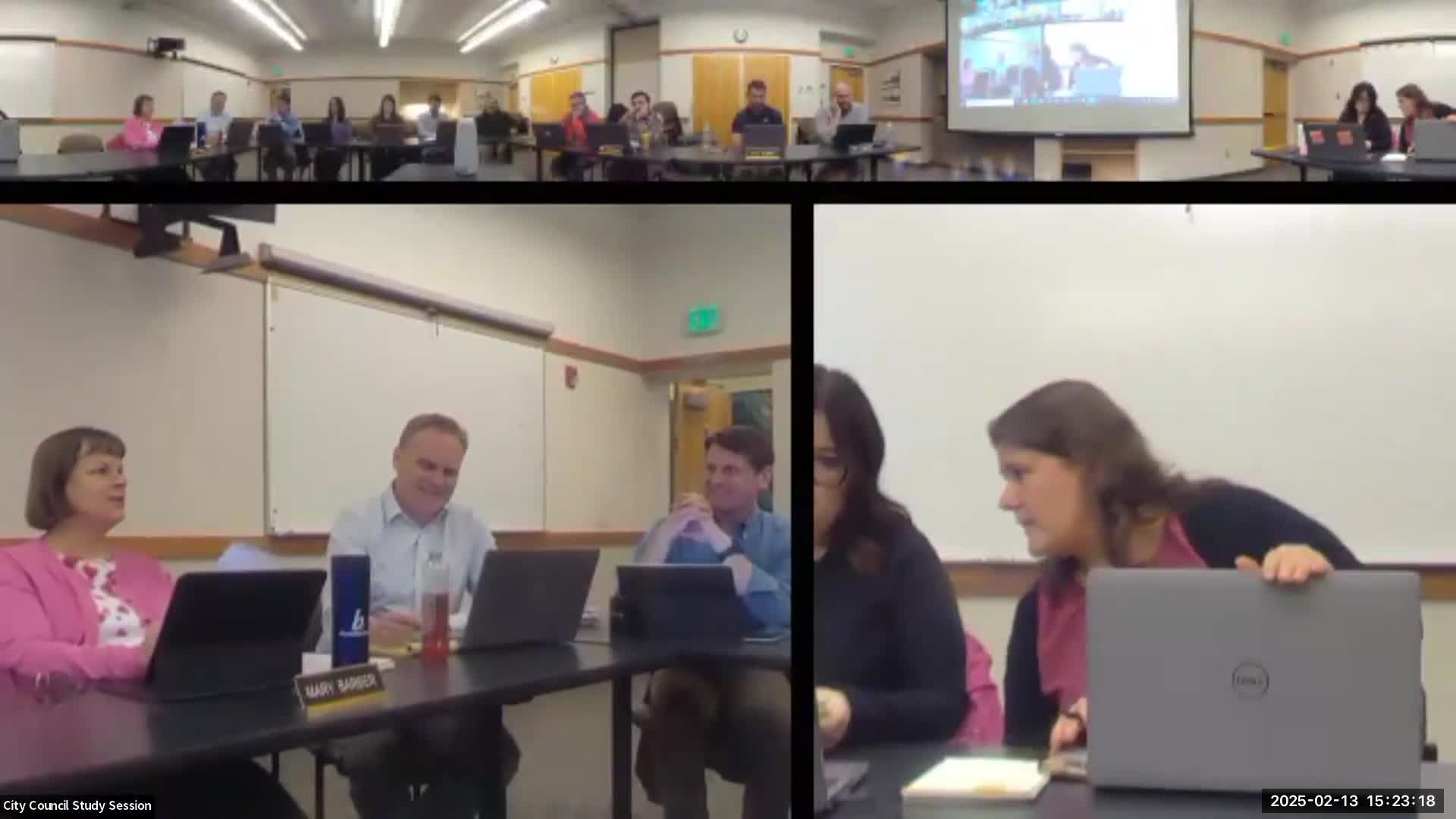
Community Development Director Eric Taylor told the Gig Harbor City Council at its Feb. 13 study session that the draft transportation and capital facilities elements of the comprehensive plan are nearing final review and that staff will return with a consolidated matrix and proposed changes ahead of a first reading and public hearing planned later in March.
“Today we’re here to go over the transportation element of the comprehensive plan,” Taylor said, noting the update draws from the 2018 transportation element and aligns new text with the city’s recent GigConnect 2024 transportation plan. Taylor said the chapter’s goals were refined for clarity, travel‑demand modeling was updated to 2024 and 2029 horizons, and staff developed short‑term and long‑term project lists so projects can be easier to move into the annual six‑year Transportation Improvement Program (TIP).
Consultants presented modeling and outreach work informing project lists. A consultant identified three modeling scenarios used in the analysis: a 2022 base year using traffic counts, a 2029 “pipeline” scenario covering projects with valid concurrency certificates, and a 2044 horizon aligned with comprehensive‑plan land‑use assumptions. The team said those scenarios supported both short‑term corridor and intersection projects and longer‑term WSDOT coordination projects.
Council members asked about specific policies and next steps. One councilor questioned whether the city’s Complete Streets ordinance was explicit in the updated goals; staff responded that Complete Streets policy is reflected in the chapter’s multimodal goal and is included in policy language under Goal 1, and that it will be implemented through construction standards. Council members also pressed staff on the project lists’ prioritization and timing; Taylor said the short‑term list largely reflects the existing 6‑year TIP and that comments now will inform the March return and the March first reading and public hearing.
Taylor and consultants listed upcoming, related actions: a Transportation Impact Fee (TIF) program update with preliminary recommendations to council in March, and a refresh of the Active Transportation Plan later in 2025. Staff advised the council to submit written comments to staff and to Aaron (project lead) so the return package on Feb. 27 can include a complete matrix of council direction for the first‑reading package late in March.
Council questions also covered safety data and potential projects. One councilor noted nearly 600 collisions citywide from 2017–2021 concentrated near the Burnham Drive–Oregon Avenue corridors and asked whether projects would address that. Staff said the Burnham–Oregon corridor improvements appear on both the short‑ and long‑term lists, with an initial corridor study to identify near‑term, lower‑cost safety measures and to scope any larger corridor investments. Staff said roundabouts and incremental restriping or multimodal improvements are among the tools under consideration, and that more detailed design and funding would follow if council prioritizes projects for the TIP.
No ordinance or council vote occurred at the Feb. 13 study session; staff scheduled a return to council Feb. 27 with an updated matrix and said a public hearing and first reading of the comprehensive‑plan amendments is likely at the March council meeting. Staff and consultants said they are coordinating the transportation chapter with the city’s climate and resilience work and incorporated new state and regional legislative guidance (PSRC and the Washington State Department of Commerce) on multimodal goals and reducing vehicle miles traveled into the update.