Get Full Government Meeting Transcripts, Videos, & Alerts Forever!
Get email alerts on the Deitraining Vcr topic
No spam. Unsubscribe anytime.
Sudbury DEI Commission hears Wayside on ‘‘validate, challenge, request’’ training; discusses mission review, gender-policy follow-up and fall cultural festival
Summary
The Town of Sudbury DEI Commission heard a Wayside presentation on the Validate–Challenge–Request framework for difficult conversations and discussed using that training for commissioners, town leaders and the public.
The Town of Sudbury DEI Commission on an evening meeting heard a presentation from Wayside trainers about the ‘‘validate, challenge, request’’ framework for facilitating difficult conversations and discussed next steps including a possible training series for commissioners, select board members and the public.
The presentation came from Aliyah Bannister Batey, vice president of government and external affairs at Wayside, who described VCR as “a structured approach for facilitating productive conversations” and said “courageous conversations is a tool that we can all use.” Tia Gary, a Wayside trainer and consultant, told the commission the framework can be adapted for different ages and settings, including schools.
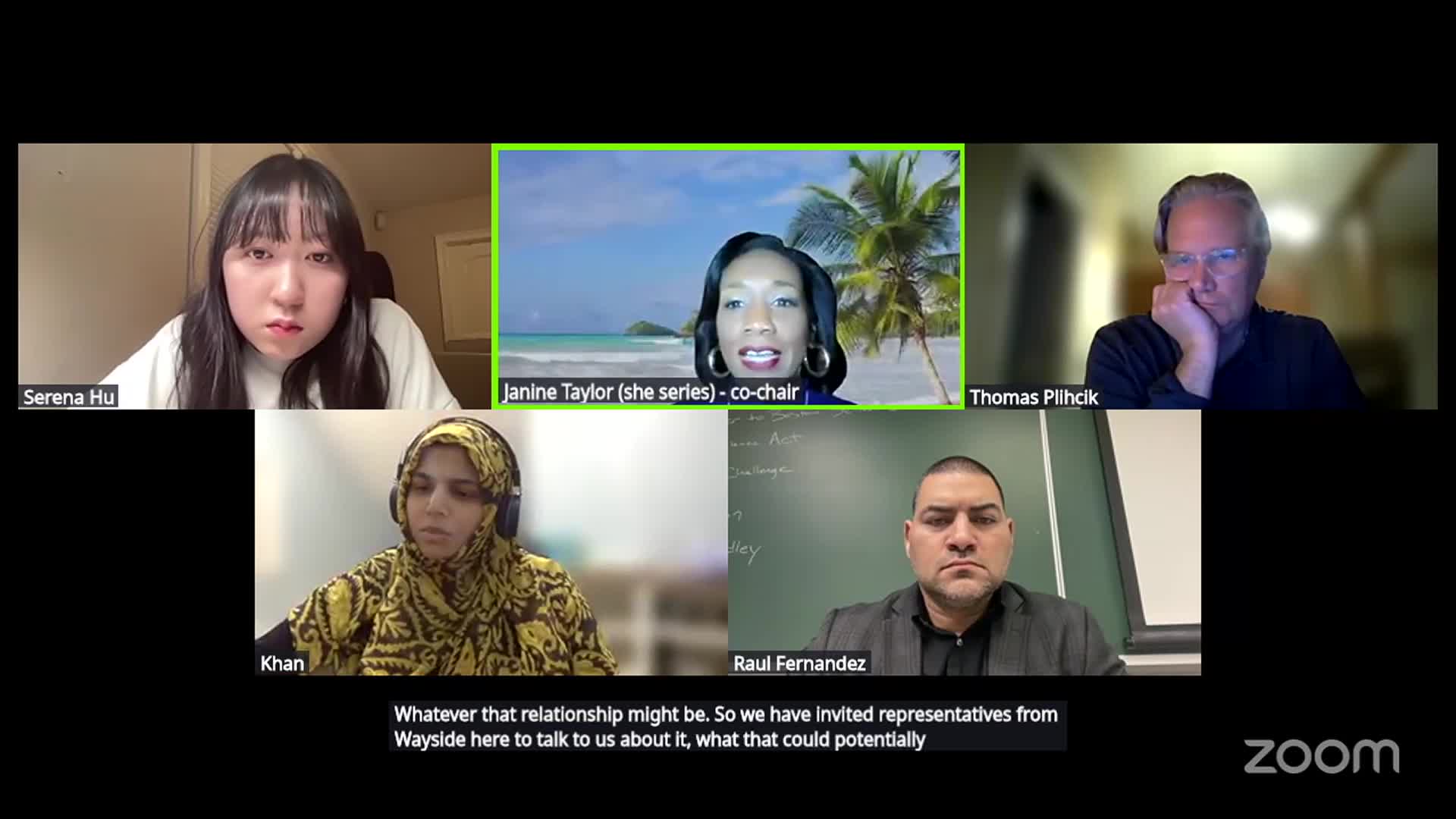
The commission, led in the meeting by co-chair Janine Taylor, said it would consider beginning the work internally and then expanding training to other town leaders and the broader community. Commissioners and guests discussed modes of delivery (in-person or virtual), group size and the need for follow‑up. Raul, the commission’s consultant whose six‑month contract is ending this month, told the group: “There needs to be a follow-up plan,” and urged the commission to plan how the training would be used after initial sessions.
Members of the commission and one high‑school student who spoke during the presentation backed the idea of introducing the approach to younger residents. A student participant said she is “in high school” and that, without training, students are “thrust into the conversation” and often “do not know what to say or how to approach a conversation that might be difficult.” Commissioners flagged local schools and youth programs as possible early partners.
Commissioners discussed practical next steps if they engage Wayside. Aliyah told the group that Wayside charges for services; exact fees were not specified in the meeting. Wayside representatives said they commonly tailor sessions to the organization and can run multi‑session cohorts, single workshops, or programs adapted for children (for example, through age‑appropriate acronyms and activities). The Wayside presenters said they have contracts with other government and nonprofit clients and that they can provide references and a course list on request.
The commission also raised two near‑term items: a proposed gender‑identity support policy and planning for a community cultural festival. Commissioners said they had expected a draft of the proposed gender‑identity support policy from local advocates after an earlier meeting but had not yet received it; they asked staff to follow up and place the policy on a future agenda once the document is available. Janine Taylor said the commission wants to review the policy before deciding whether to send a letter of support.
On consultant services, the commission agreed to ask Raul to provide an annotated review of the commission’s mission statement and to make himself available to discuss that review at a future meeting, subject to his availability. Raul confirmed he would prepare a written review in advance of the next meeting.
Commissioners also began planning a fall cultural festival to showcase the town’s different communities. They discussed venues including Haskell Field, the community center and Camp Suwatharo (as raised during the meeting) and tentatively favored an early‑fall date to avoid summer scheduling conflicts; the commission asked members to research available venues and report back. Commissioners proposed beginning public outreach in spring and working through vendor, logistics and accessibility planning over the summer.
Votes at the meeting were procedural. The commission approved the January meeting minutes by voice/roll‑call; the motion passed (yes: 5; no: 0; absent: 2). Members later moved and seconded to adjourn; the motion to adjourn passed by roll call (yes: 5; no: 0; absent: 2).