Get Full Government Meeting Transcripts, Videos, & Alerts Forever!
Get email alerts on the Community Mental Health Response topic
No spam. Unsubscribe anytime.
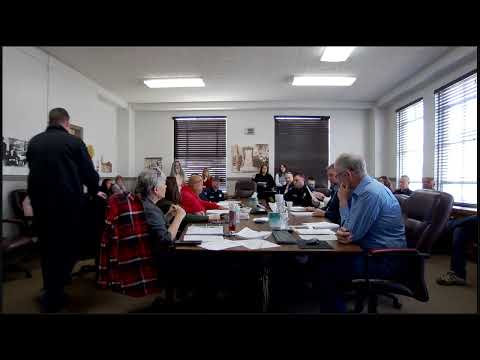
Committee backs resolution to create Community Response Team for Roswell; forwards plan to full council
Summary
A committee voted to send to full council a resolution to form a Community Response Team (CRT) — a hybrid team of first responders and civilian crisis specialists — aimed at reducing law-enforcement burdens on nonviolent behavioral-health calls.
A Roswell City Council committee voted to forward to full council a resolution directing city administration to develop a Community Response Team (CRT) that would pair trained civilian crisis specialists and clinical staff with first responders to handle nonviolent behavioral-health and jail-diversion calls.
Councilor Christina Arnold, who presented the proposal, said the subcommittee had spent nearly two years studying national models and recommended a hybrid CRT housed within the Roswell Fire Department with finance involved for grant and program administration. “The purpose of the subcommittee was to advocate for a formation of a community response team,” Arnold said. She described the model as a mix of first responders and civilian crisis intervention specialists, including law enforcement, mental-health professionals, EMTs and peer support members managed under fire and finance.
County Commissioner Gary Dana, who described site visits to Miami-Dade and Colorado Springs, emphasized crisis-intervention training for dispatch and officers and the importance of a triage center and “warm handoff” to treatment. “When they started going out and sending their officers, they found out when you send an officer in full uniform … it escalates,” Dana said. He also described peer mentors who can provide outreach and help people connect with services.
Supporters said the CRT could reduce repeated calls for the same person, free up patrol officers and ambulance crews for 911 emergencies, and increase connections to treatment. Kevin Barry, a licensed therapist on the subcommittee, cited data from other cities showing reduced hospitalizations, arrests and repeat contacts after CRT implementation.
Speakers discussed funding possibilities including opioid settlement money, the city’s public-safety tax revenues, state grants and cannabis funds. Presenters and several committee members urged forming a program director post and working with county-level opioid-settlement planning. Dan Jennings, who presented county-level work, said settlement funds present an “unprecedented opportunity” to fund programs such as CRT.
Committee members raised concerns about liability, long-term costs and implementation details; several asked for clear staffing and multi-year cost estimates before committing operational funds. The presenter and others said the resolution would simply direct the city administration to develop an implementation plan and return with a budget and standard operating procedures to Finance and full council. “This is the first step,” Arnold said.
The committee voted to send the resolution to full council for further discussion.
Context
Supporters pointed to models in Miami-Dade, Colorado Springs and San Antonio where similar teams reduced hospital admissions and arrests and increased referrals to ongoing care. Presenters said the CRT is one component of a larger Chaves County “opioid settlement solutions” plan being presented to the county later this week, and that a triage center and case management are part of the broader system-of-care needed to sustain CRT operations.