Get Full Government Meeting Transcripts, Videos, & Alerts Forever!
Get email alerts on the Gas Decarbonization topic
No spam. Unsubscribe anytime.
Charlottesville utility releases gas-decarbonization study; offsets, RNG and hydrogen modeled, council presses for electrification analysis
Summary
Charlottesville's director of utilities and consultant Black & Veatch presented a gas-decarbonization study March 4 that models combinations of energy efficiency, renewable natural gas, hydrogen and carbon offsets to meet city greenhouse-gas targets; councilors asked staff to produce more analysis of electrification options and legal limits.
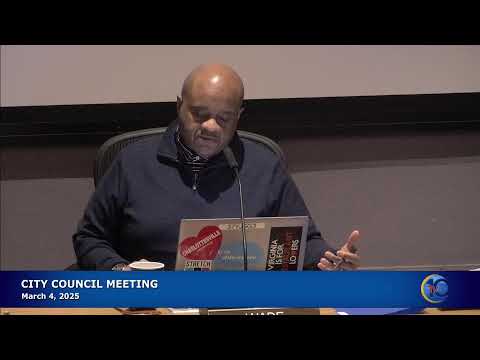
Charlottesville's director of utilities presented a gas-decarbonization study and next steps to the City Council on March 4, reviewing modeled pathways that combine energy efficiency, low-carbon fuels and carbon offsets to meet the city's greenhouse-gas reduction targets.
The study, developed with consultant Black & Veatch, evaluated customer-led measures (electrification and efficiency), low-carbon fuels that can be blended into the city's municipal gas system (renewable natural gas and hydrogen) and continued purchase of certified carbon offsets. The utility director told council the system serves about 21,050 customers (about 89% residential); roughly 55% of customers are inside the city and 45% are in Albemarle County.
Key findings and numbers - Emissions and offsets: Charlottesville Gas has an existing carbon-offset contract (executed November 2021) purchased through a broker; staff reported the program increases the average monthly bill by roughly $0.60 and that current carbon-offset purchases cost about $342,000 per year. - Leak prevention and infrastructure: Black & Veatch recommended continued leak surveys every three years (the utility already surveys business sectors annually) and continuing excess-flow-valve installation; the utility reported it repairs leaks promptly and is replacing a last-mile cast-iron main corridor under a roughly $7.1 million U.S. Department of Transportation grant. - Low-carbon fuels: The consultant models showed renewable natural gas (RNG) supply would be constrained and is estimated at a possible maximum blend of about 22% of pipeline content based on projected availability. Hydrogen currently can be blended at up to 15% by volume into gas pipelines with minimal disruption; the study noted hydrogen costs are higher today but could decline over the next decade as supply grows. - Cost modeling: The presentation included conservative cost assumptions (3% inflation in modeling). The consultant's example projected an average monthly bill of about $80.70 in 2030 under a "current track" scenario; the study estimated a 2050 baseline bill (no decarbonization) of roughly $360.30 and said adding green-hydrogen fuel decarbonization could raise customer costs by roughly 27.4% (about $90) relative to that projection.
Council questions and legal limits Councilors pressed staff on several issues: the study's treatment of electrification, the legal and financial limits of using public gas-enterprise funds to support electrification measures that would benefit a private electric utility, and the role and verification of carbon-offset purchases. The utility director said legal questions about whether enterprise funds can subsidize measures that effectively shift customers to a private electric utility are under review by the city attorney's office and cited an intention to avoid subsidizing fuel switching.
Carbon offsets and local alternatives Staff said current offsets are procured through a broker and registries that certify projects, and that no Virginia-based certified offset projects currently meet registry criteria; councilors asked for more information on registries, verification and whether offset dollars (about $342,000 per year) could instead be invested locally in energy-efficiency or electrification programs.
Next steps and actions taken - The utility has implemented a new fee structure (implemented January 2025) designed to discourage new gas connections; staff reported the new connection fee at $340. - The utility plans to launch a new weatherization program next month, increased the attic-insulation rebate and discontinued the tankless-water-heater rebate in July 2024. - Staff will continue to monitor RNG availability (including discussions with Rivanna Water & Sewer Authority about biogas opportunities), hydrogen-hub development in the Mid-Atlantic, and the evolving federal funding picture for hydrogen and geothermal pilot projects.
Direct quotes (from presenters) "We're the only municipal natural gas utility of our size in this country that has undertaken a study of this kind," the director told council, describing the study's scope and outreach.
"Carbon offsets are readily available to meet goals," the director said, while staff and councilors debated local alternatives and verification concerns.
What council members asked for Councilors repeatedly asked staff to return with: (1) clearer analysis of electrification pathways and the local municipal policy options to support electrification without running afoul of legal constraints, (2) a deeper review of carbon-offset sourcing and broker practices, and (3) a municipal building inventory showing natural-gas usage and pathways for municipal electrification or retrofit.
Ending note Council did not vote on policy changes at the meeting but directed staff to continue implementation of specified programs (fee change, weatherization outreach) and to provide additional legal review and analysis of electrification, offsets and local investment alternatives before any large-scale commitment to a specific fuel pathway.