Get Full Government Meeting Transcripts, Videos, & Alerts Forever!
Charlottesville staff outline options to close $1.6 million solid-waste funding gap; cart-based pay-as-you-throw recommended
Summary
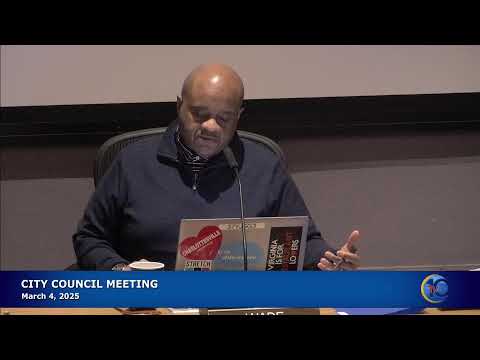
Charlottesville City Council heard a presentation March 4 from Public Works Director Steven Hicks and consultant Seth Cunningham showing core solid-waste costs of about $2.7 million and sticker-and-decal revenue of roughly $1.1 million; staff proposed a near-term sticker increase and a longer-term move to cart-based pay-as-you-throw.
Charlottesville City Council heard a presentation March 4 from Public Works Director Steven Hicks and consultant Seth Cunningham outlining a solid-waste rate study that shows core collection, disposal and recycling processing costs of about $2,700,000 per year while annual revenues from the city's sticker-and-decal program total roughly $1.1 million to $1.2 million.
The study, prepared by NuGen (NuGen/"NewGen" in the presentation), recommended two near-term options: (1) an interim increase to the existing sticker-and-decal program (staff highlighted a 25% sticker increase as a preliminary step) and (2) a longer-term transition to a cart-based pay-as-you-throw (PAYT) system with automated collection. Seth Cunningham said the current revenue covers “about 40 to 45% of the cost” of core services and that, without change, rising contract and operating costs could create an additional roughly $22 million strain on the general fund over the next ten years.
Why it matters: Councilors were presented with concrete figures that show the program has not been updated in many years (staff cited ordinance rates going back to 2004 and 2007) and that maintaining the status quo will widen the gap between user fees and the cost of providing service. The choices councilors make about rate structure, subsidies and the pace of implementation will affect households differently and will involve operational, billing and procurement steps that cannot be…
Already have an account? Log in
Subscribe to keep reading
Unlock the rest of this article — and every article on Citizen Portal.
- Unlimited articles
- AI-powered breakdowns of topics, speakers, decisions, and budgets
- Instant alerts when your location has a new meeting
- Follow topics and more locations
- 1,000 AI Insights / month, plus AI Chat