Get Full Government Meeting Transcripts, Videos, & Alerts Forever!
Get email alerts on the Housing And Economic Development topic
No spam. Unsubscribe anytime.
Two Rivers council candidates focus on housing shortage, business recruitment and vacation rentals at League forum
Summary
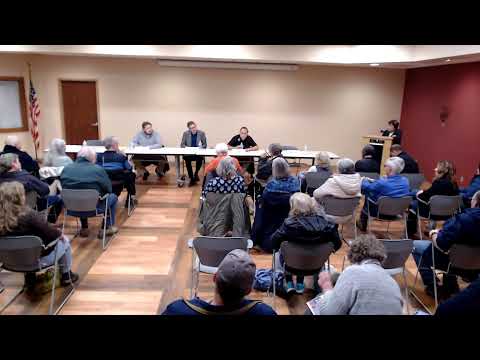
At a League of Women Voters forum in the Oscar Room, three candidates for Two Rivers city council emphasized housing shortages as the core obstacle to attracting employers, debated how to handle vacation homes and utility charges, and discussed downtown vibrancy, blight and promotion of tourism.
At a League of Women Voters forum in the Oscar Room of the Two Rivers Park District, three candidates for city council — incumbent Tim Petrie, candidate Andre Robitai and incumbent Scott Steckwasser — told voters the city’s most urgent problem is a shortage of housing that, in their view, is blocking business recruitment and workforce growth.
The candidates said the housing shortage, competition from short-term vacation homes and uneven downtown development were the dominant themes across audience questions. Andre Robitai, a candidate and resident, told the forum “there’s a pretty big rift between a lot of the residents that live here and the city leadership,” saying closing that gap and improving communication were central goals of his campaign.
Why it matters: multiple candidates said a lack of housing limits the city’s ability to attract and retain businesses and workers. That, they said, affects school enrollment, tax base and downtown activity — all issues voters raised at the forum.
The candidates’ priorities and proposals
Housing and workforce: All three candidates named housing as the top barrier to economic growth. Petrie said the housing shortage forces would-be employers and workers to look elsewhere. Steckwasser, who is finishing his first term on the city council, said the city should focus on available land in the city’s north and explore creative ways to pay for infrastructure to open new building lots.
Several candidates pointed to recent and proposed developments to show the range of housing available and the gaps: Sandy Bay Highlands, which candidates said has higher-priced lots and houses (candidates cited roughly $450,000 as a typical recent price for that development), and other proposed projects that have stalled, among them the West River Lofts and sites tied to the former Hamilton property. One candidate said the city has about 77 short-term rental units (Airbnbs) in its latest count and that vacation homes take housing supply off the market for full-time residents.
Vacation rentals and utilities: Audience members asked whether the city should change its minimum-usage utility threshold for houses used only part of the year. Candidates described the policy concept as raising the minimum-usage threshold that governs some utility billing so that largely vacant vacation properties would bear a larger share of infrastructure costs; they said the idea has been discussed but needs data and further study. Steckwasser and Petrie expressed conditional support for some adjustment designed not to drive owners away; another candidate said the city must gather usage data before acting.
Business recruitment and industrial strategy: Candidates said attracting large single employers like Hamilton’s peak-era employer is unlikely, and urged recruiting multiple small- and mid-sized firms instead. Several speakers criticized the city’s business/industrial subcommittee by name (referred to in the forum as the BIDC or similar acronyms) for not presenting a clear, actionable strategy to council; they urged the council and the subcommittee to define specific targets and execution steps.
Downtown vitality, tourism and parking: Voters asked whether to charge for beach parking to manage visitor traffic. Candidates largely opposed charging residents for beach parking; they said a targeted approach — for example, resident permits and modest tourist fees or shuttles — merits study but would require technology, staffing and public engagement before implementation. Speakers also suggested more marketing of Two Rivers’ arts, museums and natural assets to expand weekday and shoulder-season visitors rather than only weekend crowds.
Blight and code enforcement: Several audience members raised concerns about blighted or poorly maintained properties. Candidates said the city has processes — citations, warnings and court steps — but that enforcement can be slow. Multiple candidates said an existing subcommittee is tasked with blight and affordable housing issues and urged clearer committee strategies and more council oversight.
City staffing and communication: Candidates noted the city’s vacancy in a community development director role and said that vacancy slows project development and business outreach. Mark Bindner, a sitting city council member in the audience, urged better and steadier public communication; candidates agreed more proactive outreach, surveys and clearer use of tourism/room-tax marketing (Explore Two Rivers was named in discussion) could help.
What they did not do: There were no formal motions, votes or council actions at the forum. The event was a candidate Q&A hosted by the League of Women Voters; remarks expressed policy priorities, not enacted municipal decisions.
Context and next steps: Candidates urged voters to weigh housing and economic development plans in their choices; several recommended that council, staff and committees produce more detailed, public strategies with measurable steps on housing, business recruitment and downtown revitalization. The League reminded attendees how to check voter registration and absentee-ballot dates at the close of the forum.