Get Full Government Meeting Transcripts, Videos, & Alerts Forever!
Get email alerts on the Historic Preservation topic
No spam. Unsubscribe anytime.
Dolman Black Heritage Museum seeks $250,000 from city to start demolition, leaders say
Summary
Dolman Black Heritage Museum leaders showed council renderings and asked the City of Hagerstown for $250,000 to begin demolition and site cleanup of the Koch/Coca‑Cola building as the first phase of a multi‑phase museum and cultural campus project.
Dolman Black Heritage Museum leaders presented designs for a five‑story museum and asked the mayor and council for emergency help to remove unsafe portions of an adjacent structure.
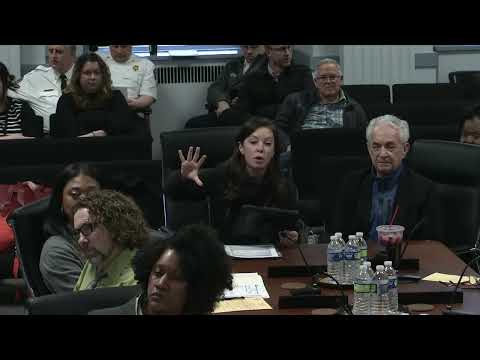
Museum director Alicia Lisonbee McBean told the council the organization is requesting $250,000 to begin demolition of the back portion of the former Coca‑Cola/Koch site so the project can move forward. “Like, give us $250,000 for the demolition and we can get that done,” McBean said during the work session.
The request is intended to remove what presenters described as structurally compromised rear additions, clear fenced debris cited by city code enforcement, and allow immediate stabilization of the Koch Building so the museum can use the first and second floors as an interim home while fundraising continues for the full container‑based museum tower.
Why it matters: museum leaders and their architect argued that visible, early progress will improve fundraising prospects for a larger capital campaign. Travis Price, the lead architect, described a phased plan: phase 1 would renovate the Koch Building and install an outdoor sculpture and stacked storage containers as interim exhibits and storage; future phases would construct a five‑story museum built in part from repurposed shipping containers.
Project scope and financing: presenters said demolition and initial work have an estimated national average cost of about $418,000, including a 15% contingency, but that the museum’s immediate ask to the city is $250,000 to begin the demolition. McBean said the organization has some matched congressional earmark funds and a bond match in process; she said a prior earmark, HUD support, CDBG applications and private fundraising are part of the capital plan but are not yet sufficient to cover the full project.
McBean described prior investments in design and environmental studies and stressed the museum’s role in local education, saying the museum’s exhibits and mobile work had previously reached schools and that local students had used the museum’s resources to learn family histories. She asked the council to consider city support while the organization pursues state and federal matches; she said the Legislative Black Caucus intends to send a letter of support.
Council reaction and next steps: council members pressed staff for budget timing and for clarity on how any city contribution would fit into the municipal budget process. Council members said they needed more time to review the request as part of upcoming budget deliberations and to understand how demolition timing would align with other funding commitments. No formal council vote or appropriation was taken at the meeting; McBean and staff said they would pursue county, state and federal sources in parallel and that the museum has retained a fundraising strategist.
Community context: presenters emphasized the Jonathan Street neighborhood history, the plan’s use of shipping containers as a design metaphor for the transatlantic slave trade and the museum’s connection to Wheaton Park and neighborhood improvements. Janice Kelsch, the museum secretary, and an account specialist (identified in the presentation) joined to explain grant matches and fundraising steps already underway.
The request is likely to return to the council either as part of the city’s budget deliberations or as a separate funding request after staff has had time to review the museum’s documentation and clarify timing for demolition and interim stabilization.