Get Full Government Meeting Transcripts, Videos, & Alerts Forever!
Get email alerts on the Capital Projects Utilities topic
No spam. Unsubscribe anytime.
Punta Gorda presents FY25 capital projects progress; water, flood control and staffing concerns surface
Summary
City staff briefed the Punta Gorda City Council on the status of fiscal year 2025 capital projects, outlining completed work, cost increases on several park projects, major water and wastewater upgrades planned or underway, and staffing and procurement limits that could slow delivery.
City staff on Wednesday delivered a comprehensive progress report on fiscal year 2025 capital projects, highlighting work completed after recent hurricanes, cost increases on several park projects, and a slate of water and wastewater upgrades the city will need to finance.
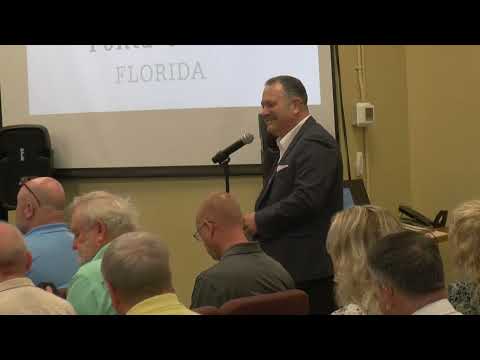
The update, presented to the Punta Gorda City Council at Lashley Court, covered completed items such as the Hansi Park boardwalk and ADA signage, ongoing downtown drainage and storm-sewer work, multiple water-main and force-main replacements, a proposed reverse-osmosis expansion at the water treatment plant, and a package of park and historic-district improvements. Finance staff and department directors told the council many projects have been delayed or re-scoped because of hurricane damage and regulatory requirements.
Why this matters: The combined slate of utility upgrades and infrastructure repairs will shape rates, bonding needs and capital spending for years. Council members and residents asked repeatedly how projects will be prioritized and paid for, and whether the city has the staffing to complete them on schedule.
City staff listed projects completed or near completion and those moving to procurement. Chris, identified in the presentation as the city's finance director, described grant appropriations and carryover funds for work that spans multiple fiscal years. He told council the appropriation item “is just to appropriate the revenue as well as the expenditure for 3 different grants,” including a USDA grant for cleaning drainage ditches and two grants for the waste department.
Park projects and splash pad costs drew sharp attention. Staff said the Plaza Park playground project had grown from an early estimate of roughly $300,000 to about $1.6 million after scope changes and Department of Health permitting delays. Urban-design staff attributed increases to repeated changes in project scope—"it went from a plain park to an extended park, then it went to a water park,"—and to material-cost increases since COVID. One council member asked for clearer documentation showing scope changes and phase-by-phase costs; a resident speaker later recommended the council present projects as tiered (current-year vs. future-year) so the public can see immediate priorities.
Staff also walked the council through multiple water and wastewater items. The most substantial new item is a proposed water-treatment plant reverse-osmosis (RO) expansion to add a 4 million gallons-per-day process and an additional groundwater well. Staff said the original budget estimate was about $30 million; a consultant later estimated about $37.8 million. Staff said they are consulting bond counsel and the city’s financial advisor about financing options and a potential 30-year amortization to spread rate impacts.
Tom, a utilities staff member, described an urgent repair need for the wastewater force main that crosses I-75. “The current force main is cast iron and needs to be replaced,” Tom said. He warned that if the pipe fails the interstate could be disrupted and said the city is trying to be proactive to avoid an emergency replacement.
Staff discussed other utility work in procurement or design: replacement of aging lift-station generators (grant-funded), AMI meter rollout nearing contract details, replacements and rehabilitation at the wastewater treatment plant, and multiple water-main upgrade projects across the distribution system. Staff also said wastewater handling requirements have changed, requiring projects to add drying and handling facilities for biosolids.
Council and staff repeatedly raised the interaction of funding and staffing. Multiple speakers said procurement and licensing delays and a shortage of skilled staff limit how many projects the city can execute simultaneously. One council member urged staff to consider using contract resources for high-priority projects but acknowledged contract costs can be higher than in-house delivery.
Public safety and city facilities were also covered. Staff flagged the public-safety building expansion, for which current budgeted funds of about $6.95 million may prove insufficient depending on final bid results. Historic City Hall rehabilitation and the AC Freeman House were discussed as projects that may require a community workshop and additional prioritization.
On downtown and historic-district improvements, councilors debated the value of decorative, historic-style lighting vs. lower-cost alternatives. Several council members stressed the importance of maintaining the historic downtown aesthetic; others asked whether LED or solar retrofits could retain the look while reducing long-term maintenance costs.
Several speakers called attention to harbor and waterway issues. A resident and longtime volunteer conservation advocate urged the council to treat the Peace River and harbor as urgent environmental priorities; staff noted FEMA and other grant sources are being pursued for marina and pier repairs caused by hurricanes.
On technical and regulatory matters, Ron Edwards of Public Works clarified safety and operating standards for the planned splash pad: “In Florida, the splash pad is defined as a public pool. So it has to meet all the same requirements as any public pool,” he said, adding that automated chemical feeders and daily checks will be used and that the Department of Health will inspect the facility.
The council directed staff to continue phasing projects, pursue grants and financing, and present clearer, phase-based cost documentation so council and the public can track where funds are committed versus carried forward. Staff said they will continue working with consultants on the utility rate study that will recommend scenarios for rates and tiers based on projected capital needs and consumption patterns.
Ending: Staff and council agreed to follow up with additional detail on financing options, procurement timelines and a prioritized list of projects the city can realistically execute given current staffing. Council members also encouraged more public-facing summaries and tiered project lists so residents can see near-term priorities and planned future work.