Get Full Government Meeting Transcripts, Videos, & Alerts Forever!
Get email alerts on the School Library Content topic
No spam. Unsubscribe anytime.
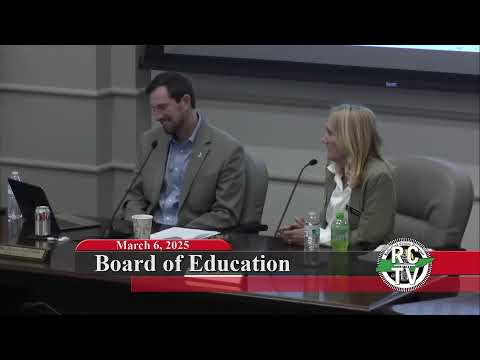
Rutherford County board votes to remove some library titles, clarifies classroom use after public comment
Summary
After public comment from parents, teachers and librarians, the Rutherford County Board of Education removed several titles from school libraries and reiterated that textbook adoptions and AP course materials can still be assigned in class.
The Rutherford County Board of Education on an evening agenda item on book reviews voted to remove several titles from school library collections and clarified how removed titles may still appear in classrooms when they are part of an adopted textbook or curriculum.
Board members moved through a set of library recommendations after more than a half-dozen members of the public addressed the board during the public-comment period. Speakers included college instructor Bill Levine, community member Judy Whitehill, parent Joshua Walker, Heather Cook and Blackmon High School librarian and parent Elizabeth Shepherd, who urged the board to accept media-specialist recommendations and preserve students' access to a wide range of books.
The board debated multiple individual titles and took roll-call votes on specific items. The board removed Joseph Heller’s Catch-22 from library circulation after a roll-call vote that produced multiple “no” votes and one “present” vote; the superintendent clarified that removal from library collections does not prevent a text from being used in a classroom if it is part of a formal textbook adoption. The board also voted unanimously to remove Water for Elephants from library collections.
Dr. Sullivan (Director) explained the legal distinction the board followed: the statutes governing library holdings differ from rules that apply to classroom textbooks, and a book that is part of a textbook adoption can still be assigned even if it is removed from library stacks. Board members reiterated that parents retain options when books are assigned in AP or other courses, including alternative assignments in some cases.
Public commentators focused on the educational value of access to library materials. Bill Levine, a longtime English instructor, said keeping books available in school libraries “assures that students can navigate controversial matters under proper guidance.” Elizabeth Shepherd, a school librarian, told the board she had taken library advocates to Nashville to meet with legislators and warned the board that its words can be used outside the district. Judy Whitehill repeatedly urged the board to accept the RCS media-specialist recommendations.
Board members asked for—and received—clarification from staff about the operational effect of removal motions: several board members noted removal affects library and teacher classroom libraries but not district-adopted textbooks; staff confirmed that parents retain opt-out options in some contexts.
The board did not attach districtwide bans on AP use where materials remain part of an adopted curriculum; board members said those distinctions come from state statute and district adoption policy. The board indicated that further policy review will continue and that individual school librarians and principals will handle implementation steps for materials removed from library circulation.
The item concluded after roll-call and voice votes on a sequence of titles. Specific, confirmed outcomes recorded in the meeting transcript include the removal of Catch-22 from school library collections and the unanimous removal of Water for Elephants.