Get Full Government Meeting Transcripts, Videos, & Alerts Forever!
Get email alerts on the Community Benefit Fund topic
No spam. Unsubscribe anytime.
Port Hueneme, Port outline history, process and status of Community Benefit Fund projects
Summary
City Manager Vega and Port CEO Kristen Diegus reviewed the 2015 settlement that created the Community Benefit Fund, explained the 180-day project approval cycle and provided status updates on projects including a statue (about $40,000 remaining), scholarships ($6,000 remaining), a completed mural awaiting invoicing, and an annual March 22 run.
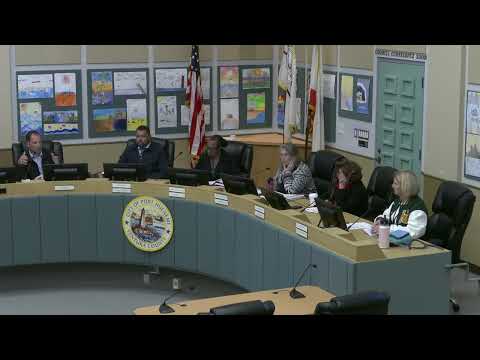
At a meeting of the joint Port–City committee, City Manager Vega and Port CEO Kristen Diegus reviewed the origin, rules and current status of the Community Benefit Fund and described which projects remain active or are awaiting invoicing.
The Community Benefit Fund (CBF) was created after a 2015 settlement agreement intended to reconcile long‑running disputes over revenue sharing and to fund joint projects. "We developed the Community Benefit Fund," Port CEO Kristen Diegus said, describing the fund as a way for the two agencies to collaborate on community projects. Under the agreement, if the Port reports more than $13,000,000 in annual revenue, $100,000 (adjusted by CPI) is placed into the fund; staff estimated the 2025 contribution at roughly $140,000 after CPI adjustments.
Why it matters: the CBF channels a predictable, modest revenue stream into local projects the Port and City approve jointly. The agreement names shoreline protection, community development and "opportunistic" projects as eligible categories and sets a timeline to propose, approve and spend funds.
How the process works: the settlement requires the joint Port–City committee to meet within 180 days after the fiscal year begins (July 1) to propose projects using the prior year’s revenues. Committee recommendations go back to each governing board; each board must secure a majority vote for a project to proceed. If the two boards do not reach agreement within the 180‑day window, funding rolls into the next fiscal year for reconsideration; committee members said that if consensus cannot be reached after several years, the settlement provides for a division of the funds for separate use by the Port and the City.
Status of selected projects and funding details provided at the meeting:
- Statue: The committee reported a remaining balance of about $40,000 to complete the statue site (platform, installation, signage and benches). Meeting remarks said the initial approvals totaled about $100,000 (two approvals of $50,000 each) and the $40,000 balance will be used to install the statue and create a small interpretive area near the Maritime Museum.
- Mural: The mural on the library has been completed, but the grand‑opening ceremony is pending because library construction remains under way; committee staff said the mural has been installed and money will be reconciled once invoicing is submitted.
- Scholarships: The committee approved $1,000 scholarships for students. Staff said four checks ($4,000) have been issued; $6,000 remains available in that line item. The group said they have opened a new round of applications timed to the school year to improve participation.
- Annual run and health fair: The event (rebranded as a color 5K and a 1K kids run) is scheduled for March 22; staff estimated about 600 runners for the 5K and a few hundred children for the 1K. The health and wellness fair will run alongside the event in Parking Lot C.
- Sister City seed funding and other small grants: Staff said a $3,800 check was issued as seed money to the Sister City committee after earlier steps to make the committee a standalone nonprofit. Several other small sponsorships and contracts (Police Explorers events, caregiver sponsorships, Little League, lifeguard training) were reported as executed contracts pending invoicing.
- DC advocacy/coalition funding: A $40,000 joint trip allocation that was programmed but not used last year remains on the books; staff noted that the funds can either carry forward (no re‑vote required) or be reprogrammed with board approval.
Staff also emphasized accounting treatment: projects where work is complete but cash has not yet been paid will still appear on the active list until invoicing is received and reconciled. "Even if work is done, if we haven't paid the cash, it's still in the list as unpaid," a staff member said.
Votes at a glance: At the start of the meeting the committee approved the October meeting minutes by a unanimous voice vote (motion and second were made; no individual mover or seconder was recorded in the transcript).
The committee concluded with a request that staff include a status column on future project lists to indicate which line items have been paid, which are invoiced and which remain outstanding. Members also noted May is typically when the next cycle of CBF planning begins because the fiscal-year accounting closes July 1 and gives staff 180 days to propose projects.