Get Full Government Meeting Transcripts, Videos, & Alerts Forever!
Get email alerts on the Campaign Ethics topic
No spam. Unsubscribe anytime.
Council receives training on campaign rules: PDC carve‑outs, education vs. advocacy and use of city resources
Summary
A municipal attorney gave a 30‑minute briefing on Washington campaign rules (RCW 42.17A series) and Public Disclosure Commission guidance, focusing on distinctions between education and advocacy, use of city facilities, the "specific inquiry" carve‑out, and practices to reduce OPMA risks at town halls.
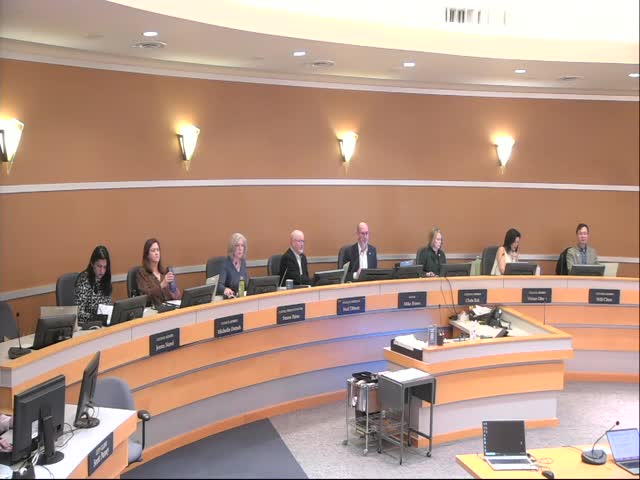
Jeff Taraday of Lighthouse Law Group briefed Edmonds elected officials on Washington state campaign rules and Public Disclosure Commission (PDC) guidance, focusing on how council members may participate in ballot‑measure discussions while avoiding prohibited use of public facilities.
Taraday framed the analysis around RCW 42.17A.555 (the statute the PDC enforces) and described the statute's general rule — that elected officials must not use public facilities to assist campaigns — and four carve‑outs the law provides, including: council collective action (e.g., a formal council resolution), responses to specific inquiries, activities that are part of normal and regular conduct of the office, and a carve‑out that applies to certain state officers. Taraday emphasized the practical distinction between advocacy (campaigning) and education (objective, factual presentations) and said education is permissible using normal city channels when it is fair and objective.
Key points covered included:
- Responses to a specific inquiry by a constituent or reporter are a carved‑out exception and may be made using city email or a city phone when answering that inquiry, although officials should be mindful of perception.
- Officials may use their title but should clarify they are speaking for themselves unless the council has taken a formal collective action (resolution or motion) that the official is reporting.
- Agencies may prepare objective educational materials in their normal publications or customary formats, but should avoid timing or formats that are "significantly different" during the pre‑election period and should not distribute content that targets specific subgroups.
- Large town halls or events raise potential OPMA (Open Public Meetings Act) concerns if a quorum attends and participates; passive attendance reduces that risk but perception matters.
Council members asked for practical examples — including social gatherings, FAQ distribution and outreach to community groups — and Taraday advised that while the PDC allows certain actions, officials may choose more conservative practices to avoid perception issues. He also advised separating city education materials from campaign distribution to reduce confusion.
The training closed with staff and council discussing scheduling practices for town halls to limit quorum risks and recommended record‑keeping for events and materials.