Get Full Government Meeting Transcripts, Videos, & Alerts Forever!
Get email alerts on the Executive Sessions topic
No spam. Unsubscribe anytime.
SeaTac council debates in-person requirement for executive sessions; attorneys say law allows hybrid but stresses confidentiality
Summary
Councilmembers debated requiring in-person attendance for executive sessions and strict rules for remote participation; city attorneys said state law allows hybrid sessions but urged strong confidentiality safeguards.
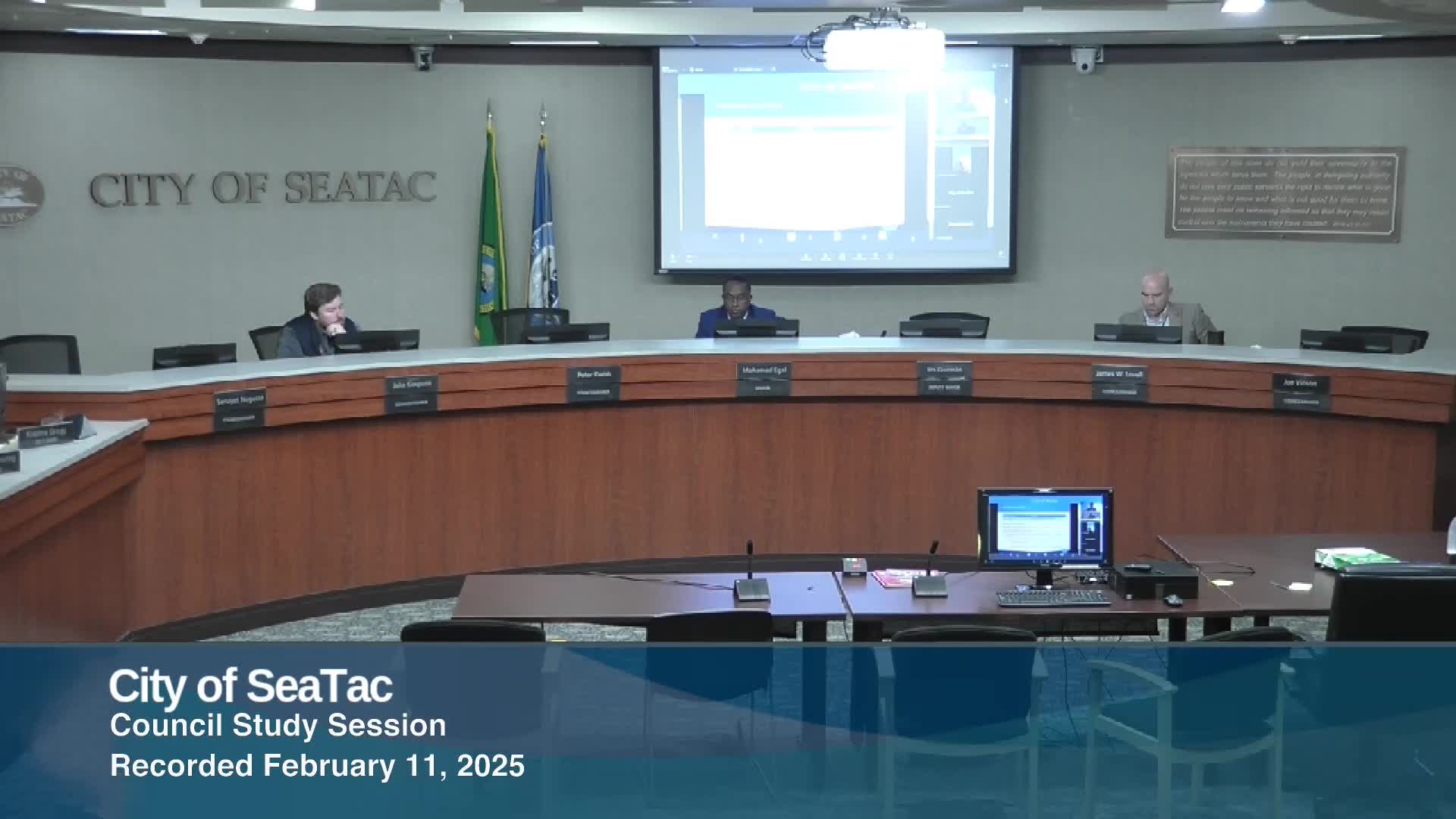
The SeaTac City Council debated proposed language that would require in-person attendance for executive sessions and establish stricter rules when members attend remotely.
Staff presented two related proposals from a council member: require councilmembers to attend executive sessions in person, with limited exceptions for remote attendance, and a companion section that clarifies virtual-executive-session procedures during emergencies. Some councilmembers urged postponing action until the filer could attend. Supporters of an in-person requirement argued confidentiality is difficult to guarantee in hybrid settings: remote participants might be overheard or have others in the room. Council Member Kwan and others suggested that, if remote attendance is allowed, the administrative procedures should require advance notice (Christina Greg and staff mentioned a 12-hour notification), video and audio to be on for the entire session, and use of a secure communications platform and a private room without others present.
Senior Assistant City Attorney Cindy Corsilius and another attorney explained that the Open Public Meetings Act (RCW 42.30) does not mandate in-person executive sessions; it allows hybrid meetings. They said, however, that best practices and other statutes protecting privileged communications counsel strong confidentiality measures: attorneys should confirm a secure room and platform, and council members should avoid being overheard. Several councilmembers said they preferred in-person sessions for sensitive topics (real estate, litigation), while others supported a remote option if strict safeguards were enforced. The council did not adopt new language at the study session; staff said they will return with clarified, consistent wording for executive sessions and virtual-executive-session procedures.
Why it matters: executive sessions address confidential topics such as legal strategy and real estate; rules determining whether councilmembers may attend remotely affect the ability to protect privileged information and maintain public-trust safeguards.