Get Full Government Meeting Transcripts, Videos, & Alerts Forever!
Get email alerts on the Water Fluoridation topic
No spam. Unsubscribe anytime.
Longview council orders staff to pursue November advisory vote on fluoride after contentious hearing
Summary
After hours of public testimony and a staff presentation on fluoride levels and history, the Longview City Council voted 4–3 to direct staff to bring a resolution for an advisory ballot question on fluoride to the November 2025 general election, pending a March 18 meeting with Beacon Hill Water & Sewer.
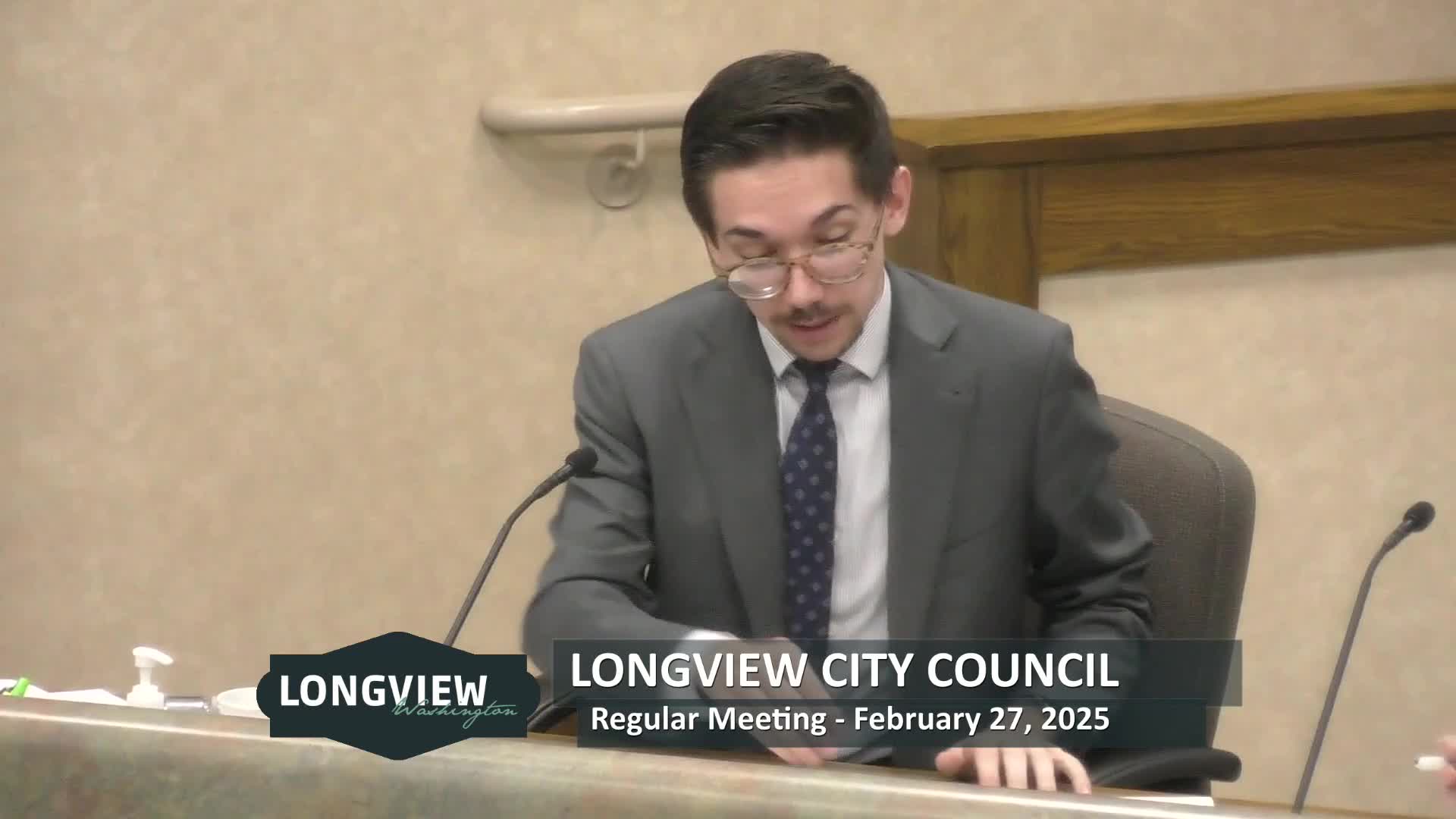
The Longview City Council voted 4–3 on Feb. 27 to direct staff to prepare a resolution putting an advisory question about removing fluoride from the city water supply on the Nov. 2025 general-election ballot, after a lengthy public hearing that drew dozens of speakers for and against fluoridation.
The motion, made by Councilmember Eric Halverson and seconded by Councilmember Young, instructs city staff to meet with Beacon Hill Water & Sewer (a partner in the treatment plant) and return to council with a draft resolution on March 27; staff and Beacon Hill agreed to meet March 18. Mayor Spencer Boudreau announced the motion carried 4–3.
Why it matters: The debate combined public-health claims, local history and a small annual line item in the city budget. City staff told council the water system currently spends about $14,000 a year to maintain fluoridation; speakers and health providers said removing it would worsen dental decay among children and low-income residents, while opponents urged choice and questioned potential long-term health effects.
Assistant City Manager Chris Collins opened the council’s technical presentation, giving historical context and operational details. Collins said Longview began fluoridation in 1951 and that state reporting and the city’s daily tests show the system operates near the 0.7 parts-per-million target recommended for dental benefit. “Our goal is always a 0.7, but it does fluctuate between a 0.5 to a 0.9,” Collins told council, and he noted an average of about 0.66 parts per million in a six‑year review of sampling. He also told the council the plant’s water source naturally ranges roughly 0.21–0.31 ppm, and that any local change would require coordination with partner Beacon Hill, which owns roughly 17% of the plant.
Public comment filled the chambers. Local dentists, pediatric dental staff and doctors urged the council to keep fluoridation. Dr. Jeff Langdon, who practices across the river and said he serves many low‑income patients, told council: “When I came to the fluoride workshop last month, I saw an overwhelming number of citizens and professionals contend for fluoride because we know it helps our community.” Britney Cole, operations manager at Happy Kids Dentistry, warned that removing fluoride would increase children's dental pain, abscesses and missed school.
Opponents made a range of arguments, including requests for individual choice and concern about possible neurotoxicity reported in some observational studies. Councilmember Halverson, who proposed the resolution to place an advisory question on the ballot, said during debate: “From a risk‑mitigation standpoint, I think it's both safer and smarter to remove fluoride from our water supply rather than continuing to impose it on every household in our community.” That view prompted rebuttals from several council colleagues and from many public commenters.
Council action and next steps: The council’s motion as amended directs staff to meet with Beacon Hill Water & Sewer District by its March 18 board meeting and to return with a draft resolution for council consideration at the March 27 meeting. Collins told council he had discussed the idea of a joint referendum with Beacon Hill staff and that Beacon Hill had indicated willingness to discuss the option with its board.
If council ultimately places the advisory measure on the November ballot and voters approve removal, the city would still face contractual and operational steps: Collins noted a 90‑day period typically required to stop dosing after a vote and said any legal risks to modifying the plant agreement would require separate review. Interim City Attorney Archer advised that legal issues around modifying inter‑agency agreements could require executive‑session discussion.
The public hearing and council discussion highlighted two persistent tensions: public‑health assessments by medical and dental professionals, many of whom urged keeping fluoridation, and the council’s budgetary and philosophical concerns about city‑wide “medication” through water and the small line item’s role in the larger budget. The council’s direction to staff is procedural — bring back a resolution for a potential advisory vote after the city and Beacon Hill confer — not an immediate policy change.