Get Full Government Meeting Transcripts, Videos, & Alerts Forever!
Get email alerts on the Development Impact Fees topic
No spam. Unsubscribe anytime.
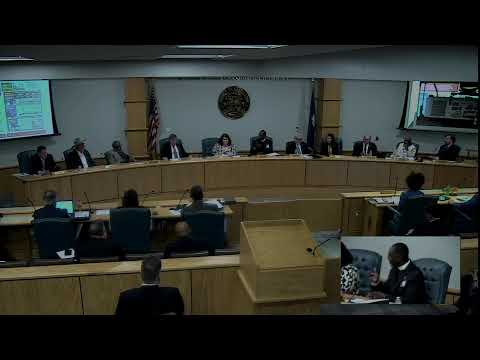
Charleston County staff brief council on development impact fees; feasibility study proposed
Summary
County planning staff summarized state rules for development impact fees and council members asked staff to evaluate feasibility and potential revenue for unincorporated areas before hiring a consultant.
Charleston County planning staff gave a brief overview of how development impact fees work under state law and council members asked staff to gather feasibility information before the county pursues an ordinance.
In a Planning & Public Works Committee meeting, county planning staff explained that a development impact fee is “a means of payment of money imposed as a condition of development approval to pay a proportionate share of the cost of system improvements needed to serve the public utilizing the improvements,” and listed state statutory requirements for adoption, including a capital improvements plan, a justification report, third‑party consultant review, annual accounting, and a three‑year expenditure or refund requirement.
Council members asked staff to scope a feasibility study for the county’s unincorporated areas — including whether there is enough projected growth to justify the administrative cost of adopting and maintaining an impact fee ordinance. Council members raised concerns about administration costs, equity effects on affordable housing and whether the tool would work when major municipalities in the region do not participate.
Planning staff said the county would need a capital improvement plan with specific cost estimates, land‑use assumptions and a map of service areas; the staff also noted the Charleston County Comprehensive Plan (Chapter 3.9) lists impact fees as a possible tool for offsetting service costs. Staff told the committee that several jurisdictions and municipalities in the region have adopted impact fees but that Charleston County’s unincorporated area is largely rural and may not produce sufficient fee revenue alone. Berkeley County’s terminated program was mentioned as an example where limited administration capacity and competing revenue sources (a half‑cent sales tax) led to termination.
Council members suggested a staged approach: (1) ask staff to survey remaining developable lands in unincorporated Charleston County and estimate potential fee revenue; (2) consult with municipal governments (East Cooper municipalities, Mount Pleasant, North Charleston and others) about coordination; (3) only then decide whether to retain a consultant to prepare a formal justification report. Several members emphasized avoiding unnecessary consultant expense if the feasibility analysis shows fees would not be productive.
No ordinance or formal vote was taken; the item was presented for information and committee members signaled interest in directing staff to return with more detailed feasibility materials (a cost/benefit analysis and municipal outreach results) before proceeding to a consultant procurement.
Ending
Committee members did not adopt any ordinance or refer a draft to the planning commission at the meeting. Staff recommended that feasibility (including a land inventory for unincorporated parcels) be the first step if council wants to pursue impact fees; several council members asked staff to consult municipal counterparts and return with a “blue sheet” or briefing for council consideration.