Get Full Government Meeting Transcripts, Videos, & Alerts Forever!
Get email alerts on the School Budget topic
No spam. Unsubscribe anytime.
Blackstone Millville leaders preview $32.05 million FY26 budget; towns see higher mandated contribution
Summary
Superintendent, finance and instructional leaders presented a FY26 budget totaling $32,054,773, outlined revenue offsets and capital priorities, and warned of rising costs tied to enrollment, health insurance and pending contract negotiations. Town assessments rise modestly after state aid changes.
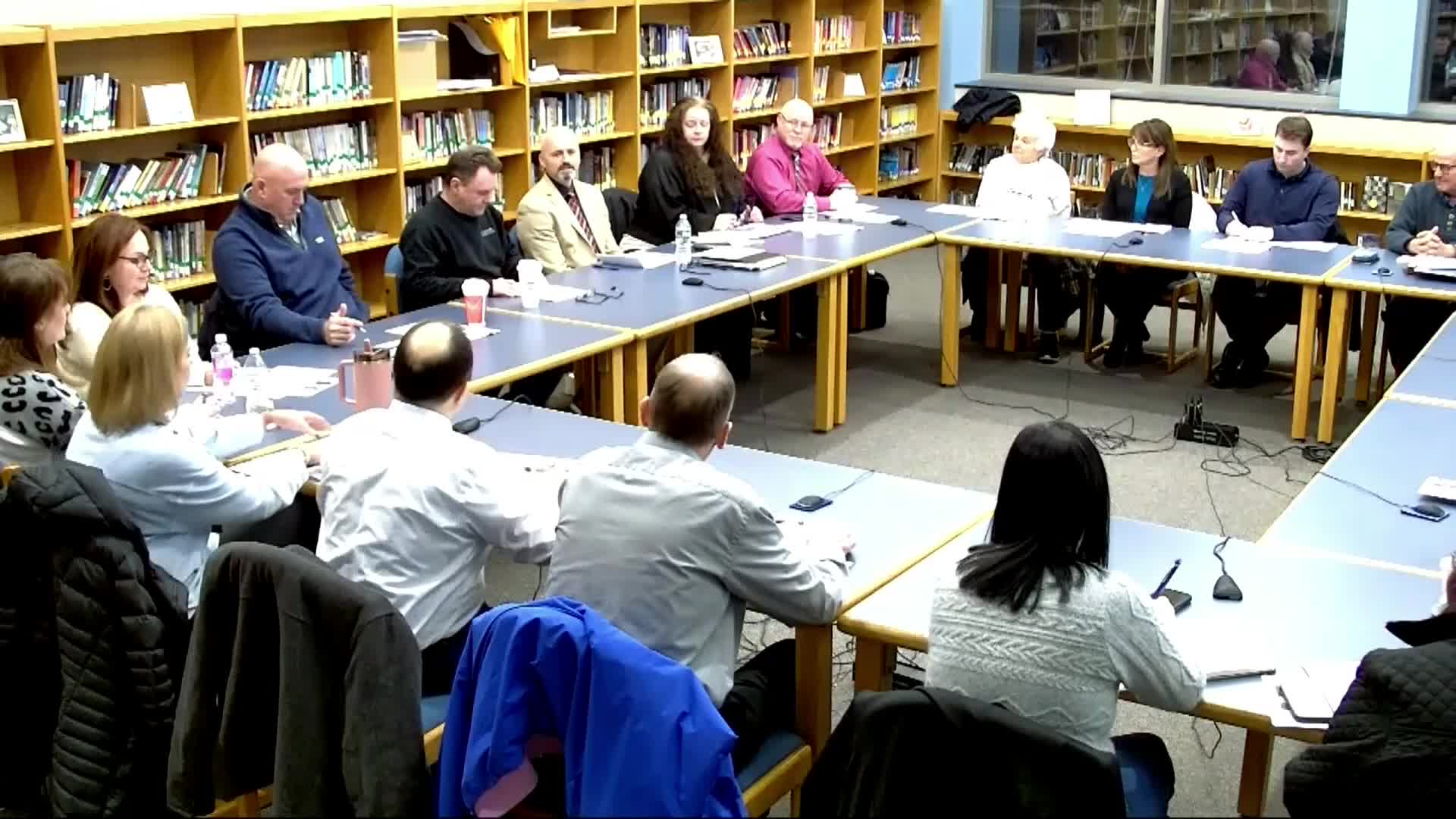
School and town officials from the Blackstone Millville Regional School District (BMR) reviewed the district’s draft fiscal year 2026 budget and five-year capital priorities at a joint budget summit, laying out a $32,054,773 spending plan and a mix of one-time and ongoing revenues intended to limit the assessment impact on the towns of Blackstone and Millville.
The presentation, led by Superintendent Jason DeFalco, Assistant Superintendent Jill Pilagalarani and Director of Finance and Operations Joe Spada, emphasized rising enrollment and student needs as the main cost drivers. “We are continuing to make moderate progress toward our goals as a district,” Pilagalarani said while reviewing accountability and student-performance measures that administrators said support proposed staffing and program investments.
Why it matters: The draft budget would increase the district’s total assessment but uses state aid growth and federal grants to reduce pressure on town tax levies. Spada told officials the proposal relies on a mix of increased foundation aid and targeted offsets to avoid a larger assessment increase: “the total budget is $32,054,773,” and, later, “the total reduction with all of these ongoing, revenues and 1 time, revenues is exactly $3,659,040,” he said, describing how one-time and recurring revenues were applied to lower the towns’ shares.
Key details
- Budget total and revenues: The proposed general-fund budget is $32,054,773. Spada showed projected state revenue at approximately $14,818,340 and described federal and special grants that will offset local cost, including an IDEA special education entitlement (about $460,000), Title I ($213,000), Title II (about $35,000) and Title IV ($15,000). He also cited a $733,030 circuit-breaker special-education reimbursement estimate and $856,952 in regional transportation reimbursements.
- State aid and assessments: Officials said the district will receive roughly $600,000 more in state Chapter/ foundation aid this year after moving out of a prior “hold harmless” status; administrators described that change as a new baseline the district expects going forward. Under the proposal Blackstone’s assessment increase would be about 3.95% and Millville’s about 2.54% (overall assessment increases shown in the packet).
- Enrollment and student needs: Pilagalarani and DeFalco described steady enrollment of about 1,500 students, with rising shares of high-needs and English-language learner students. The district reported an increase in English-language learners from about 41 to 72 during the past year and projected more growth; administrators proposed adding 0.4 FTE in ELL staff (increasing 2.6 to 3.0 FTE) to respond to demand.
- Staffing requests and class-size aims: The draft adds classroom positions to preserve target class sizes. Administrators requested additional second- and third-grade teachers to keep K–3 class sizes near 20 students and proposed restoring several high-school and middle-school positions reduced in the prior reconfiguration. Officials said the district reduced 18.5 FTEs during last year’s reconfiguration and proposes to restore six of the previously cut classroom positions given enrollment trends.
- Capital plan: The FY26 materials include the first year of a five-year capital plan. Administrators asked the towns to consider two year‑one warrant articles: a district playground replacement (estimate $70,000) and replacement of an aging plow/sander truck (not-to-exceed estimate presented). Spada reported principal-and-interest assessments falling for 2026 after earlier debt paydowns and noted the district has included a $500,000 BAN (bond anticipation note) for a feasibility study tied to long-term facility planning.
- Budget offsets and one-time sources: Spada outlined a series of offsets: prepaying up to three months of collaborative tuition ($350,000), carrying forward roughly $270,000 in existing supplies and materials, consolidating small special-revenue fund balances (about $90,000), and other one-time uses that together reduce general-fund pressure.
- Contracts and risks: Administrators said Unit A (the teachers’ bargaining unit) contract negotiations are underway; the superintendent said the plan is to certify the budget at the school committee meeting on Thursday and that, in his years with the district, they have not needed to return to the towns for supplemental funding. Health-insurance costs were flagged as a risk: staff reported a carrier-estimated rate increase of about 16% while the budget assumes an 11% increase pending bids.
Discussion, direction and next steps
Board and town officials asked detailed questions about class-size projections, capital priorities in light of an MSBA feasibility study, and whether capital work at buildings such as JFK should be delayed or reprioritized pending possible reconfiguration. Administrators said playground equipment and the plow truck were chosen as lower‑risk, district‑wide items that would be useful regardless of long-term facility choices; they said larger construction choices would wait for the MSBA feasibility outcomes.
Officials scheduled a public hearing and a school committee certification of the FY26 budget for Thursday at 6 p.m. The presentation team offered to attend town boards and finance-subcommittee meetings and said warrant articles for the two capital requests will follow in each town’s article lists.
Votes at a glance
- Motion to adjourn: Motion by Tanya Bullock (Blackstone Selectman), second by Chuck Johnson (school committee member). Voice vote: unanimous “aye.”
Ending
Administrators left the budget largely in place for certification later in the week while flagging several known risks—pending union settlement, health-insurance bids, and enrollment-related program demands—that could change final figures. They asked the towns to review the warrant articles and noted they would continue to pursue state and federal offsets to limit the towns’ assessment increases.