Get Full Government Meeting Transcripts, Videos, & Alerts Forever!
Get email alerts on the School Transportation Policy topic
No spam. Unsubscribe anytime.
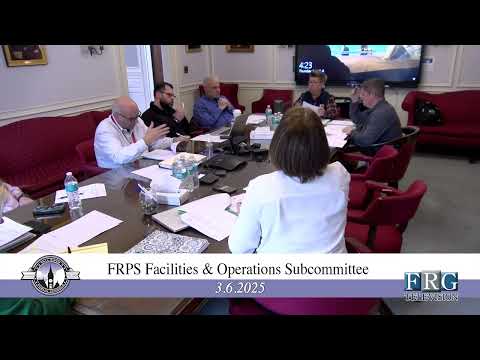
Subcommittee debates redistricting, walking‑distance measurement after DESE opinion
Summary
Members pressed for immediate guidance on how the city will measure students' walking distance to school after a DESE decision reaffirmed measurement by actual walking route, not straight-line distance. Several members urged an expedited vote to avoid sudden service losses.
Fall River City committee members used Thursday’s facilities meeting to press for faster action on transportation eligibility and district reconfiguration after the Department of Elementary and Secondary Education (DESE) clarified that walking distances must be measured by actual walking routes rather than straight‑line ("as the crow flies") distances.
Several committee members said the district has historically used straight‑line measurements on its website and that a recent state-level complaint prompted the DESE clarification. "DESE is saying you're not using our regs — if you're going to measure a mile, it has to be a measured walking mile, not a straight line," one committee member summarized, noting that measured distances can change who qualifies for transportation.
Members expressed concern that switching measurement methods could remove transportation for some students and urged the superintendent and staff to present a clear proposal and, if appropriate, a committee vote at the next meeting. Some members advocated moving immediately to a 1.5‑mile measured walking radius for elementary students to preserve current riders; others urged comprehensive reconfiguration of attendance boundaries and program locations to reduce districtwide transportation demand.
Committee members also discussed broader changes — consolidating preschool classrooms, reviewing program placements, and using route‑planning software to model alternatives — and requested a timeline and cost estimates. Staff said they would bring the policy options, potential impacts and a recommended timetable to an upcoming meeting for formal consideration and possible vote.