Get Full Government Meeting Transcripts, Videos, & Alerts Forever!
Get email alerts on the Childcare Facility Siting topic
No spam. Unsubscribe anytime.
DLCD report identifies zoning, building codes and permitting as barriers to childcare facility development
Summary
The Department of Land Conservation and Development presented a work‑group report March 6 that cataloged regulatory barriers to siting childcare facilities, recommended model zoning code guidance and navigators to help providers through permitting, and highlighted local best practices.
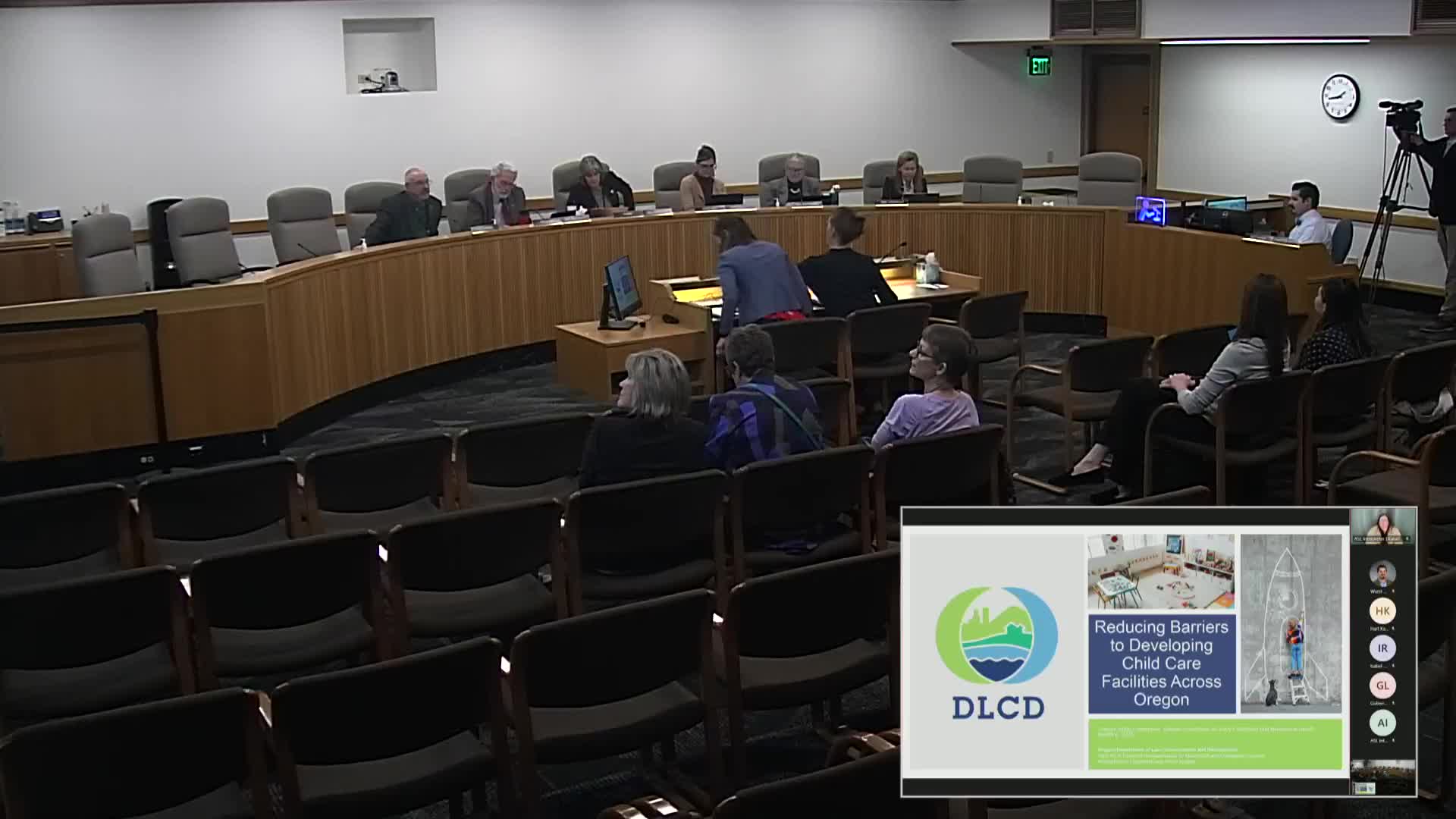
The Oregon Department of Land Conservation and Development presented its final report to the Senate Committee on Early Childhood and Behavioral Health on March 6, summarizing a 2024 work group that examined regulatory barriers to developing childcare facilities across the state.
Alyssa Benini, legislative and policy analyst with DLCD, said the study was directed by House Bill 2727 and drew on research showing most Oregon families live in a childcare desert. “As of 2022, 89 percent of Oregon families with children under 5 years old live in a childcare desert,” Benini said; she said the rate rises to 97 percent for families with children under age 2.
Kelly Reid, DLCD regional representative and a member of the work group, said the group focused on land use and zoning, building codes, licensing requirements and co‑location with affordable housing. The work group found that conditional‑use reviews, outdated local zoning codes and inconsistent terminology across codes and licensing can create delay, added cost and confusion for providers seeking to open or expand child‑care sites.
DLCD recommended more than 30 steps and identified 11 top priorities, including a statewide best‑practice guide and model zoning code for local jurisdictions; funding to create local or regional navigators to help providers navigate permitting processes; and funds for translation and interpretation services to reduce language barriers during permitting. The presentation also highlighted local practices that reduce barriers, including Bend’s waiver of transportation system development charges for child care and Sandy’s waiver of parking requirements.
Work‑group members urged pre‑application conferences that include all relevant agencies — building departments, fire marshals and planners — so providers can learn up front what approvals will be required. DLCD also cited the lack of ready‑to‑use buildings and the complexity of overlapping regulations as persistent obstacles.
Committee members and advocates discussed possible next steps, including legislation to require or fund model zoning guidance and continued funding for renovation programs that help convert existing buildings into licensed childcare space.