Get Full Government Meeting Transcripts, Videos, & Alerts Forever!
Get email alerts on the Resilience Officer topic
No spam. Unsubscribe anytime.
Senate committee hears bill to expand state resilience officer duties to all-hazards and continuity planning
Summary
House Bill 2,581 would broaden the state resilience officer's statutory duties from seismic resilience to all hazards and direct the officer to lead continuity of operations planning across executive branch agencies; the current state resilience officer testified it would not reduce seismic focus but formalize authority and coordination.
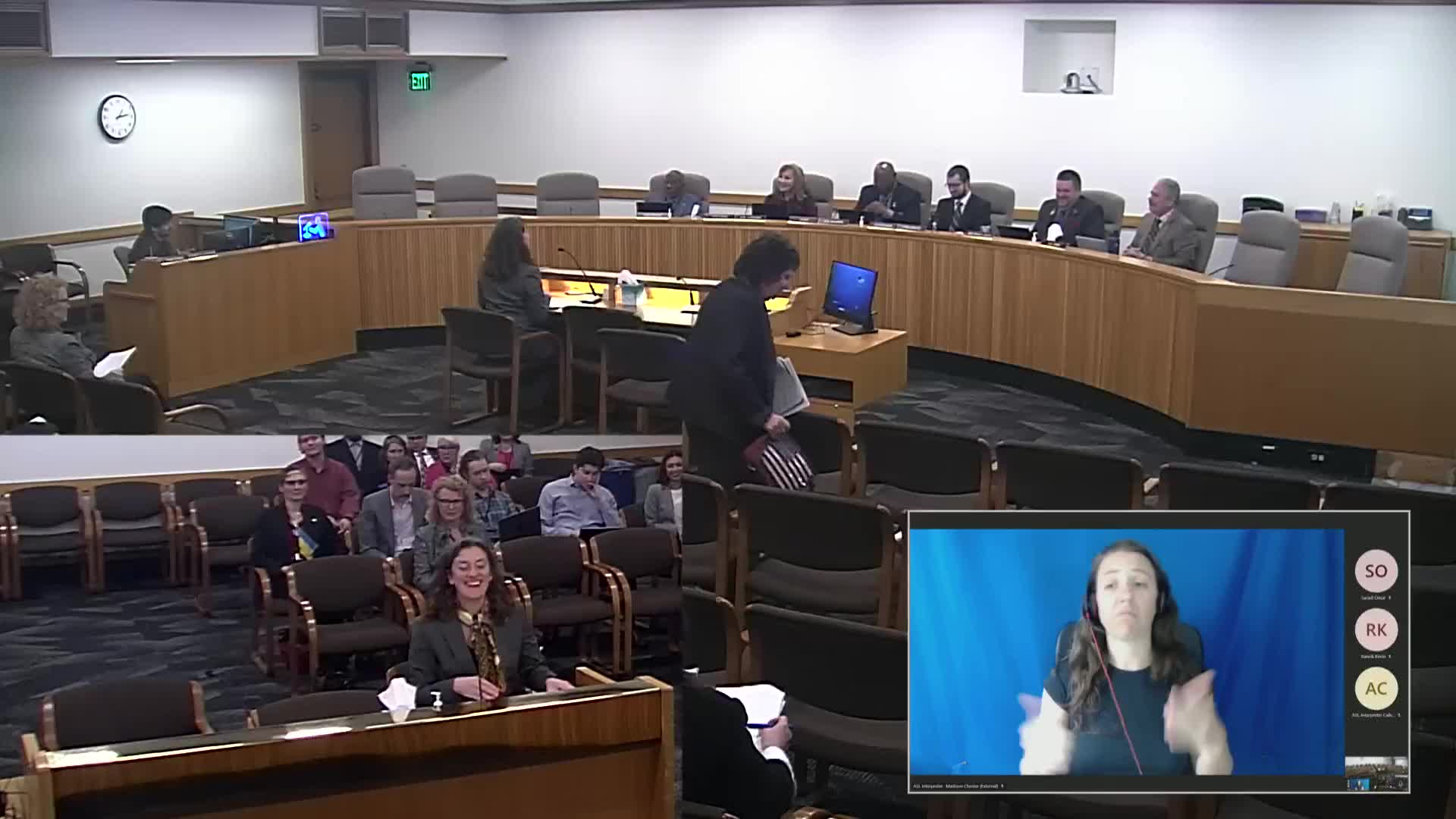
House Bill 2,581 would expand the duties of Oregon's state resilience officer from a primary focus on seismic resilience to a statutory responsibility for all hazards and for leading continuity of operations (COOP) planning across executive branch agencies, Rep. Dacia Graber said at a March 6 public hearing before the Senate Committee on Veterans, Emergency Management, Federal and World Affairs.
"This bill directs the SRO to implement the Oregon resilience plan, the natural hazard mitigation plan and other resilience plans that are adopted by the state," Graber said, summarizing the measure sponsors developed with the state resilience officer.
Why it matters: The state resilience officer position, established by the Legislature in 2014 after the Oregon Resilience Plan, has focused on Cascadia Subduction Zone earthquake preparedness. Supporters told the committee that expanding the statutory description to all hazards would align the office's authority with current practice and the state's broad risk landscape, including wildfire, floods, drought, heat, cyber incidents and other human-caused or natural hazards.
Testimony: Jana Papa Efimio, who identified herself as Oregon's current state resilience officer, told the committee that broadening the role would not diminish the state's commitment to seismic resilience. "It is not a matter of if the earthquake will happen, but when," she said, adding that many seismic investments require long-term planning and should continue. She described the bill's second element as adding continuity of operations responsibilities so executive branch agencies can better prepare to maintain or restore services after disruptions.
Committee discussion: Senator Brock Smith asked about coordination with the Oregon Office of Emergency Management (OEM) and the resilience officer said she supervises the director of emergency management and meets regularly with the state's wildfire lead. Graber and the resilience officer said the bill was developed in coordination with the resilience officer and had minimal reported fiscal impact; it passed its House committee unanimously and passed the House by a large majority, according to the sponsor.
Next steps: The committee held public testimony and did not take a vote at the March 6 hearing. The sponsor urged committee members to support the bill to "bolster Oregon's resilience" and offered to remain for questions as the committee schedules further consideration.