Get Full Government Meeting Transcripts, Videos, & Alerts Forever!
Get email alerts on the Self Sufficiency Programs topic
No spam. Unsubscribe anytime.
Oregon DHS outlines $4.87 billion self-sufficiency budget, warns of staffing and funding gaps
Summary
Oregon Department of Human Services presented an overview of its Self Sufficiency Programs and the governor's proposed $4.87 billion SSP budget (Senate Bill 5526), highlighting caseload growth, staffing shortfalls, program outcomes and several policy option packages including a proposed increase to the TANF jobs participation incentive.
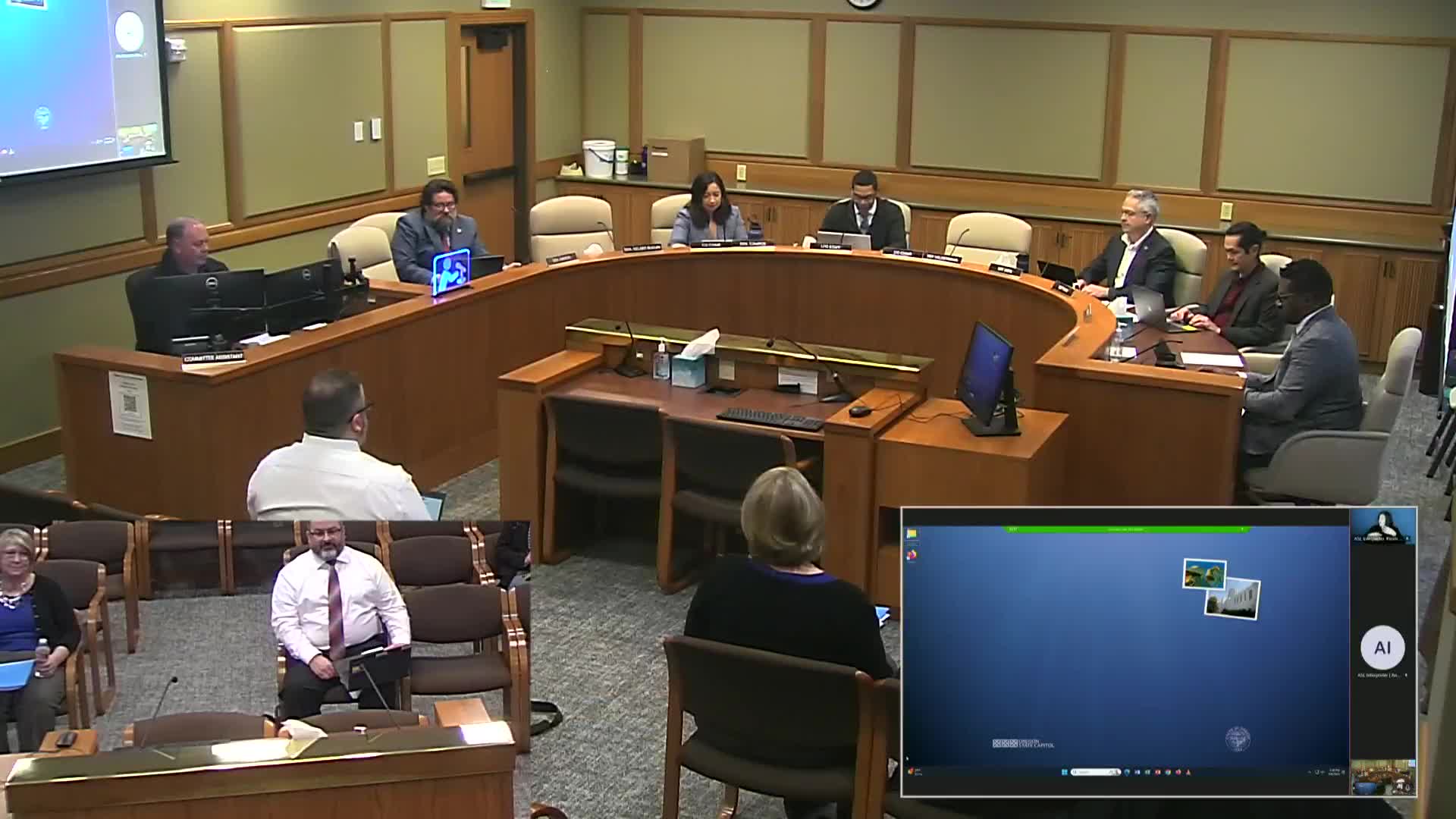
Claire Seguin, director of Self Sufficiency Programs at the Oregon Department of Human Services, told the Joint Subcommittee on Human Services and Ways and Means on March 6 that the agency’s Self Sufficiency Programs (SSP) serve “about 1 in 6 Oregonians” and are funded primarily with federal dollars under the governor’s proposed budget for Senate Bill 5526.
Nut graf: The department asked lawmakers to support targeted investments to shore up staffing and ongoing program funding after describing caseload increases across SNAP, TANF, refugee services and youth homelessness programs, and warning that several current positions are funded only temporarily and could expire by June 30 if lawmakers do not act.
Seguin said SSP’s proposed budget is $4,870,000,000 and that roughly 83% of the SSP budget is federal funding, “primarily for SNAP benefits.” She described core programs that provide food and cash assistance, refugee resettlement services, supports for survivors of domestic violence and services for youth experiencing homelessness. “These essential lifelines help individuals and families in Oregon build stability and resilience,” Seguin said.
On SNAP, Seguin told the committee more than 400,000 households — more than 700,000 individuals, by the department’s figures — receive food assistance. The department reported monthly SNAP benefit spending of $140,500,000, or about $1,600,000,000 annually, and an average benefit of $247 per month. Seguin said SNAP benefits are entirely federally funded and that most SSP administrative and delivery funding for SNAP comes from federal sources.
The committee heard that TANF supports about 21,000 families, including roughly 38,000 children, and that the TANF program operates on a federal block grant that has not increased since 1996. Seguin described the block grant structure as limiting because funding does not automatically rise with demand; she said about 67% of TANF funding is federal and 33% is state. Seguin also noted Oregon’s TANF participation rate is 58.8%, above the national average, and that 72.4% of families who leave TANF for employment remain off assistance for at least 18 months.
Seguin described the refugee program as serving more than 7,200 individuals and partnering with about 50 culturally specific organizations; she said federal funds make up about 87% of the refugee budget and that the legislature has provided state general fund dollars for resettlement grants in recent biennia to extend case management beyond initial resettlement.
On youth experiencing homelessness (YEP), Seguin said demand has grown 530% since 2019 and that in February 2024 more than 6,200 youth received assistance, with nearly 3,800 connected to housing. She said YEP’s $25,000,000 budget is largely state-funded (the department reported 98% from one-time general funds in the current presentation) and warned that much of the program’s current funding is time-limited and will expire by June 30 unless the legislature acts.
The department presented staffing figures and workload metrics. Seguin said the governor’s proposal includes 999 SSP positions overall, with 90% allocated to delivery and 10% to administration/design. The department said it is funded at less than 69% of its modeled staffing need for SSP delivery and cited specific shortfalls: 465 family coach positions statewide (458 budgeted, 7 non-budgeted) and a refugee team with 9 positions of which only 3 are budgeted. Seguin said that many delivery positions are funded temporarily and that vacancy savings have been used to cover “non-budgeted positions.”
Tim Gillette, deputy of business operations for Self Sufficiency and Child Welfare, described the department practice: “Anytime that we have a non budgeted position in our agency, that's covered by savings that we generate elsewhere,” he told the subcommittee.
Audits and error rates were part of the presentation. Seguin said Oregon exceeded the national average SNAP payment error rate for two consecutive years and faced a $15,700,000 penalty from the U.S. Department of Agriculture; the department said it accepted a negotiated 50/50 settlement and would invest roughly $7,800,000 in corrective actions. Seguin also reported the error rate had dropped from a peak of 22.99% in federal fiscal year 2022 to 13.4% in 2025.
The department described three policy option packages (POPs) it brought to the committee: raising the TANF job participation incentive (JPI) payment to $35 in order to preserve federal work participation credits and avoid a potential $35,000,000 funding hit; an elderly simplification application project to reduce churn and administrative burden for older adults and people with disabilities; and a YEP core services POP to prevent the expiration of services and preserve shelter capacity if one-time funding lapses.
Committee members asked for follow-up materials and deeper dives scheduled for subsequent hearings: the presentation referenced more detailed briefings on SNAP, TANF and refugee programming planned for the next three days. Members asked for county-level TANF participation data, demographic breakdowns of the SSP well-being survey, detail on error-rate drivers, and an explanation of TANF eligibility rules; the department agreed to provide those items in upcoming presentations or supplemental materials.
Ending: The informational hearing closed with the subcommittee reserving further questions for the scheduled, more detailed SSP presentations on SNAP, TANF and refugee services. No formal actions or votes were taken during the March 6 informational briefing.