Get Full Government Meeting Transcripts, Videos, & Alerts Forever!
Get email alerts on the Relief Nurseries topic
No spam. Unsubscribe anytime.
Oregon senators hear how relief nurseries keep young children safe and support families
Summary
The Senate Committee on Early Childhood and Behavioral Health held an informational hearing March 6 on relief nurseries, which provide therapeutic classrooms, respite, home visiting and parent education. Providers asked the legislature for $4.9 million above the governor’s recommendation to reach 300 children on waiting lists.
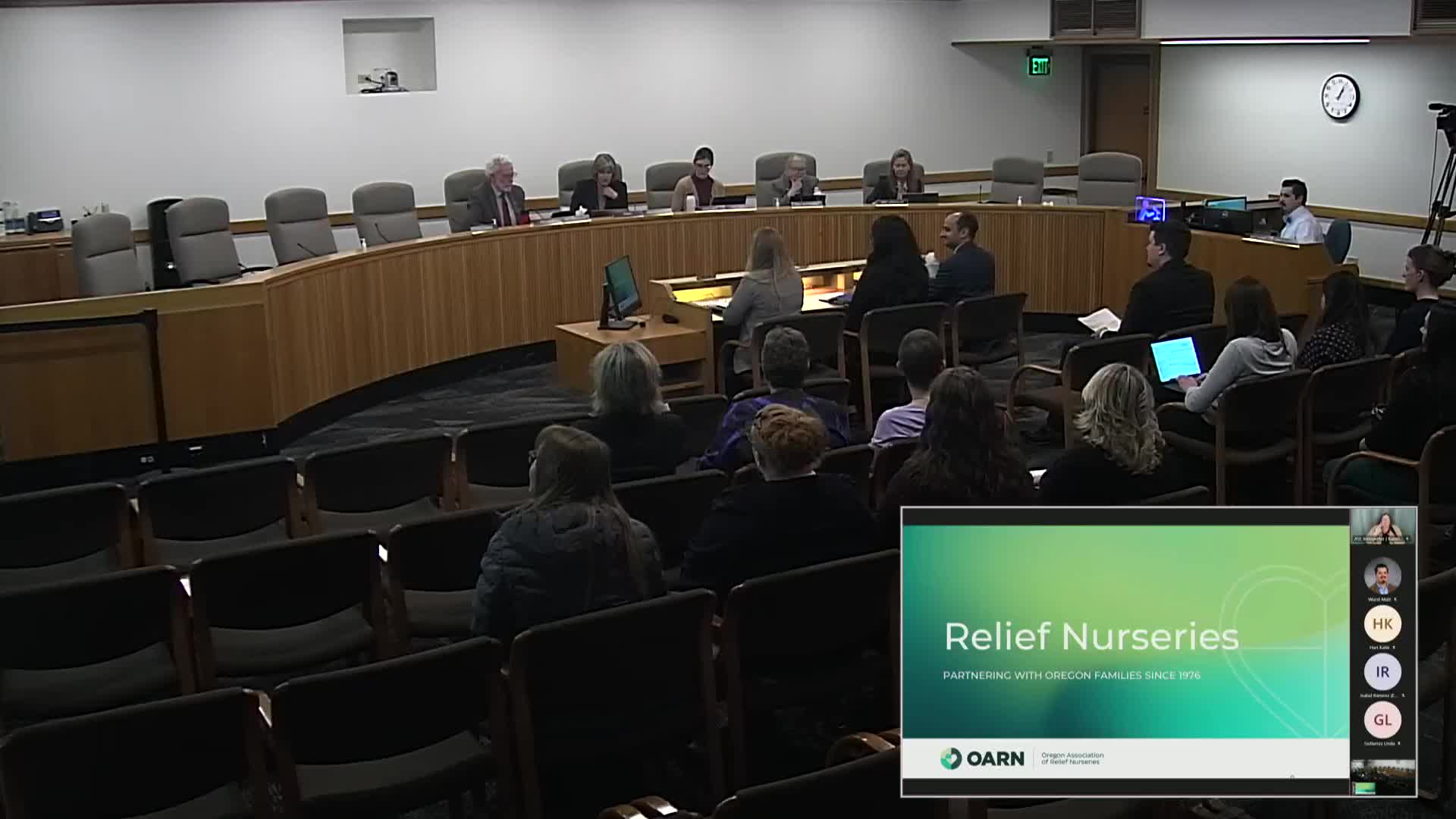
The Senate Committee on Early Childhood and Behavioral Health on March 6 held an informational hearing on relief nurseries, nonprofit programs that serve children birth through age 5 with therapeutic early childhood classrooms, outreach and respite care, home visiting and parent education.
Rae Ann Butler, executive director of Baker Relief Nursery in Baker City, told the panel Oregon’s 38 relief nurseries provide wraparound child development and parental support services for more than 2,300 children and families. “This specific approach gives children a more positive experience and hope for a better future,” Butler said. She described services used to prevent abuse, strengthen families and reduce foster-care placement.
Parent Araceli Lopez, who testified about her family’s experience with Family Building Blocks, described developmental screenings, home visiting and mental-health referrals she received after the birth of her son. “Dropping them off knowing that they are safe and well cared for gives me the sense of tranquility,” Lopez said of the relief nursery classroom environment, adding that the program allowed her time to manage appointments and errands and helped her become parent-leadership council chair.
Dr. Sami Al Adrobo, representing the Old Mill Center for Children and Families board, asked the committee to fund a request for $4,900,000 above the governor’s recommended budget to expand services to about 300 children currently on waiting lists. “Your decision to encourage that investment of $4,900,000 will allow them to get that help as soon as possible,” he said, and cited an Echo Northwest analysis the witnesses referenced that estimates a $2–$4 return for each dollar invested through improved educational and public-cost outcomes.
Evan Porter, executive director of Coastal Families Relief Nursery in Coos Bay, said the first relief nursery began in Eugene in 1976 and the network now includes 16 nonprofit operators across 38 sites; Coastal Families opened in 2023. Porter said communities often privately raise significant start‑up funding — he cited about $300,000 in local fundraising required to open a new relief nursery site — and that state dollars typically leverage at least a 25% community match.
Committee members asked about rural access and program models. Witnesses described variability across sites — single‑classroom rural nurseries may run infant classes one day and toddler classes on other days, while larger sites run multiple simultaneous classrooms — and emphasized trauma‑informed approaches and individualized family supports.
The committee did not take a vote; the hearing was informational and closed without formal action.