Get Full Government Meeting Transcripts, Videos, & Alerts Forever!
Get email alerts on the Seismic Risk Mitigation topic
No spam. Unsubscribe anytime.
Committee hears industry concerns over expanding seismic risk mitigation fund
Summary
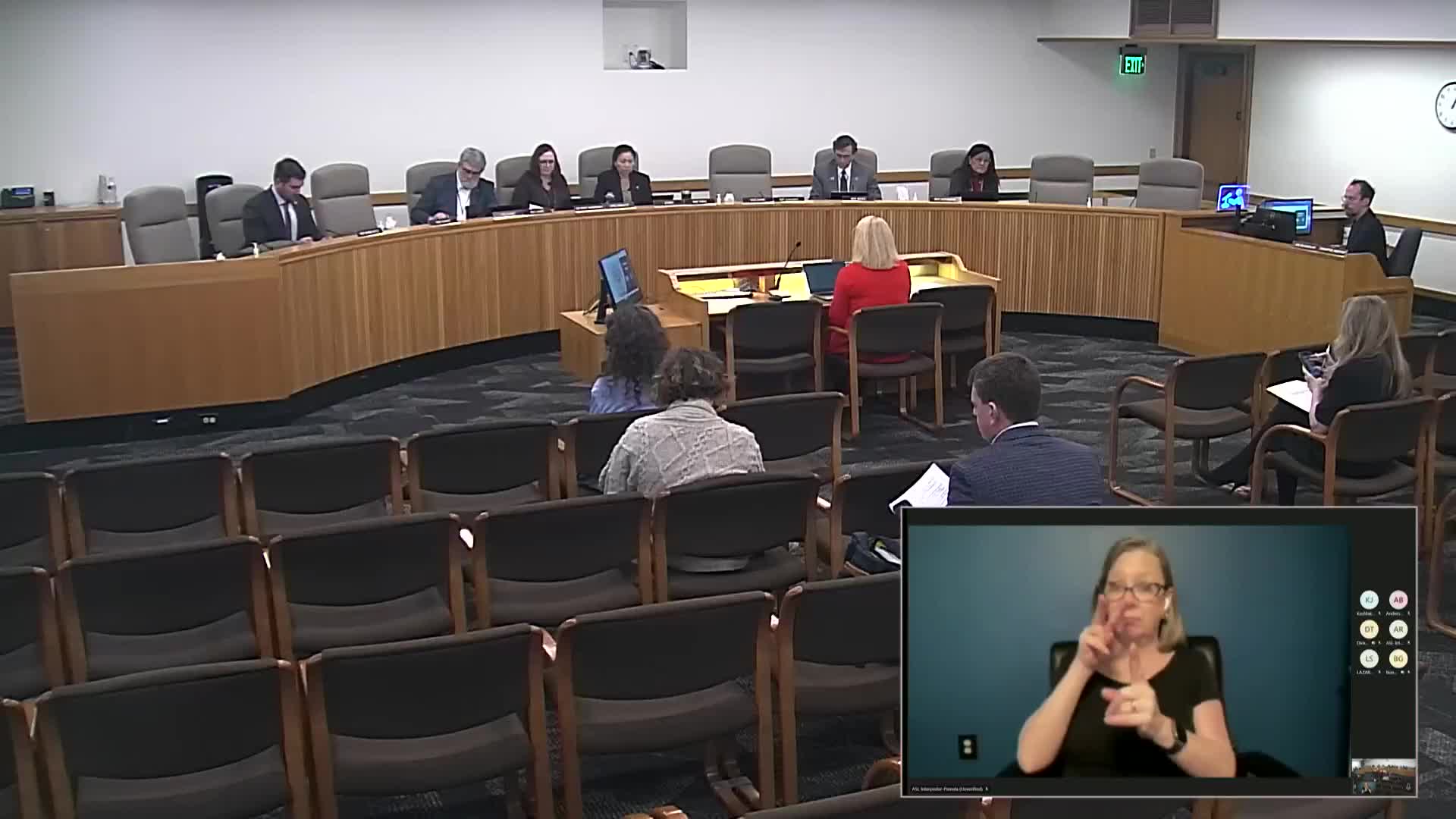
Chair Tran opened a public hearing on House Bill 2,151 on March 6, 2025, to expand the seismic risk mitigation fund for broader disaster-preparedness measures including earthquake response and evacuation planning.
Chair Tran opened a public hearing on House Bill 2,151 on March 6, 2025, describing the bill as a proposal to expand the seismic risk mitigation fund to help communities prepare for a major earthquake, including emergency response and evacuation planning.
The bill matters because the fees that created the fund after 2022’s SB 1567 were negotiated with fuel terminal operators and, industry representatives said, were intended to offset terminal mitigation costs rather than broader disaster-preparedness spending.
Kelsey Wilson, representing the Western States Petroleum Association, told the committee she opposed HB 2,151. "These fees were not intended to serve as a broader funding mechanism beyond their agreed upon scope," Wilson said, arguing that expanding allowable uses would undermine the original intent of Senate Bill 1567 and could require a new stakeholder reassessment. Sharla Moffat, senior policy director for Oregon Business and Industry, also pressed the point that the bill does not create new revenue and that existing terminal fees are substantial; she cited the program fee schedule in Oregon Administrative Rules and summarized the fees as a seismic vulnerability submittal fee of $39,000, a risk mitigation implementation plan submittal fee of $36,000, an initial annual compliance fee of $23,000 and a potential reassessed annual fee "up to $50,000," plus a $5,000 fee for plan modifications.
Svetlana Lazarev of the Oregon Department of Environmental Quality told the committee the facility fees are used to administer the program. "The fees that facilities pay are to run the program," Lazarev said, adding that any federal grants or other gifts to the fund would be used "to defray some of the costs that facilities encounter." She also corrected a misunderstanding in testimony: the second-year annual fee is not automatically $50,000; it is reassessed annually and "may go up or it may go down depending on how much is needed to administer the program." Lazarev told members there is currently no money in the non-administrative portion of the fund available to distribute for mitigation or community uses.
Representative Scarlatos asked whether diverting fund money to other purposes would prevent facility fees from falling; Lazarev replied the program does not plan to divert facility fees from administration, and if earlier years charged more than needed, subsequent annual fees could be reduced. Committee members asked DEQ for fiscal details on actual administrative costs; DEQ staff said those figures would be provided by the agency and recommended as a follow-up.
No committee vote or formal action was taken on HB 2,151 during the hearing; the committee closed the public hearing and moved on to other bills.
Ending: The committee closed the hearing on HB 2,151 and opened a public hearing on HB 2,949 later in the same session.