Get Full Government Meeting Transcripts, Videos, & Alerts Forever!
Get email alerts on the Public Broadcasting Emergency Coverage topic
No spam. Unsubscribe anytime.
OPB tells Ways and Means panel state funding helps maintain emergency broadcast network and statewide journalism
Summary
OPB President and CEO Rachel Smolkin described OPB’s role as a primary entry point for the emergency alert system and urged continued DAS funding of $500,000 per biennium to sustain statewide readiness and journalism.
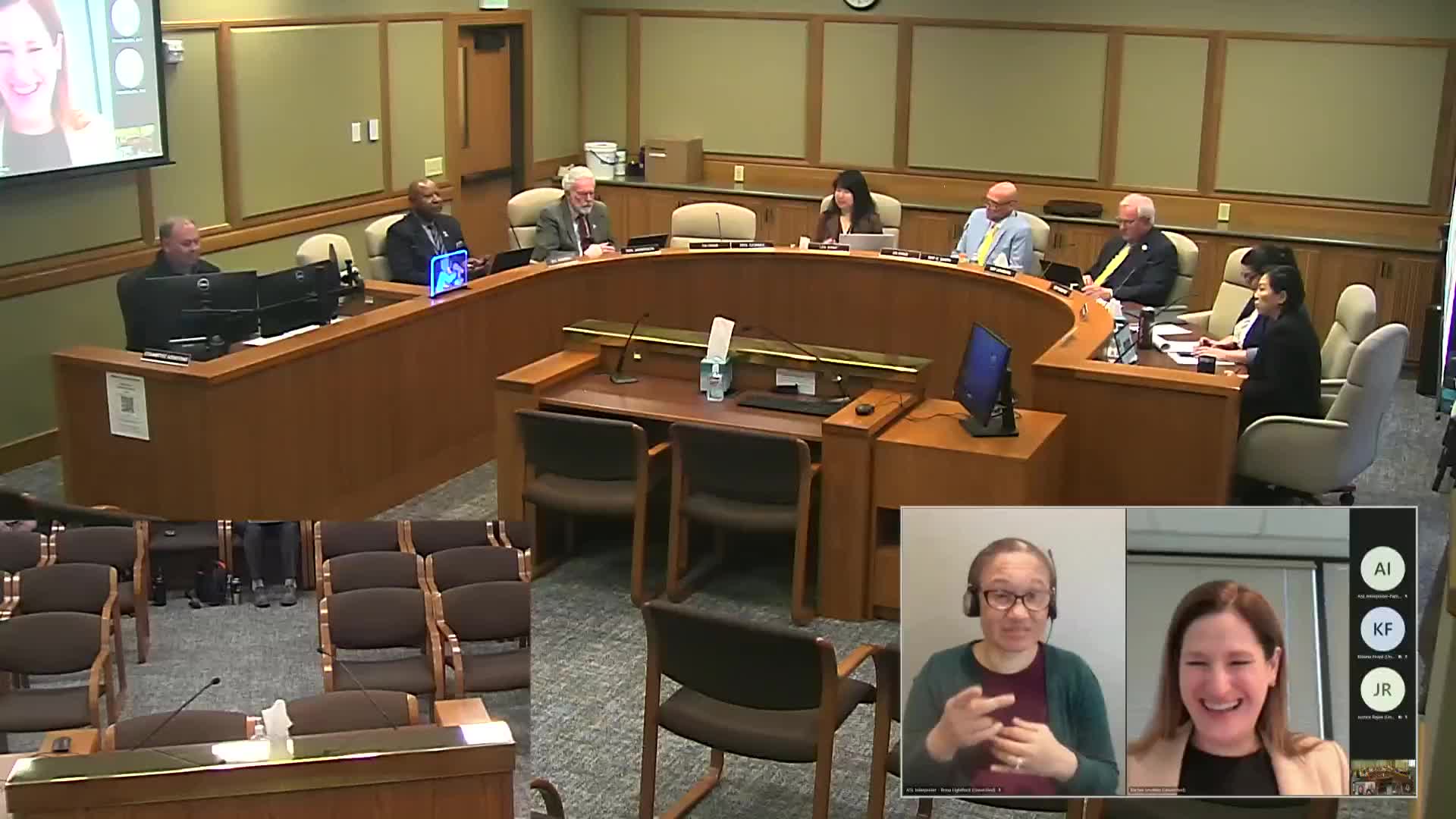
Rachel Smolkin, president and CEO of Oregon Public Broadcasting, told the Joint Committee on Ways and Means Subcommittee on General Government that state funding is critical to maintaining OPB’s role in the emergency alert system and to supporting its statewide journalism.
Smolkin, who said she has led OPB since September, described OPB as a member-supported public broadcaster with 17 full-service radio stations, five full-service television stations and additional translators and digital services that together reach audiences across all Oregon counties. She said the $500,000 per biennium the organization has received in recent cycles supports OPB’s role as a primary entry point station for the Emergency Alert System and helps maintain the network’s readiness and infrastructure.
“Funding from the state of Oregon is critical to OPB's success. Primarily, this funding helps to bolster OPB's central role in the statewide emergency broadcast system,” Smolkin said. She told the committee OPB works closely with the Office of Emergency Management and other responders and that state-provided funds support the organization’s ability to initiate and relay urgent alerts for wildfires, severe storms, earthquakes, tsunamis and AMBER alerts.
Smolkin also summarized OPB’s audience reach: roughly 800,000 monthly television viewers, more than 750,000 digital readers on opb.org, and about 700,000 radio listeners and audio-stream users, in addition to partnerships with other local newsrooms. She said OPB makes its reporting available free of charge and that federal funding uncertainty makes state support particularly important.
Committee members asked about geographic coverage and whether OPB participates in a competitive RFP process for the funding; Smolkin said OPB reaches every county through its network and partnerships. She added that the organization’s primary entry-point designation stems from the Federal Communications Commission and that, in recent cycles, the $500,000 per biennium has been awarded to OPB rather than through an RFP process.
The committee did not take immediate action on OPB’s request. Members thanked Smolkin and asked staff to note the testimony as they consider HB 5002.