Get Full Government Meeting Transcripts, Videos, & Alerts Forever!
Get email alerts on the Higher Education Fees topic
No spam. Unsubscribe anytime.
House approves bill letting Higher Education Coordinating Commission set application fees by rule
Summary
The Oregon House passed HB 3028 to allow the Higher Education Coordinating Commission to set fees by administrative rule to recover the cost of reviewing school degree-authorization applications; one lawmaker raised concern that the bill does not cap or make fees refundable.
The Oregon House on March 7 approved House Bill 3028, which lets the Higher Education Coordinating Commission set fees by administrative rule to recover costs for reviewing applications from schools that seek authorization to grant degrees.
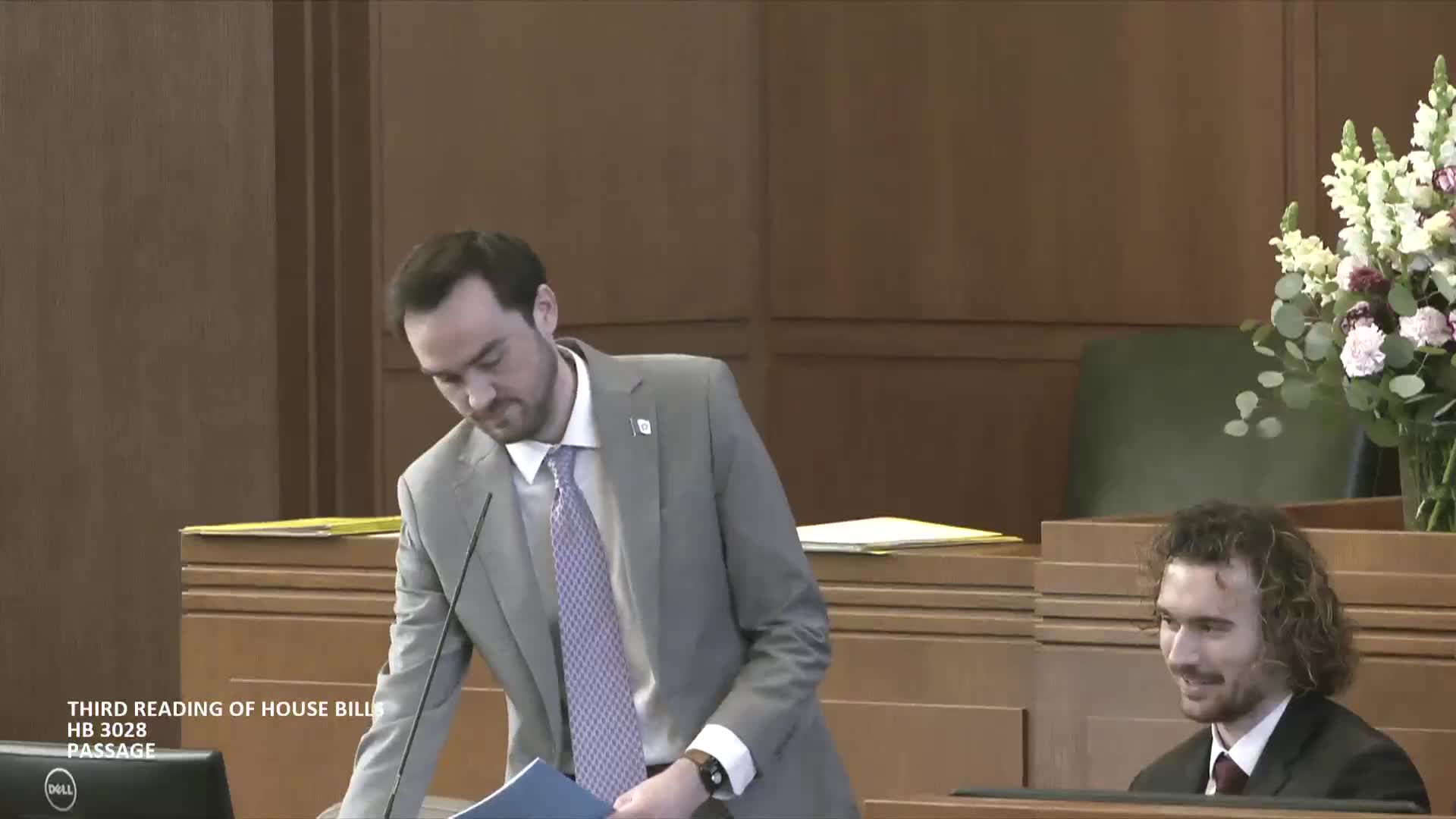
Supporters said the change offers the commission flexibility to adjust fees between legislative sessions while leaving ultimate legislative oversight intact. “HB 30 28 would allow the higher education coordinating commission to set fees by rule to pay the cost of reviewing a school's application for approval,” Representative Diego Muñoz said on the House floor.
The bill amends provisions cited in the transcript as R.S. 348.604, 348.606 and 348.607 by removing the statutory fee amounts and directing the commission to adopt rules imposing fees necessary to recover review costs. Muñoz said the commission is not seeking higher fees now but wants the ability to publish a fee schedule by rule so it can act when the Legislature is not in session.
Representative Mannix questioned the change, saying he was concerned the statute imposes no cap and that fees would be nonrefundable. “The fees that they will charge are not refundable, and I didn't find anything in this bill that capped the fees they may charge, which is very concerning to me,” Mannix said. He added that community colleges seeking authorization could face unexpected cost burdens.
No further debate followed. The clerk announced the measure had “received the constitutional majority” and was declared passed.
The bill passed the House by a voice vote and will proceed for the next steps required under House procedure.