Get Full Government Meeting Transcripts, Videos, & Alerts Forever!
Get email alerts on the Tuition And Fees topic
No spam. Unsubscribe anytime.
Bill would let regional university trustees set tuition for select partner programs; sponsors pitch international recruitment
Summary
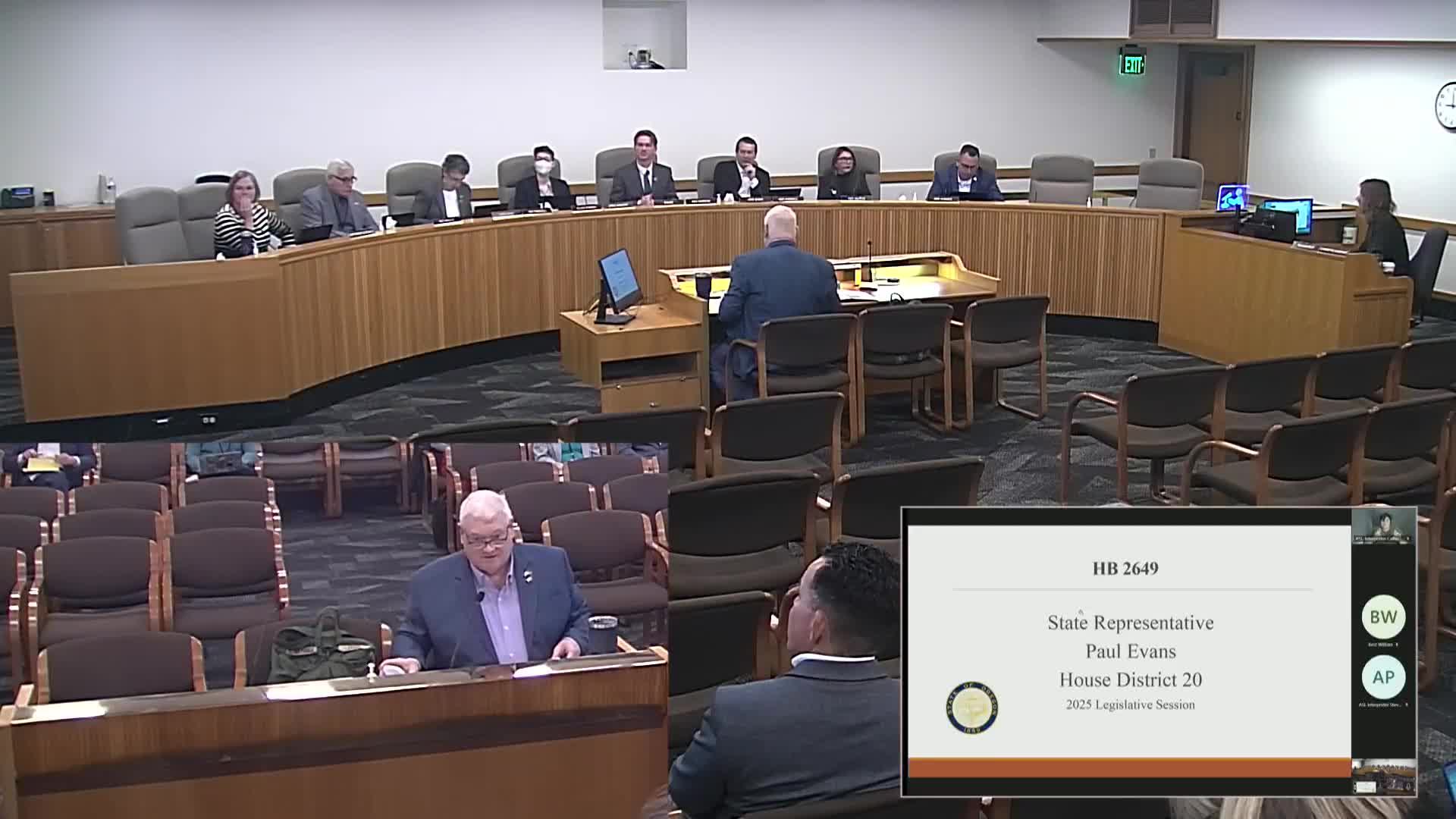
The House Committee on Higher Education and Workforce Development heard testimony on House Bill 2,649 on March 6, which would authorize the boards of trustees at Oregon’s regional public universities to set tuition and fees for certain partner programs intended to recruit international or out‑of‑state students.
The House Committee on Higher Education and Workforce Development heard testimony on House Bill 2,649 on March 6, which would authorize the boards of trustees at Oregon’s regional public universities to set tuition and fees for certain partner programs intended to recruit international or out‑of‑state students.
Representative Paul Evans, the bill sponsor, said the measure aims to provide regional universities — sometimes called "Trues" in testimony — with tools to craft partnerships (Evans described outreach to Taiwanese institutions and potential programs with Vietnam) and develop revenue streams that do not rely on Oregon taxpayers.
Evans said the original intent was to enable targeted programs (for example, exchange or cohort programs) to be offered at in‑state tuition rates for partner students, enabling up to a stated goal for some pilot cohorts. He said Legislative Counsel advised the cleanest statutory approach was to give boards of trustees the authority to set tuition and fees for those specific programs rather than enumerating each partnership in statute.
Committee members raised concerns about the bill’s drafting and consumer impacts. Representative Fingerhutta asked whether the bill’s language would make it easier for universities to raise tuition broadly; Evans replied the board authority would be subject to existing trustee oversight and a 5% cap referenced elsewhere in discussions. Representative McDonald and others asked how online/eCampus students and out‑of‑state recruits factor into revenue mixes; testimony noted the regional universities have had fewer international students historically and that targeted partnerships were intended as one option to increase enrollments.
Representative Raguelo and others said the bill text did not explicitly reference the partnership model described by the sponsor; Evans said Legislative Counsel suggested the trustee authority formulation. Members asked for refinements to ensure protections for students and clarity about when boards could alter tuition for specific cohorts or programs.
No committee vote was taken at the hearing; the bill remains at the public‑hearing stage.
Ending: The sponsor offered to work with committee members on language to narrow or target the authority, including specifying program types, caps or oversight mechanisms before the bill would advance.