Get Full Government Meeting Transcripts, Videos, & Alerts Forever!
Get email alerts on the Finance And Debt topic
No spam. Unsubscribe anytime.
ODOT details GARVEE sales, short‑term borrowing and tolling role for Interstate Bridge financing
Summary
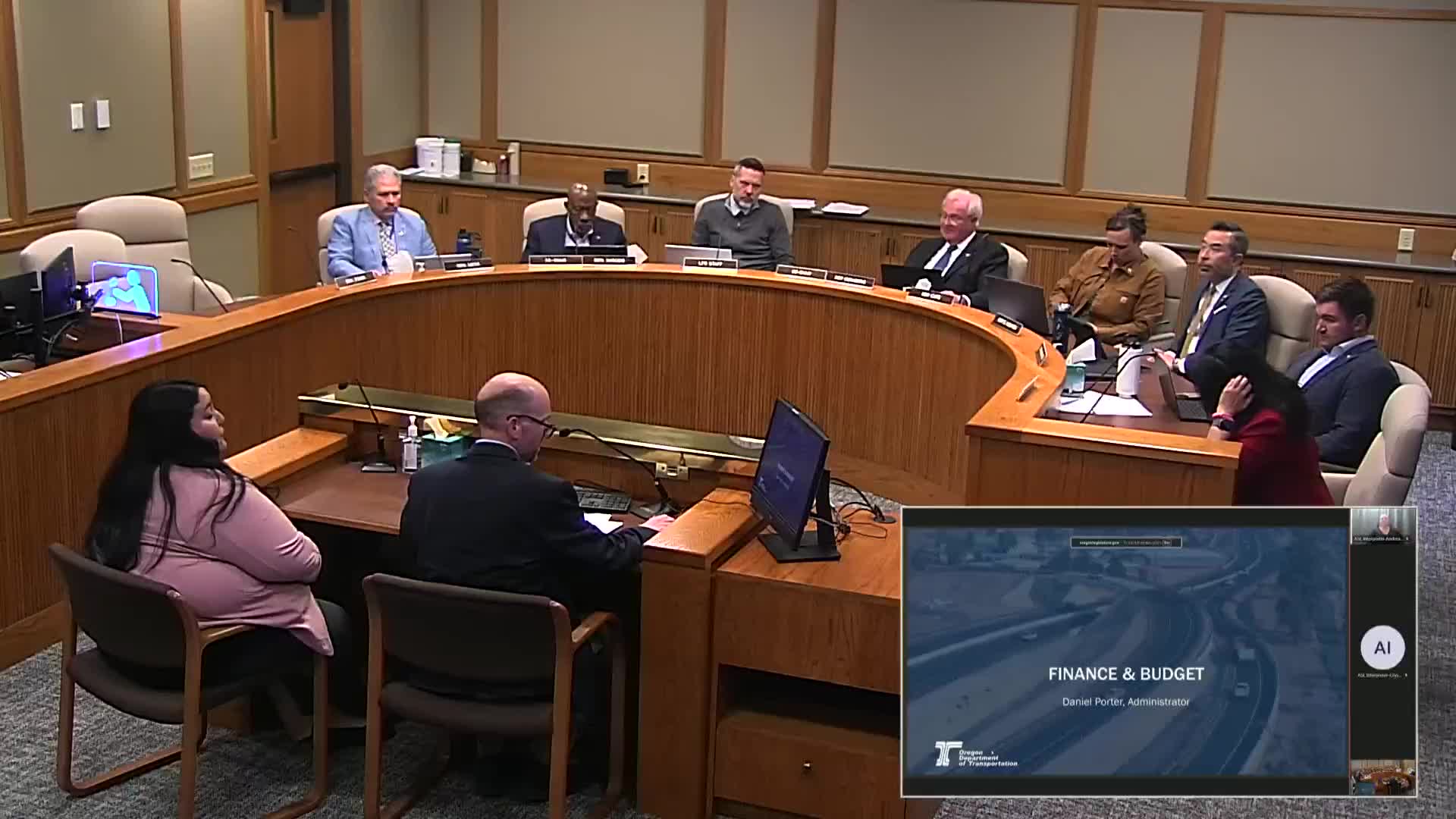
Daniel Porter, ODOT finance and budget division administrator, told the Economic Development Subcommittee of Ways and Means on March 5 that the agency operates two distinct credit structures and is planning both short‑term and long‑term debt strategies for major projects.
Daniel Porter, ODOT finance and budget division administrator, told the Economic Development Subcommittee of Ways and Means on March 5 that the agency operates two distinct credit structures and is planning both short‑term and long‑term debt strategies for major projects.
Porter said one credit structure is pledged to state highway funds (highway user tax bonds) and carries strong ratings tied to the state. The second structure, GARVEE (Grant Anticipation Revenue Vehicle) bonds, is repaid with anticipated federal reimbursements. Porter told the committee ODOT sold about $257 million in GARVEE bonds last year and expects additional GARVEE borrowing in future biennia (Porter identified a planning figure around $377 million over upcoming biennia, subject to market and treasury timing).
Porter described a short‑term borrowing approach the agency used for the Abernethy Bridge work: short‑term notes provide cash now for large near‑term expenditures and are expected to be taken out with long‑term bond sales later, at which point the short term will be retired. The department described a similar use of short‑term debt for Rose Quarter and said the same technique could be used for the Interstate Bridge replacement project.
Porter noted the GARVEE rating was recently reaffirmed (Moody—s review) and said treasury manages bond timing and issuance; ODOT recommends amounts and timing. Committee members asked about the sensitivity of credit ratings to federal funding uncertainty. Porter said the most recent review did not change ODOT—s rating and that treasury handles sale timing decisions.
On Interstate Bridge project financing, Porter and staff explained multiple potential revenue sources and structures. The committee heard that toll revenue bonds, TIFIA loans, or other toll revenue vehicles could form part of the financing package; ODOT—s Office of Innovation and tolling teams are expected to coordinate with Washington State on setting toll rates and collection structures because Washington will be the toll authority for its side of the project while Oregon must establish administration and collection for its portion.
Responding to committee questions, Porter and other ODOT staff provided summary numbers for existing debt portfolios and the agency—s average interest rate on outstanding debt (about 3.8% noted in committee discussion) and said additional details would be supplied in follow‑up materials. Porter said POP 90 in the governor—s budget would include an $84 million debt service figure tied to Abernethy project borrowing as part of the governor—s package.
Ending: The committee asked ODOT to provide follow‑up materials including: (1) the most recent credit‑rating reports for GARVEE and highway user tax bonds, (2) details on planned GARVEE issuance and timing, and (3) a briefing on how toll revenues would be administered and transferred between Washington and Oregon for the Interstate Bridge project.