Get Full Government Meeting Transcripts, Videos, & Alerts Forever!
Get email alerts on the Hb2614 Consorita Sunset Governance topic
No spam. Unsubscribe anytime.
Lawmakers, DAs and defense groups clash over consortia sunset, OPDC independence during HB 2614 hearing
Summary
Testimony at a House Judiciary public hearing on HB 2614 divided over whether to extend or eliminate the sunset on public-defense consortia and whether the Oregon Public Defense Commission should retain independence from the governor; district attorneys proposed short-term fixes to the unrepresented crisis.
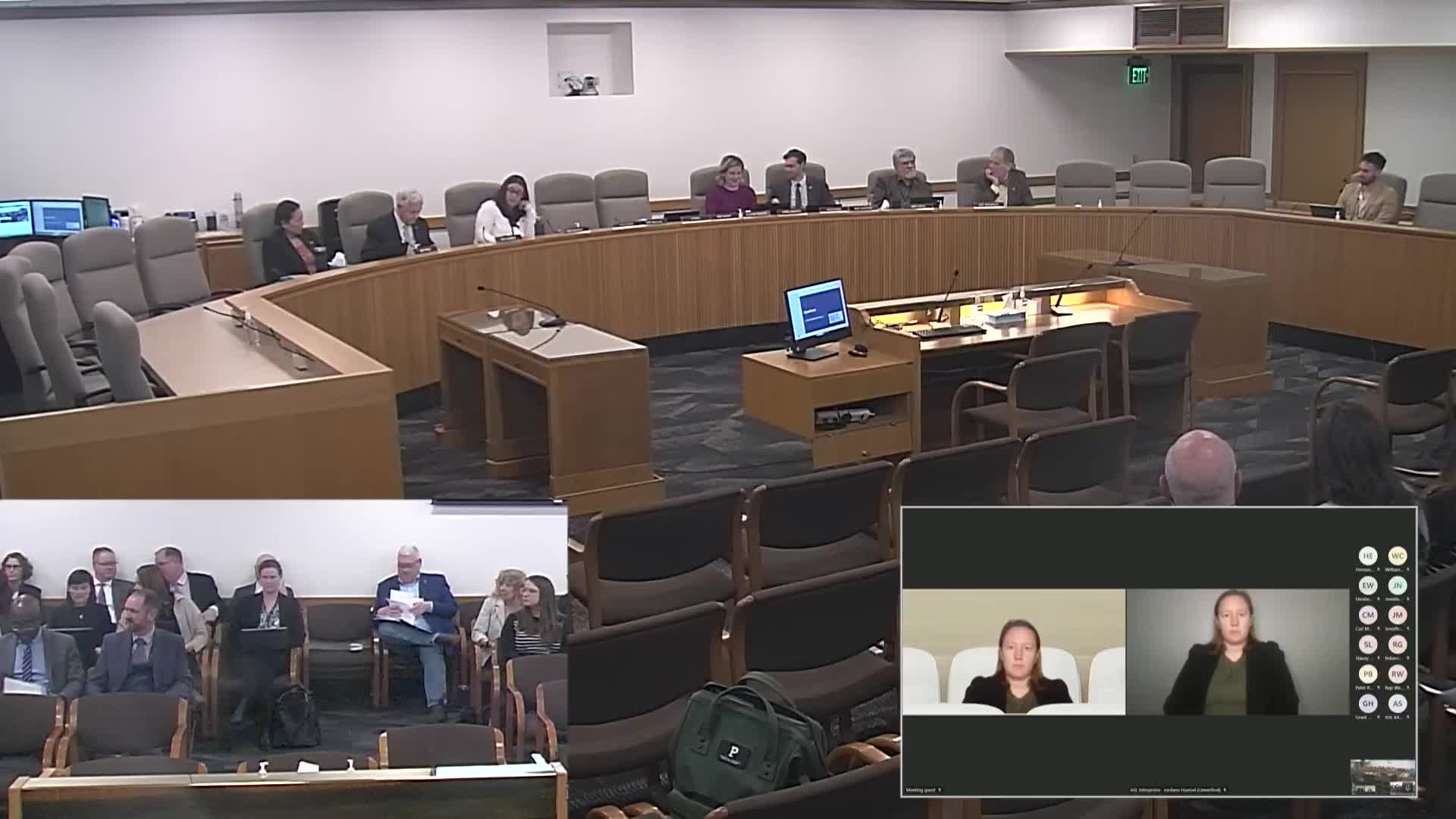
The House Committee on Judiciary opened public testimony on HB 2614 on March 5, confronting sharply different views over whether the legislature should extend or eliminate a scheduled sunset of public-defense consortia, and whether the Oregon Public Defense Commission should remain independent of executive control.
Representative Jason Prop (R-Bend) and several other legislators said the immediate priority is ensuring representation for defendants and stabilizing the workforce; some asked for clearer, shorter-term steps. "Our task is to figure out what our long term vision is for public defense and what the short term solutions are for the crisis that we're in," Prop told the committee.
Why it matters: HB 2614 would shape which provider models the state supports going forward. Proponents of consortia and private firms say those models are cost-effective and deliverable in rural areas; opponents and some reform advocates argue the state must build more state-controlled trial-division capacity and preserve an independent commission to protect zealous representation.
Positions presented to the committee
- Support for extending or eliminating the consortia sunset: Several legislators and nonprofit and private-firm witnesses urged the committee to remove or lengthen the sunset date that would phase out consortium-style contracts. Senator Janine Solman urged eliminating the sunset or extending it longer than the proposed 2029 extension, arguing consortia are cost-effective and especially important in rural counties.
- DAs offer day-1 and time-limited fixes: Multnomah County District Attorney Nathan Vasquez and Washington County District Attorney Kevin Barton presented a six-part proposal intended to provide immediate relief in crisis counties and to create time-limited authorities for up to five years. Their recommendations included permitting experienced defense attorneys who have capacity to take more cases and paying them proportionally; conditioning payment on hitting minimum MAC utilization (for example, a 95% rolling-average threshold); providing presiding judges authority to order appointments or use market mechanisms such as reverse auctions when counsel is unavailable; funding process efficiencies such as paperless discovery; and sunseting the emergency measures after a defined period.
Barton described the proposals as collaborative suggestions shaped with judges and defense attorneys and said the aim was to produce measurable results "on day 1." "Complicated crises do not require complicated solutions," he said.
- Defense providers and consortia oppose short sunsets: Witnesses from consortium firms, nonprofit public defenders and individual consortia attorneys testified that short sunsets or elimination of consortia would destabilize existing services, especially in rural counties. Elizabeth Muse, an attorney with the Marion County Juvenile Advocacy Collective, said she joined a consortium because it provided mentorship and predictable contract administration; she warned a short sunset would push experienced attorneys into private practice.
- Nonprofit providers urge caseload protections and fair pay: Caitlin Plummer, executive director of Public Defender Services of Lane County, opposed removing national and regional caseload standards and removing statutory language calling for compensation commensurate with the work. "A manageable workload is essential to a stable workforce," she said, noting Lane County avoided a crisis this year after targeted legislative investments and changes in local charging practices.
- OPDC chair opposes stripping independence: Jennifer Nash, chair of the Oregon Public Defense Commission, testified in her official capacity against amendments that would make permanent recent temporary changes to the commission's independence and that would allow the governor to remove commission members or the executive director without cause. Nash cited the American Bar Association's principle that public defender systems should be independent of political influence and warned other states' nonindependent systems have been found unconstitutional.
Committee proceedings and next steps
The hearing included pro and con testimony and questions from committee members. No votes were taken on the bill during the session; the committee carried over the public hearing to the next day's agenda for additional testimony and discussion.
Ending
The committee will continue the HB 2614 public hearing on the following day to hear additional witnesses and the governor's office, and to consider amendments and possible committee work sessions.