Get Full Government Meeting Transcripts, Videos, & Alerts Forever!
Get email alerts on the Maintenance And Bridges topic
No spam. Unsubscribe anytime.
ODOT says staffing cuts would slow snow response, risk more load‑restricted bridges
Summary
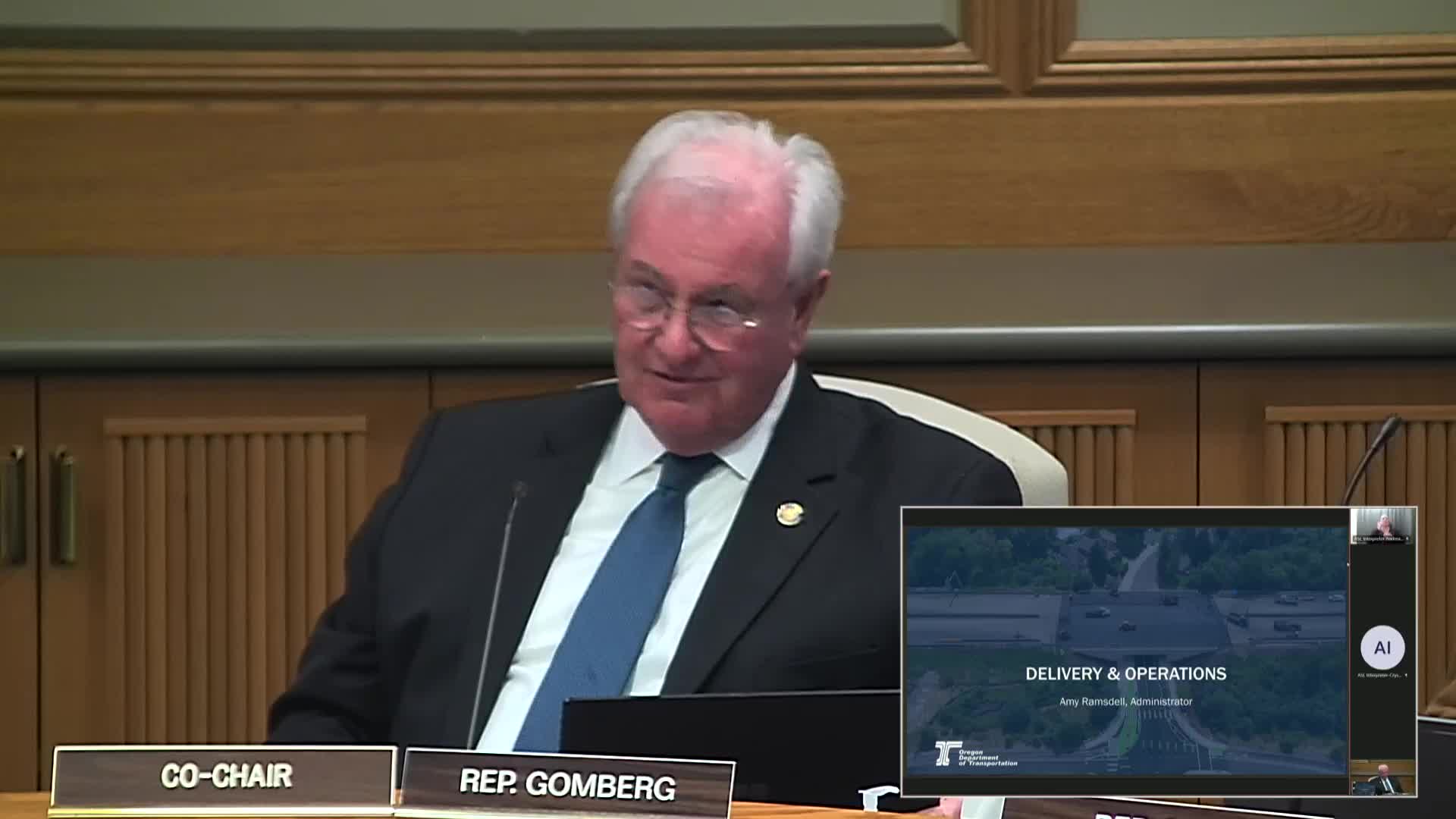
On March 5 at an information hearing of the Economic Development Subcommittee of Ways and Means, Amy Ramsdell, delivery and operations division administrator for the Oregon Department of Transportation, told legislators that proposed budget reductions would cut hundreds of positions that keep roads and bridges in service.
On March 5 at an information hearing of the Economic Development Subcommittee of Ways and Means, Amy Ramsdell, delivery and operations division administrator for the Oregon Department of Transportation, told legislators that proposed budget reductions would cut hundreds of positions that keep roads and bridges in service.
Ramsdell said the department currently replaces two to three bridges per year and is on an approximate 900‑year replacement cycle; the governor—s budget would move the state closer to a 500‑year cycle. That work, she said, supports freight and other users and prevents structures from moving into a "distressed" category that could lead to load restrictions.
The distinction matters because load restrictions can prevent vehicles, including freight, from crossing bridges until repairs or replacements occur. Ramsdell said maintaining bridges in a state of good repair is the department—s current priority but that replacement funding is needed to avoid more bridges slipping into distress.
ODOT outlined three related policy option packages (POPs) to the committee: a maintenance restoration POP that would restore 414 positions statewide, a project delivery restoration POP to preserve 371 positions tied to the capital program, and several smaller requests including one FTE to support a housing initiative permit coordination role. Ramsdell said the 414 positions include both headquarters staff (fleet mechanics, sign shop, material storage) and frontline regional maintenance workers who run snowplows and emergency responses.
The department told the committee that if the restoration POP is not funded it would reduce staffing across both Salem headquarters and regional offices and would operationally close 17 of ODOT—s 88 maintenance locations identified in the staffing plan. Ramsdell said those closures would reduce the speed and coverage of snow and incident response, and could cause some roads not to be plowed in a timely manner, or at all, in affected areas.
Committee members pressed Ramsdell for specifics. Chair Gomberg asked what the 900‑year replacement cycle meant in practice; Ramsdell answered that the agency—s investment strategy seeks to keep bridges serviceable and prevent them from becoming distressed but that without replacement funding the share of distressed bridges will grow. Senator Starr and others requested a state bridge report and cross‑state comparisons; Ramsdell said she would provide the department—s comparative bridge data.
The department also described how maintenance funds are allocated across preservation (paving, bridge preservation, signal replacement), modernization (I‑205 funding among other items) and special programs (including ADA settlement funds and Urban Mobility Office projects). Ramsdell said ADA curb ramp work under a settlement is being delivered through a mix of contractor strategies — adding work to existing projects, using ADA‑specific contracts, and in at least one region a large design‑build RFP to speed delivery — and that communities were selected first by where right‑of‑way and other constraints allowed fastest delivery.
Senators and representatives repeatedly returned to questions about whether ODOT was maximizing use of existing fleet and equipment versus surplusing usable machines; Ramsdell said the department seeks to optimize use and resale value and offered to supply the committee with guidance on fleet retention and surplus policy.
Ending: Legislators asked for follow‑up materials, including (1) ODOT—s bridge condition report and interstate comparisons, (2) details on which regional maintenance locations would be closed under the reduction scenario, (3) fleet retention and surplus policy documents, and (4) the department—s breakdown showing how the 414 positions are distributed between headquarters and regions. Ramsdell and other ODOT staff committed to provide those materials to the committee.