Get Full Government Meeting Transcripts, Videos, & Alerts Forever!
Get email alerts on the Public Defense Capacity topic
No spam. Unsubscribe anytime.
OPDC: Six counties account for bulk of Oregonunrepresented cases; commission proposes contract rule changes and staffing surge
Summary
The Oregon Public Defense Commission told the House Judiciary Committee that six counties account for most unrepresented defendants and outlined proposed contract-policy changes and a budget request to add trial and hourly lawyers to reduce that gap.
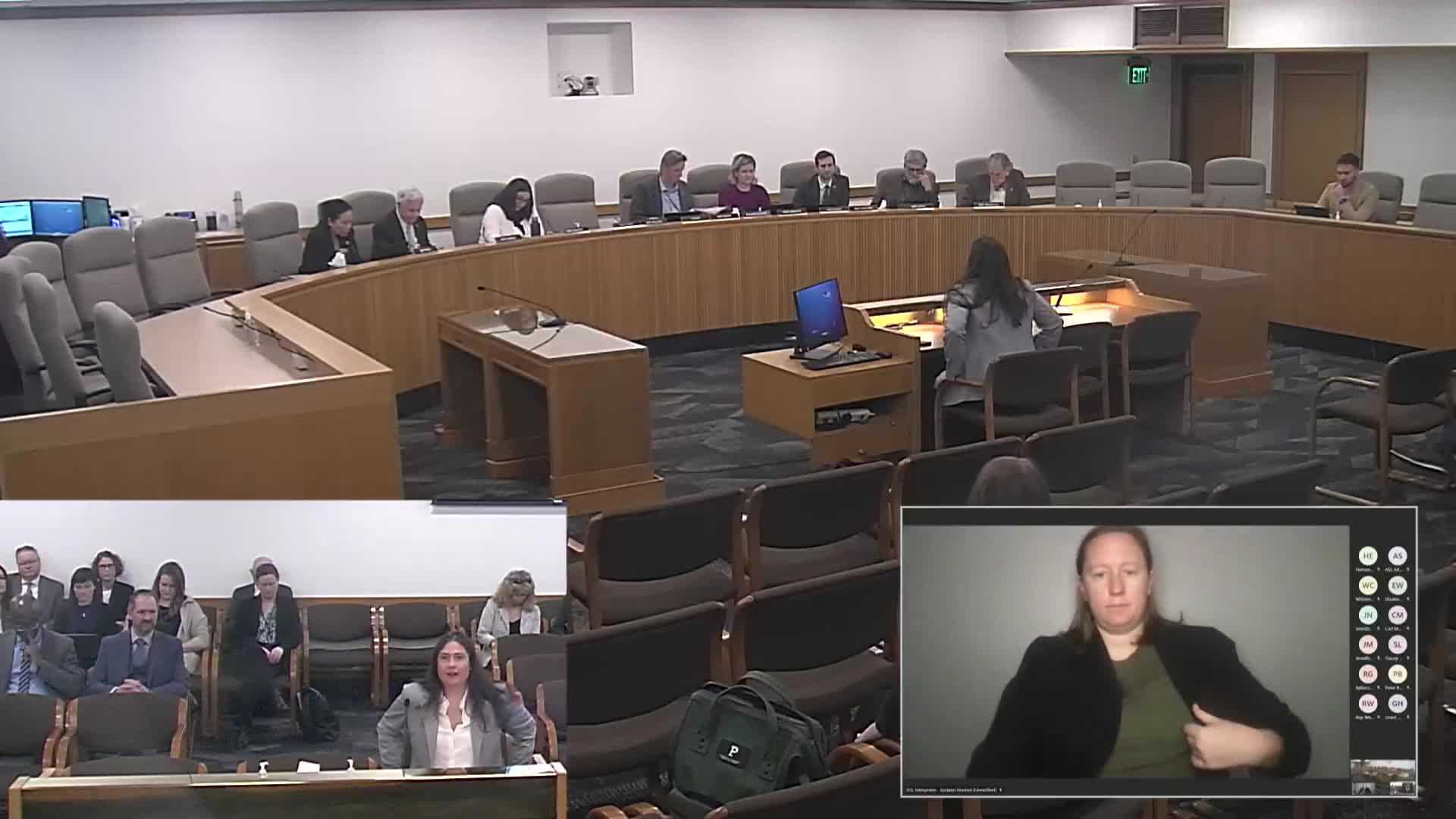
Jessica Campe, executive director of the Oregon Public Defense Commission, told the House Committee on Judiciary on March 5 that six Oregon counties account for the majority of defendants who appear in court without appointed counsel and set out near-term contract and staffing changes the agency is pursuing to reduce the number of unrepresented people.
Campe said those six counties account for about 95% of all unrepresented cases and about 85% of unrepresented in-custody cases. She described county-by-county drivers that include lawyer deserts, high turnover, difficulties accessing clients and county-specific court case-assignment processes.
The figures show where to focus limited resources, Campe said. "We have seen that the unrepresented population in Oregon really does exist primarily in six counties," she told the committee. "Armed with that knowledge, we have been taking a closer look at what is happening in those six counties to be able to target solutions for those communities."
Why it matters: People charged with crimes who lack lawyers can face detention, plea pressure and delayed resolution; the commission says its mix of data-driven contracting, a trial division and temporary hourly pay programs are intended to prevent people from being released for lack of counsel under a Ninth Circuit precedent the commission described to the committee.
What the commission reported
- Counties identified: Multnomah, Jackson, Marion, Washington, Douglas and Coos. Campe said those six counties account for the overwhelming share of unrepresented defendants statewide.
- Multnomah County: Campe said high hiring and departure rates among contracted lawyers are contributing to the problem, and cited that since July 2023 contracted providers in the county had hired 33 lawyers and lost 34. The commission has used temporary increased hourly rates and appointments from its trial division to cover cases there.
- Jackson and Coos counties: Campe described them as "lawyer deserts" with recruitment and retention challenges. In response, OPDC has pursued locality-specific measures such as stationing trial-division lawyers in Coos and supporting specialty dockets in Jackson.
- Marion, Washington and Douglas counties: common themes include high turnover and access-to-client problems; DouglasCounty's court practice of placing all criminal matters on the unrepresented list until a provider removes them was identified as a workflow driver.
How cases get assigned and what the commission is tracking
Campe said the commission contracts with roughly 64 entities and assigns unrepresented cases via four full-time assignment coordinators who prioritize tier-1 matters. She told the committee that assignment coordinators have assigned about 5,500 cases off the unrepresented list. The commissiontrial division has taken appointments on hundreds of cases and is providing centralized timekeeping and outcome tracking.
The commission cited the "Becht"-style Ninth Circuit ruling (described in testimony as a Ninth Circuit decision requiring release from custody when a defendant lacks counsel after seven days) as a particular driver of assignment prioritization; trial-division lawyers have been used increasingly to accept appointments on those high-priority cases.
Policy and budget changes under consideration
Campe described several proposed contract-policy changes currently under development and a governorrequested budget that would add staff:
- Staffing and budget: the governor's request would add 42 lawyers to the commission's trial division and 40 more hourly lawyers, plus support staff such as paralegals, social workers and investigators; the request would also extend the temporary hourly program (THIP) to December 2025.
- Partial waiting credit: change how contractors receive MAC (maximum attorney caseload) credit when a lawyer withdraws, assigning partial case weight (50%, 75% or 90%) based on case seriousness and timing rather than awarding full credit for later withdrawals.
- Warrant removals: limit required case stay to 90 days in many warrant-status cases and assign partial credit based on the warrant date to free capacity on those dockets.
- Co-counsel guidance: require co-counsel on the most serious crimes (murder, life-sentence and juvenile waiver cases), require agency approval for optional co-counsel and set guidelines for when co-counsel is appropriate.
- Subsequent-attorney credit: if a second attorney from the same law firm is appointed, the second attorney would receive 50% of the case weight to discourage double-counting of MAC credit.
- Contract compliance and corrective action: clarify caseload expectations; create notice-and-performance-plan steps for breaches; permit corrective actions including funding withholding, reductions in FTE or attorney qualification level, required mentoring or contract termination.
- Reduced caseload for first-year lawyers: allow newly practicing attorneys to enter a reduced-caseload program (proposed example: 50 misdemeanors) while they complete training and supervision.
- Vacancy funding: reduce immediate vacancy funding to 50% for open positions and limit a contractor's exclusive position authority to 60 days to allow the commission to redeploy resources.
"Partial waiting is limited now and really only applies within the first 30 days," Campe told the committee. "We're looking at a policy that would do partial waiting based on the crime seriousness because it takes longer to represent somebody on a more serious case."
Questions from legislators
Committee members asked about reasons for turnover, differences among provider types, MAC utilization rates and whether the trial division was being recruited from within nonprofit offices. Campe said contractors generally report hiring and retention problems and that two-thirds of lawyers who leave contracted positions leave public defense entirely; she said OPDC lacks exit-interview data for independent contractors but could seek that information.
Campe said OPDC is publishing interactive dashboard data showing contract-level staffing, MAC utilization and caseload metrics and that trial-division data show roughly 45% of trial-division outcomes result in non-incarceration resolutions when measured across probation, dismissal and sentence-discharge outcomes.
What the commission did not decide
No formal actions or votes occurred during the informational hearing. Campe and the committee discussed timelines for policy drafting, and Campe said OPDC would brief commissioners on draft policy changes in March and hoped to move to adoption in April.
Ending
The committee carried the informational hearing over to a continued session; OPDC said policy drafts and additional data would be provided to stakeholders and the commission for review.