Get Full Government Meeting Transcripts, Videos, & Alerts Forever!
Get email alerts on the Housing And Homelessness topic
No spam. Unsubscribe anytime.
Oregon committee hears bill to fund senior-focused affordable housing and home modifications
Summary
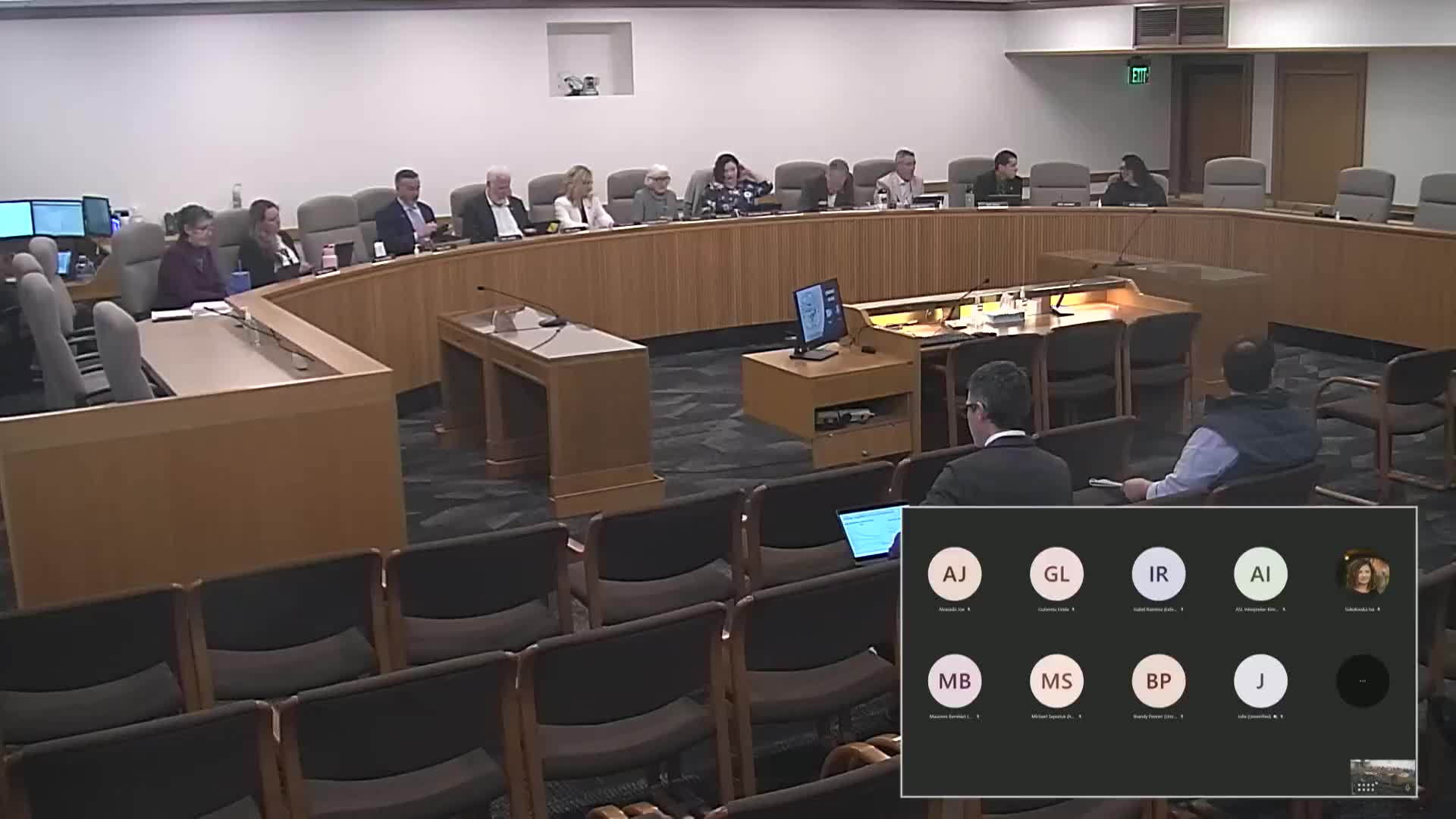
SALEM, Ore. — Lawmakers and housing providers on March 5 heard testimony on House Bill 3,589, a proposal to create a senior housing development initiative at Oregon Housing and Community Services (OHCS) and to fund home accessibility modifications through the state’s Healthy Homes program.
SALEM, Ore. — Lawmakers and housing providers on March 5 heard testimony on House Bill 3,589, a proposal to create a senior housing development initiative at Oregon Housing and Community Services (OHCS) and to fund home accessibility modifications through the state’s Healthy Homes program.
The bill, summarized to the committee by staffer Eva, “establishes a senior housing development initiative and directs the housing and community services department to administer it,” and includes a dash-1 amendment that alters how funds would be diverted from the property tax deferral revolving account, eliminates a dedicated line for disability modifications in this bill, and redirects housing development dollars to OHCS.
Supporters told the House Committee on Housing and Homelessness they face growing demand for one-bedroom and studio units and for housing that meets accessibility needs. DJ Vincent, pastor and director of Church at the Park, told the committee his shelter work is seeing a surge of people 55 and older and said, “50% of the folks we served at that adult shelter are over 55 years of age.” He said his organization sheltered 502 people in 2023 and 761 in 2024 and that 370 people over 55 remain on the local wait list in Marion County.
Yoni Khan, advocacy director for Northwest Pilot Project, said the senior population being served is becoming older and more medically and socially acute. Khan described the client profile his group serves: “72 percent of our clients have a chronic physical disability upon entry to our programs,” and many are at extremely low incomes and have behavioral-health needs that complicate housing retention.
Alan Delatorre, a policy advocate and housing researcher, and others emphasized statewide demographic shifts and rising housing cost burdens among older adults. Delatorre said Oregon’s oldest cohorts are growing and that accessible, one-bedroom units are in short supply. Kristen Milligan, CEO of LeadingAge Oregon, and Stephanie Hooper of Age Plus said wait lists for affordable senior units are years long and that accessible design features (wide doorways, grab bars, walk-in showers, elevators) are needed to prevent falls and costly medical care.
Sponsor Representative Pam Marsh outlined the bill’s funding approach: the proposal would allocate roughly $23.5 million to OHCS for development incentives, $500,000 for technical assistance, and propose $3.0 million for accessibility modifications via the Healthy Homes program (the latter amount is allocated via separate legislation, House Bill 3506, according to testimony). Marsh described using a transfer of reserve funds from the Oregon property tax deferral for disabled and senior homeowners program as the source; testimony noted a current fund balance of about $70 million and described a legislative plan for a conservative solvency analysis by the Department of Revenue before transfers are made.
Testimony stressed the initiative’s two primary goals: (1) jump-start production of accessible, age-friendly studio and one-bedroom units through targeted incentives and technical assistance so developers build to universal-design standards; and (2) fund home modifications that allow low-income older adults to remain safely in existing homes. Pam Marsh told the committee the bill would seed programs to expand local capacity and “ensure that projects that are funded meet the social, emotional, and physical needs of seniors.”
Advocates and providers urged technical assistance and scoring incentives to make senior-targeted projects financially feasible, especially in rural areas. Stephanie Hooper described Age Plus modular projects in Madras and Talent and said universal-design construction did not materially raise per-unit costs when planned up front. Alan Delatorre estimated that adding full bathroom accessibility can be the cost driver and cited a $2,000-order-of-magnitude estimate for common accessibility features when designed in from the start.
Committee members asked about the timing and permanence of the proposed funding. Marsh said the bill would enable a transfer in fiscal year 2026 if the solvency analysis supports it and that the initiative includes a review and sunset provision to allow future legislatures to evaluate continuation. Several members pressed for clarity on how long the initial allocation would last and whether subsequent transfers could occur; staff and the sponsor said an annual solvency analysis would determine whether further transfers were possible.
The public hearing collected examples from jurisdictions and providers. Tiffany Grama Lane, Portland City Councilor, and Jimmy Jones of Mid-Willamette Valley Community Action emphasized demographic trends and public-sector alignment with the governor’s housing production goals. Multiple speakers recounted case examples of older adults who became unhoused after income shocks, underscoring testimony that income and rent divergence is a leading driver of senior housing instability.
No committee vote was taken on House Bill 3,589 during the hearing. The bill’s dash-1 amendment, funding allocations described by the sponsor, the proposed transfer source (the senior property tax deferral account), the OHCS administration, and the Healthy Homes accessibility funding were the principal elements aired during testimony.
What’s next: The committee concluded the public hearing and indicated additional referral and fiscal review would occur — Representative Marsh noted she had requested a subsequent referral to the revenue committee to scrutinize the funding mechanism. If advanced, the bill would proceed through standard committee steps before any final appropriations or program implementation.
Votes at the hearing: none — public hearing only.
Sources: Committee testimony from Representative Pam Marsh (sponsor), Eva (committee staff summary), DJ Vincent (Church at the Park), Yoni Khan and Alan Delatorre (Northwest Pilot Project), Kristen Milligan (LeadingAge Oregon), Stephanie Hooper (Age Plus), Dorinda Schubert (Bridge Meadows), Julie Akins (AllCare Health), Vandana Shrestha (AARP Oregon), and signed public commentators.