Get Full Government Meeting Transcripts, Videos, & Alerts Forever!
Get email alerts on the State Budget Odhs Sb5526 topic
No spam. Unsubscribe anytime.
Oregon human services budget hearing spotlights $2.5 billion current‑service growth and safety concerns for stabilization units
Summary
A March 5 informational hearing on Senate Bill 55 26 outlined a $2.5 billion current‑service level increase for the Oregon Department of Human Services and prompted questions from lawmakers about proposed reductions to the Stabilization and Crisis Unit and other program investments.
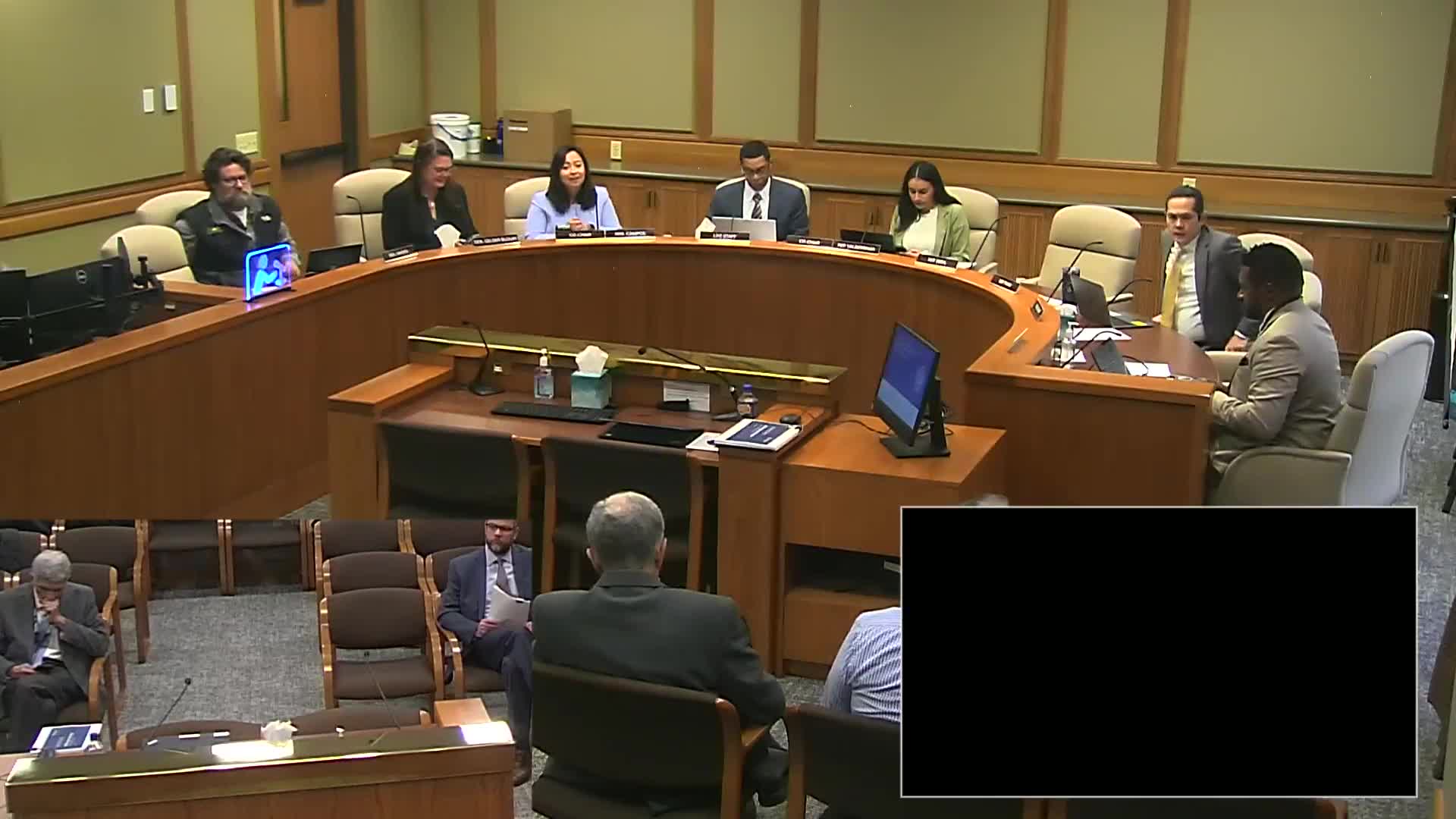
Co‑chairs Campos and Valderrama opened a March 5 informational hearing on Senate Bill 55 26, the governor’s recommended budget for the Oregon Department of Human Services (ODHS), which staff said includes a $2.5 billion increase in the 2025–27 current‑service level (CSL) compared with the 2023–25 legislatively adopted budget.
The CSL increase — described in the hearing as the cost of maintaining existing programs under current law — totals about $2,500,000,000 in total funds and about $1,300,000,000 in general fund. Gregory Jolivette, a staff member who summarized the CSL, told the subcommittee that roughly 46% of that growth is attributable to caseload and per‑case cost adjustments, about 30% to inflation, about 20% to employee compensation, and another portion to changes in the Federal Medical Assistance Percentage (FMAP).
The governor’s recommended budget also includes policy investments and program changes delivered by ODHS leadership and Department of Administrative Services staff. Mike Striepe of the Department of Administrative Services summarized emerging issues and said Aging and People with Disabilities (APD) and the Office of Developmental Disability Services (ODDS) are the primary drivers of CSL growth because of rising caseloads and service costs. Striepe said the CSL numbers reflect the end of pandemic enhanced FMAP rates and other shifts that moved costs to general fund.
Why it matters: The CSL growth establishes a baseline the legislature must fund before considering new investments. Lawmakers pressed agency leaders about where savings in the governor’s proposal would come from and about the practical effects of proposed changes on residents and providers.
Stabilization and Crisis Unit (SACU) reductions drew the sharpest scrutiny. ODHS officials said the governor’s budget shows a net $17,800,000 general fund reduction for SACU intended to “right‑size” the program and align it with a short‑term stabilization purpose. Senator Gelser Blue expressed alarm that a slide presented to the committee showed $45,600,000 in total funds removed and asked how residents of SACU homes would be protected. The senator said constituents, families and workers are “terrified” about potential consequences.
ODHS leadership told the committee the reduction is a net figure that would be phased in during year two of the 2025–27 biennium and that the administration intends to work with providers, self‑advocates, families and labor partners to plan transitions without layoffs or service interruptions. The director said: “No one would want anyone who is living in a stabilization and crisis unit to suffer or to receive a lower level of service than they’re receiving today.” The director also committed to continued briefings and to working with stakeholders as proposals are developed.
Program investments and changes highlighted in the presentation include:
- A $75,000,000 special purpose appropriation to support non‑state‑employee bargaining for workforce that serves APD and IDD clients (noted as set aside in the governor’s budget). - A roughly $60,000,000 total‑fund investment to develop a new rate methodology for adult foster homes in APD, with an accompanying bill to change rate methodology to reduce the current high number of rate exceptions. - Child‑welfare investments including a $10,000,000 general fund proposal to limit temporary lodging by funding an innovative placement program; continued funding for youth‑experiencing‑homelessness programs that had been one‑time in 2023–25; and a proposal to create a contract administration team and increase independent living provider rates. - A $5,200,000 investment to raise a minimum nutritional benefit for job‑program participants to $35 per month, a change tied to a federal rule that affects workforce participation metrics and TANF funding. - Proposals to use one‑time funds — including $20,000,000 in TANF carryforward and quality care fund adjustments — to free up general fund in 2025–27, and several one‑time reductions to services and supplies that were phased back into CSL.
Officials also described other programmatic items that will be examined in upcoming weeks: the agency’s long‑term IT and payment system upgrades, workforce‑related rate pressures identified by a 2023 rate study, and federal policy uncertainty on Medicaid and nutrition programs. The rate study, required by 2023 legislation, recommended raising the average wage for direct care workers to $23.20 per hour and increasing payment rates; ODHS said detailed cost and funding breakdowns for implementing those recommendations appear in the budget documents provided to the committee.
Agency leaders reminded the committee that ODHS relies heavily on federal funding — the presentation showed about two‑thirds of the agency budget comes from federal sources such as Medicaid, SNAP and TANF — and that declines in FMAP will increase state general‑fund pressures. Staff said a one‑percentage‑point reduction in FMAP in the forecast raised costs by about $151,500,000.
Other items staff highlighted included recent program rollouts and outcomes: implementation of a permanent Summer EBT program that issued about $41,000,000 in benefits to roughly 343,000 children last summer; the Children’s Extraordinary Needs program launched July 1, 2024 (capacity 155, current enrollment 144; an active waiting list of about 1,600); and resilience hub grant awards planned from a $10,000,000 appropriation.
What lawmakers directed: Co‑chairs and members said they expect detailed briefings in the coming five weeks and asked ODHS and DAS staff to provide written breakout details for CS L adjustments, rate proposals, and the SACU plan. Gregory Jolivette confirmed materials summarizing CSL adjustments and policy option packages were available to members.
The hearing closed with committee leadership scheduling further reviews: ODHS staff will return for program‑level presentations and more in‑depth questioning over the next several committee meetings.