Get Full Government Meeting Transcripts, Videos, & Alerts Forever!
Get email alerts on the State Fair Emergency Center topic
No spam. Unsubscribe anytime.
Package bill would fund county fair capital plans and prepare Oregon State Fairgrounds as regional evacuee center
Summary
House Committee members heard testimony on House Bill 2304, which would fund a statewide county fair capital plan, remove the lottery cap on fairs funding, allocate a portion of lottery proceeds to the Oregon State Fair and authorize bonds to upgrade the State Fairgrounds for regional emergency use.
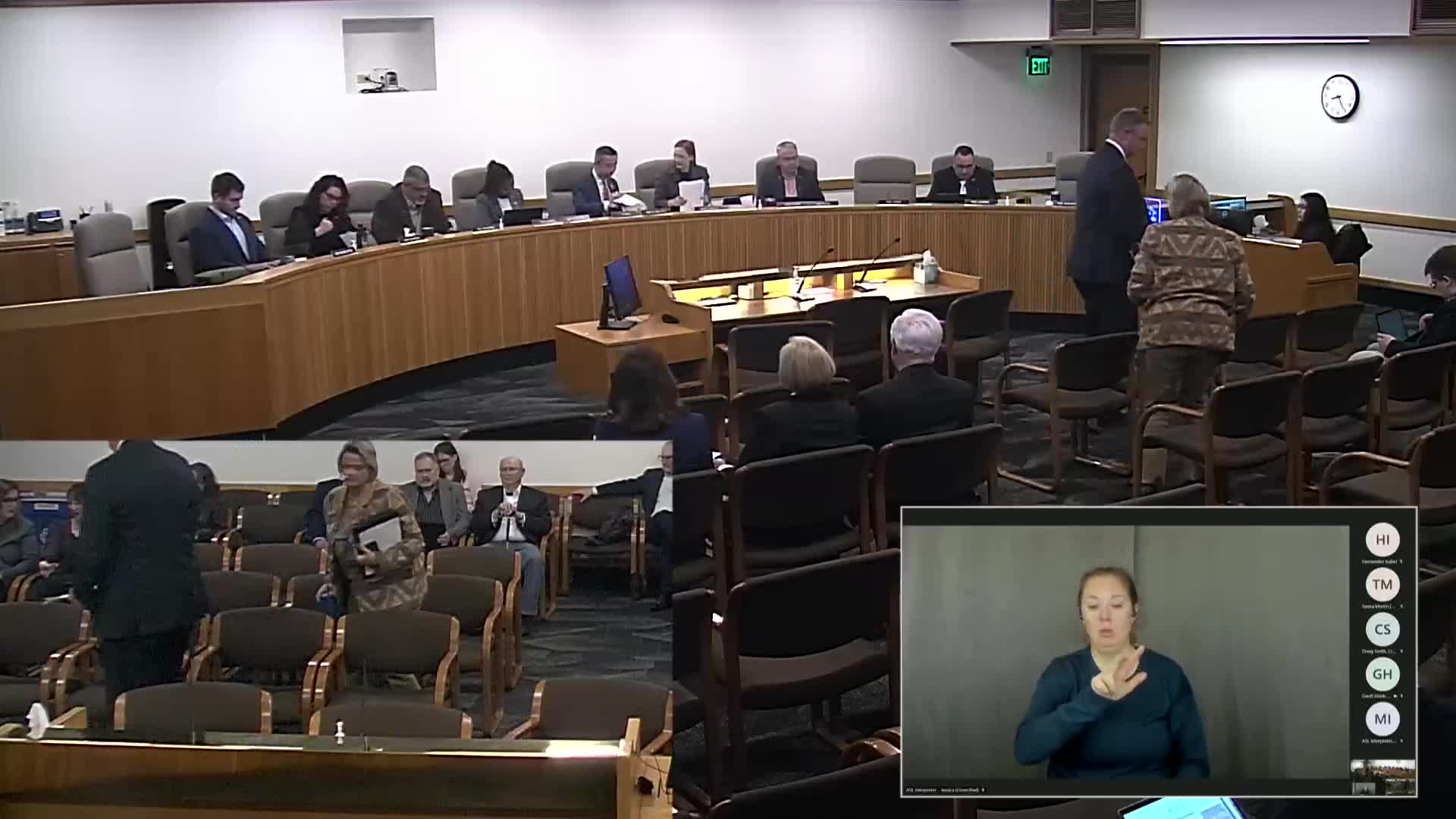
House Committee on Economic Development, Small Business, and Trade members heard testimony Wednesday on House Bill 2304, a package measure that would expand funding for county fair capital projects, route a share of lottery proceeds to the Oregon State Fair and authorize bonding to make the State Fairgrounds usable as a regional emergency and evacuee center.
The bill would adjust the lottery allocation to the county fair account from 1% to 0.9% of net lottery proceeds and allocate 0.1% of net proceeds to the State Fair Council. It would remove the current annual cap of $1,530,000 on the county fair account, appropriate $250,000 from the General Fund for Business Oregon to develop a county fair capital construction master plan, and authorize the state treasurer to issue lottery bonds to produce about $20,838,690 in net proceeds for State Fair improvements. The dash-1 amendment submitted for the bill would appropriate $2,500,000 to the Union County Fair Association for water and sewer improvements at the Union County Fairgrounds.
Representative Kevin Mannix emphasized the emergency-preparedness purpose for State Fair Center improvements, saying the facility has been used in prior disasters but lacks full capability to serve as a regional hub for animals and evacuees without infrastructure upgrades. Representative Bobby Levy, the sponsor of the dash-1 amendment, said the Union County Fairgrounds currently has no running water or working sewer facilities and that a DEQ finding requires connection to La Grande’s municipal system; levy said project estimates have risen from about $700,000 in 2021 to roughly $4.35 million and that $2.5 million remains to be funded to secure the fairground as a year-round resilience hub.
JL Wilson of the Oregon Fairs Association described the bill as the association’s “value statement” — a package that inventories capital needs and organizes investments, and which the association supports (including the dash-1 appropriation for Union County). Kim Grewpowel, chief executive of the Oregon State Fair and Exposition Center (OSFEC), described the fairgrounds’ heavy use in 2020–21 for emergency operations, vaccination and testing sites, animal sheltering and storage; she said OSFEC lacks the facilities to serve as an efficient regional evacuee center and requested bond and lottery funding to complete necessary repairs and upgrades.
Multiple county fair directors and association leaders testified in support, saying fairgrounds across Oregon are acting as year-round community assets and emergency facilities, and that stable, increased funding would allow fairgrounds to address deferred maintenance and meet ADA and safety standards. Supporters asked the committee to consider the package as a coordinated approach to county and state fairground needs.
No final committee action or vote was recorded at the hearing; witnesses and legislators asked for follow-up on project lists and cost estimates.