Get Full Government Meeting Transcripts, Videos, & Alerts Forever!
Get email alerts on the Special Education Access Postsecondary topic
No spam. Unsubscribe anytime.
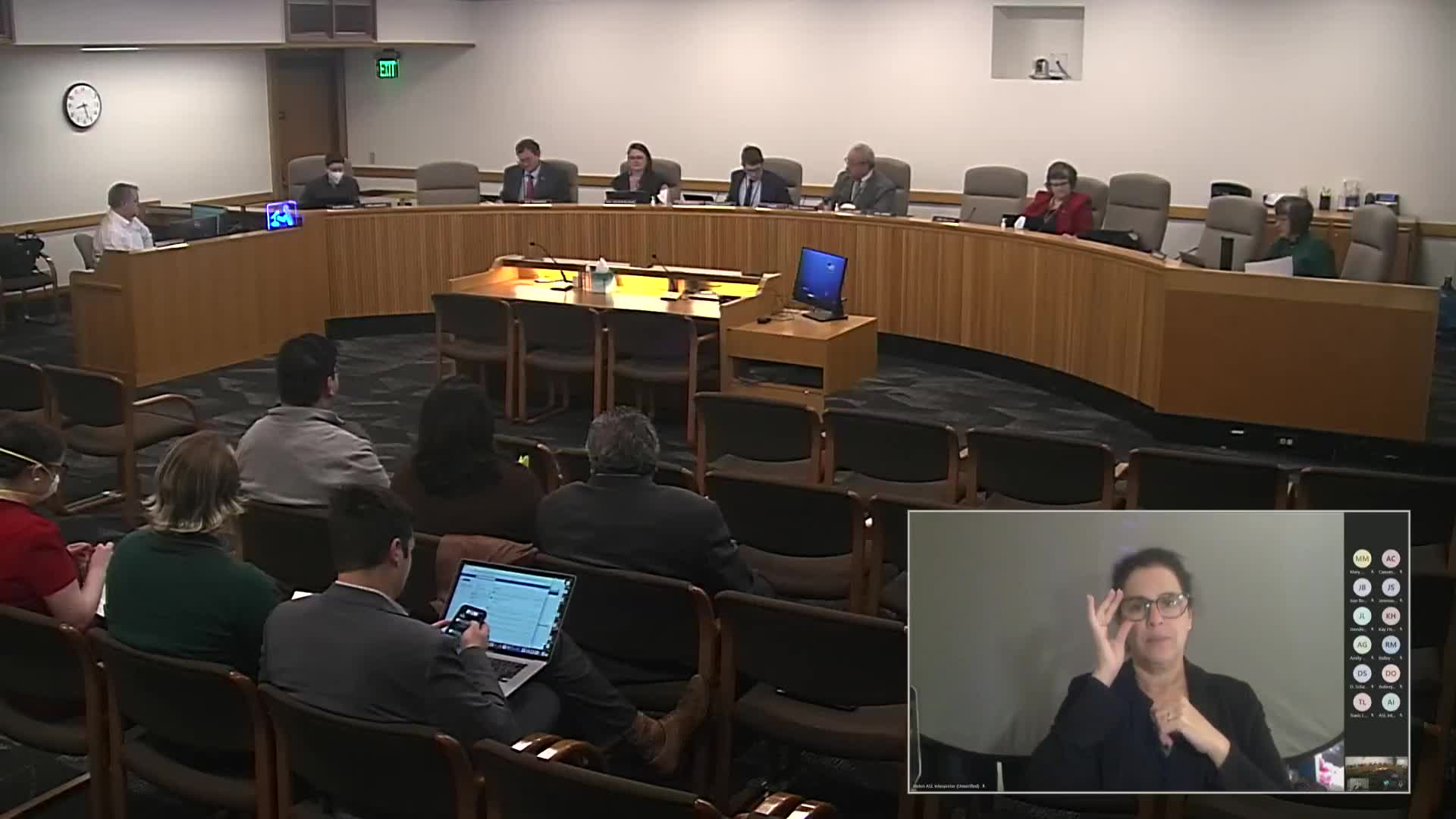
Senate panel hears broad testimony urging creation of work group on postsecondary supports for students with disabilities
Summary
The Senate Education Committee heard extensive testimony in support of Senate Bill 9 79, which would direct the Higher Education Coordinating Commission to convene a Students with Disabilities Success Work Group and produce reports to shape statewide postsecondary disability policy.
The Senate Education Committee heard more than a dozen testimonies on Wednesday urging passage of Senate Bill 9 79, a measure directing the Higher Education Coordinating Commission (HEC) to convene a Students with Disabilities Success Work Group and produce two reports: an advisory-group report to HEC by Dec. 15, 2025, and an HEC report to the Legislature by Sept. 15, 2026.
Committee members heard detailed personal accounts from students and advocates who said supports at Oregon’s colleges and universities are inconsistent, under-resourced or improperly implemented. “Students don’t stop needing the support when they graduate from high school,” said Senator Sarah Gelser Blue, introducing the bill and describing the results of prior task-force work. “Higher education needs to catch up.”
Why it matters: Witnesses said the absence of consistent statewide standards leaves many students with disabilities facing barriers to admission, participation and graduation. Speakers cited problems including delays arranging accommodations, lack of faculty training, inaccessible facilities and financial hurdles for nontraditional and adult students.
Many individual testimonies described repeated failures to receive accommodations. Megan Sykes, an honors student at Oregon State University, recounted being forced to continue taking classes because insurance coverage required enrollment and then encountering faculty who “frequently ignor[ed] what little accommodations I had or weaponized them against me,” testimony in the record said. Joey Beasley Bennett, another OSU student who transferred from Lane Community College, said an instructor denied a makeup quiz despite a documented accommodation and that “instructors at OSU are not required to complete any accommodations-related training before teaching.”
Disability advocates and higher-education professionals also urged specific attention to students with intellectual and developmental disabilities. Dr. Mary Morningstar, director of the Career and Community Studies program at Portland State University, asked that the advisory group include voices experienced with intellectual and developmental disabilities and warned against excluding those perspectives.
Legal and procedural context: The bill would require HEC to consult an advisory group of specified members and deliver the advisory-group report by Dec. 15, 2025; HEC would then submit its report to the Legislature by Sept. 15, 2026. Witnesses compared U.S. practice to other models, noting the United Kingdom provides substantial allowance funding for disabled students; testimony cited the UK example as evidence that funding policy can materially affect completion rates.
Costs and operations: Multiple witnesses emphasized that barriers are not only educational but financial. Deidre Shaffer, a student at Eastern Oregon University and a parent of two disabled college students, said assessments and supports can cost hundreds of dollars and that many disabled students are nontraditional adults for whom traditional aid is insufficient.
Support and opposition: Testimony was uniformly supportive at the hearing; no organized opposition spoke. Several senators signaled they would follow the bill through the Ways and Means process to resolve any fiscal questions.
Next steps: The committee closed public testimony and indicated the measure will proceed through the committee process; HEC and legislators will address any fiscal or membership questions as the bill moves forward.
Ending: Supporters said the bill is intended as a first step to create consistent expectations and accountability across Oregon’s postsecondary institutions so students with disabilities can access and complete higher education.