Get Full Government Meeting Transcripts, Videos, & Alerts Forever!
Get email alerts on the Pass Through Tax Extension topic
No spam. Unsubscribe anytime.
Committee opens hearing on SB 111 to extend pass‑through business alternative income tax workaround
Summary
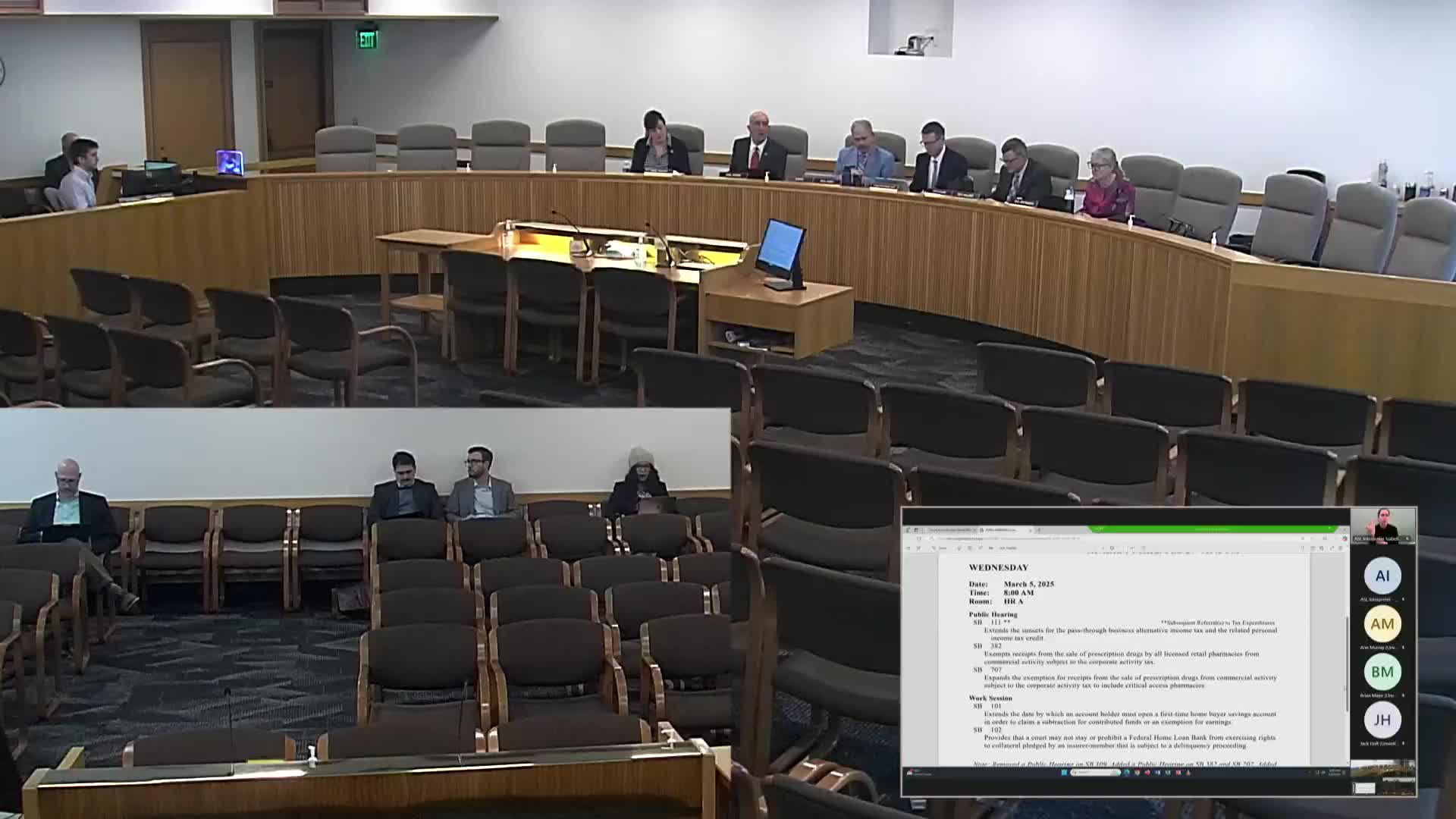
The Senate Committee on Finance and Revenue held a March 5 public hearing on SB 111, a bill to extend Oregon’s pass‑through entity alternative income tax and credit for two additional tax years to preserve federal deductibility for small business owners.
The Senate Committee on Finance and Revenue opened a public hearing March 5 on Senate Bill 111, which would extend Oregon’s pass‑through business alternative income tax and associated credit for two additional tax years. Sponsors and business advocates said the program is a revenue‑neutral state response to the federal cap on state and local tax (SALT) deductions created by the 2017 Tax Cuts and Jobs Act.
Anthony Smith, Oregon state director for the National Federation of Independent Business (NFIB), told the committee that the mechanism allows passthrough entities to pay an entity‑level tax that is deductible at the federal level and then receive a credit on owners’ Oregon personal income tax returns. Smith said the state program “does not create a new tax” and that extending it would help small businesses without costing Oregon general‑fund revenue. Smith noted the program was adopted by many states after IRS guidance clarified how states could legally structure such workarounds.
Derek Sangston, policy director and counsel for Oregon Business and Industry (OBI), told the committee OBI supports SB 111 because it “ensures Oregon’s smallest businesses can continue to benefit from a revenue neutral policy adopted by 33 states.” Sangston urged broadening the program’s eligibility — for example to trusts and to provide flexibility for individual members of passthrough entities — to increase relief to more businesses.
Committee members confirmed that SB 111 would extend the current sunset by two years, covering tax years 2026 and 2027, and that the bill is intended to remain revenue neutral for the state. No committee vote or work session occurred on SB 111; witnesses answered members’ questions and the committee closed the public hearing.