Get Full Government Meeting Transcripts, Videos, & Alerts Forever!
Get email alerts on the Harmful Algal Blooms Ross Island topic
No spam. Unsubscribe anytime.
Committee hears testimony on bill to design fixes for toxic algal blooms in Ross Island Lagoon
Summary
Lawmakers heard from scientists, the Human Access Project and river advocates on House Bill 3314, which would fund design and permitting work to reduce harmful cyanobacteria blooms in the Ross Island Lagoon on the Willamette River; no final action was taken during the March 5 public hearing.
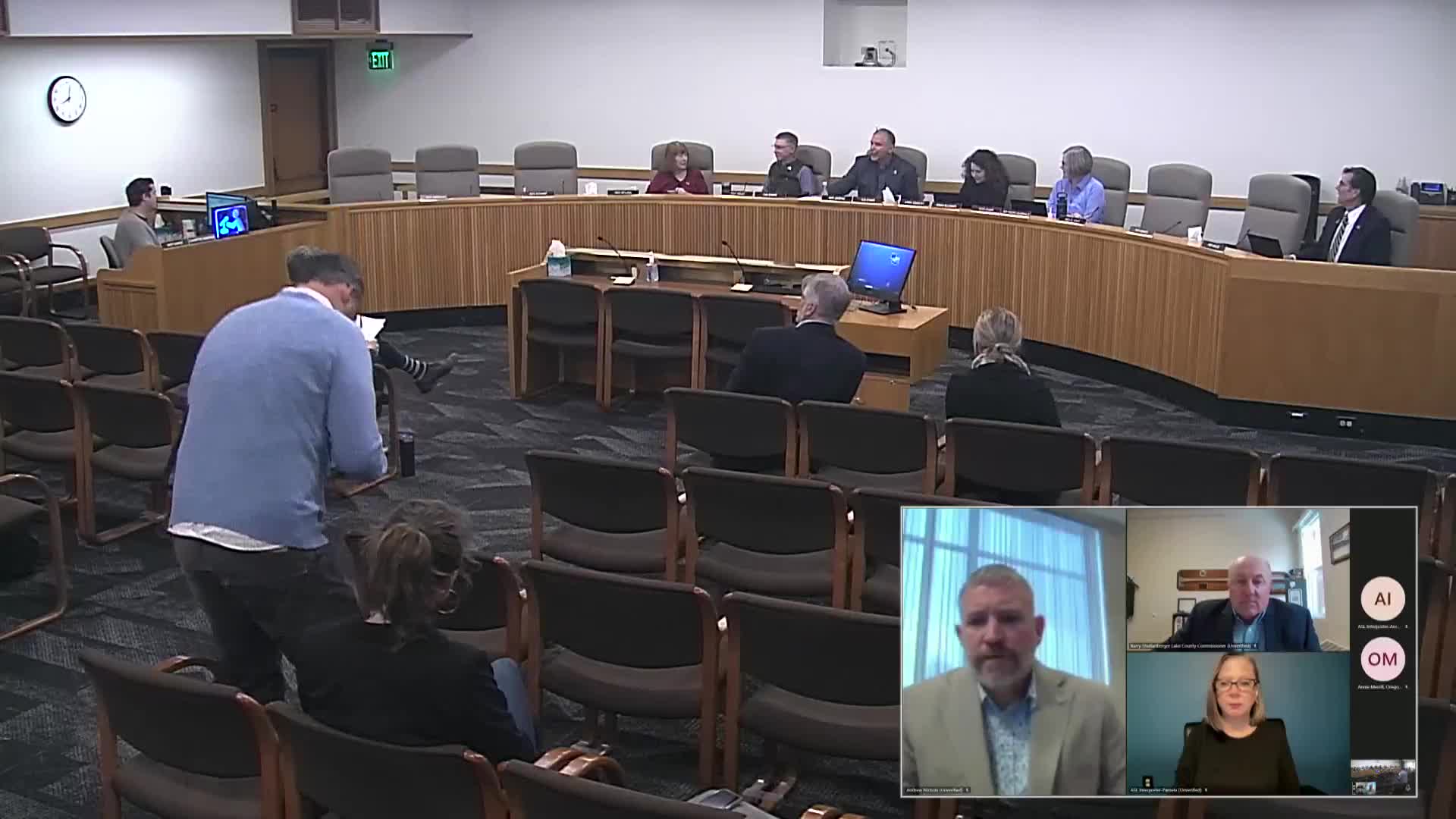
House lawmakers held a public hearing March 5 on House Bill 3314, a measure to fund design and permitting work aimed at mitigating recurring harmful cyanobacteria blooms in the Ross Island Lagoon on the Willamette River.
The bill, as described by a committee staffer, originally appropriated $2,017,000 from the general fund to the Higher Education Coordinating Commission for distribution to Oregon State University to work on mitigation. A posted “-1” amendment removed that appropriation and instead proposed $1,020,000 from the general fund to the Higher Education Coordinating Commission to be distributed to the Human Access Project to work toward mitigation in partnership with Oregon State University.
Supporters told the committee the lagoon—an artificial embayment formed by historic gravel mining and an embankment between Ross and Hardtack islands—has produced toxic cyanobacteria blooms regularly since about 2015. Representative Rob Nose, who represents House District 42 and whose district borders several miles of the Willamette River, said the blooms now transform portions of the river into “a pool of green muck” and that the bill is intended to advance work on engineering and permitting solutions.
Oregon State University’s Desiree Telles, a professor of water resources engineering, said researchers have compiled field data, developed numerical models and used those models to test treatment concepts. Telles told the committee the team is completing a 30% design and that completing the 90% design is expected before applying for required permits. She said the project team has engaged federal and state agencies, tribes and other partners to identify approaches that limit adverse habitat impacts and minimize infrastructure and energy costs.
Willamette Riverkeeper Executive Director Michelle Emmons said the Ross Island area provides critical habitat for juvenile salmon and birds and that blocked flow and stagnant, low‑oxygen conditions have contributed to the blooms. Emmons and other witnesses urged that ecological studies, stakeholder outreach and habitat restoration remain central to the design process.
Willie Levinson, executive director of the Human Access Project, described years of stakeholder outreach and preliminary studies, and detailed funding already contributed to the project: a $20,000 contribution from the Oregon Department of State Lands for an advanced hydraulic study, $15,000 from the City of Portland, a $50,000 contribution from the Confederated Tribes of Grand Ronde, federal earmark funding for the 30% design, and local support for fundraising to reach the current design phase. Levinson said the Army Corps of Engineers has engaged on the project and that the Corps has a program offering a 75% cost share for construction under certain pathways.
Witnesses told the committee the key near‑term tasks are completing the final designs, continuing public outreach and resolving permitting pathways with agencies including the Army Corps of Engineers, NOAA Fisheries and the Department of State Lands. Several witnesses said early engagement with those agencies has been constructive but that formal permitting work typically begins after completion of 90% design plans.
The committee heard no formal motion or vote during the hearing. Committee staff closed public testimony on House Bill 3314 at the conclusion of the testimony period.
The hearing record includes technical and funding details submitted by the project team; committee members asked questions about agency engagement, permitting timing and whether the project team has the right stakeholders at the table.