Get Full Government Meeting Transcripts, Videos, & Alerts Forever!
Get email alerts on the Water Management Watershed Study topic
No spam. Unsubscribe anytime.
Committee hears study proposal to manage water by watershed rather than county lines
Summary
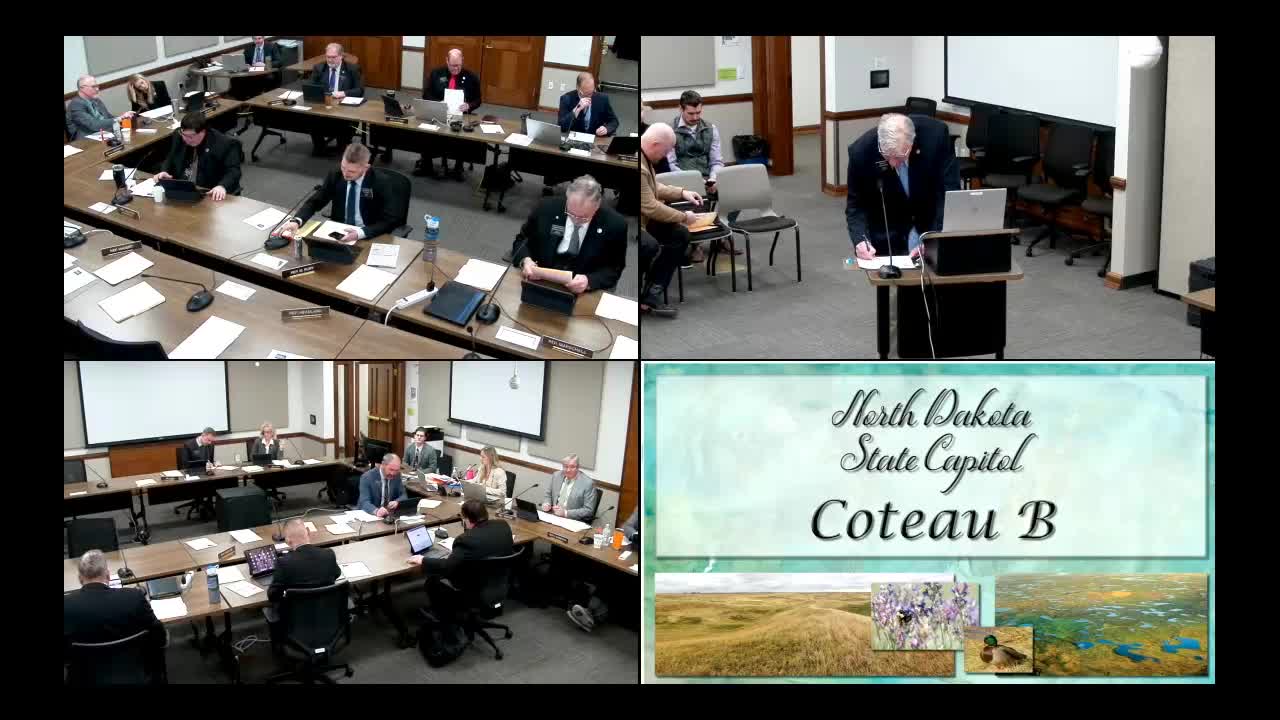
The House Energy and Natural Resources Committee opened a hearing on Senate Bill 2210, a proposal to study managing water by watershed boundaries rather than by county lines, sponsor Senator Mark Webber said.
The House Energy and Natural Resources Committee opened a hearing on Senate Bill 2210, a measure to study shifting water management from political boundaries to watershed-based administration, sponsor Senator Mark Webber said. "Senate bill 22 10 is really a very a very simple bill," Webber said, adding that "water does not run follow political boundaries but runs on a watershed basis."
The bill would commission a study to examine whether a watershed-based model, similar to systems used in other states, would improve how drainage and water management projects are assessed and financed across county lines. Webber told the committee the intent is to evaluate models and return recommendations to the Legislature for any statutory changes. He also noted a separate Senate bill by Senator Lueck that would form joint water resource boards for projects affecting two or more counties and suggested members could hold action on the study if the companion proposal moves forward.
Speakers who testified in support said a study is an appropriate first step. Danny Quistle of the North Dakota Water Resource Districts Association said the study should examine how any new structure would work across the entire state, noting differences between eastern drainage issues and western water-resource concerns. "If we're gonna move forward with looking at a new structure, I think a study is the appropriate way to do that," Quistle said.
Aaron Carranza, regulatory-division director for the Department of Water Resources, described work the department completed during the interim, including a December summary report and an appendix compiling state-specific regulations. Carranza referenced North Dakota Century Code sections enacted in the last session, saying the department used those authorities to frame its study and suggested the department's report could serve as a starting point for further legislative research. "The department study concluded at the December and a summary report with the recommendations along with an appendix of the state specific regulations and research are provided at the link, shown in my testimony," Carranza said.
Representatives asked procedural questions, including whether cross-border river systems that flow into Canada would be included; Webber said the bill is designed for in-state study and that cross-border questions could be addressed separately. Testimony closed with supporters asking that the committee move forward with a due-pass recommendation for study consideration. The committee did not take a final vote on the bill during the hearing and closed testimony on SB 2210.
The bill's next steps depend on whether the companion Senate measure establishing joint water resource boards advances; Webber asked members to consider delaying action on the study if the companion bill provides the collaborative framework lawmakers want.