Get Full Government Meeting Transcripts, Videos, & Alerts Forever!
Get email alerts on the Public Transit topic
No spam. Unsubscribe anytime.
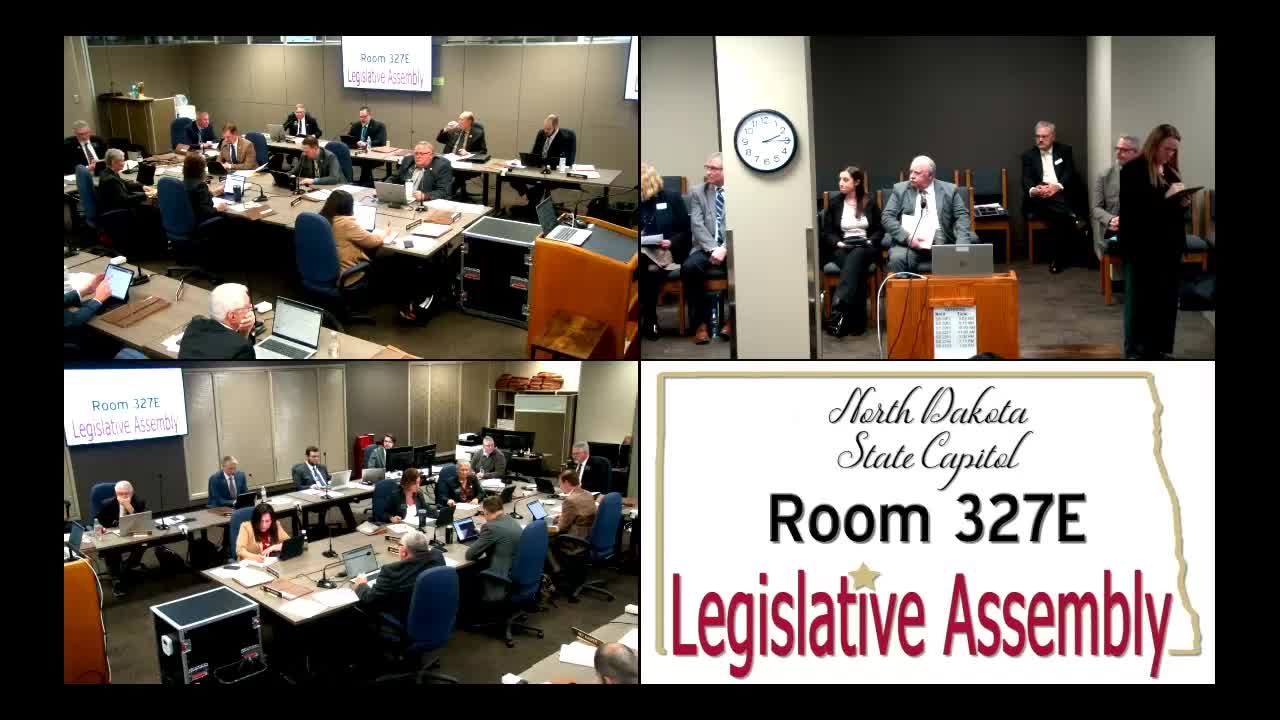
House committee hears pleas for transit aid as Senate bill 22-54 seeks funding and a study for urban fixed-route services
Summary
Transit directors from Fargo, Minot and Grand Forks described rising costs, fleet shortages and funding volatility as they urged support for Senate Bill 22-54, a proposal that would create a grant program for four urban transit systems and fund a study of the state transit funding formula.
Senate Bill 22-54, which would appropriate money for fixed-route city transit and paratransit services in Minot, Bismarck, Grand Forks and Fargo and require a legislative study of the transit funding formula, drew extensive testimony from transit officials and advocacy groups at the House Transportation hearing.
State Senator Josh Borshais introduced the bill and described the two-part proposal: a temporary grant program for the four urban systems and a study during the next interim to determine whether North Dakota’s transit funding formula should be updated. "The current funding formula through DOT only considers riders that are disabled or above an age that designates them as seniors. It does not take in into consideration general ridership," he told the committee.
Transit directors testified that their operating costs and replacement-vehicle prices have climbed dramatically, that federal and pandemic-era funding that once helped mask shortfalls is no longer available, and that classification changes tied to population have reduced federal allocations for some cities. Minot Transit Superintendent Bridal Horeca told the committee a typical replacement bus bought for about $455,000 in 2021 now prices north of $650,000, and said her agency historically relied on federal section 5311 rural grants but now faces challenges after an urban designation moved Minot to 5307 funding rules.
Fargo Transit Director Julie Baumelman said Fargo saw a 17% reduction in federal operations funding when the region’s classification shifted following the 2020 Census. She told the committee Fargo’s 2025 operating budget is about $12.3 million and the city expects to need "a little over $5,000,000" in local general-fund support in 2025 to match federal grants and run services. Fargo provided 706,145 fixed-route trips in 2024 — roughly half of the state’s fixed-route ridership — and 234,000 trips by elderly or disabled riders (34.2% of that statewide total), she said.
Grand Forks Transit Director Dale Bergman said Grand Forks dedicates five mills to transit, operates on roughly a $3.5 million budget and anticipates bus replacement costs of about $644,985 per 35-foot bus. Bergman said his city will raise fixed-route cash fares from $1.50 to $2.00 and expects an approximate ridership decline of 8% after that increase.
Committee members pressed witnesses about alternatives to state aid, including fare increases and local funding. Witnesses agreed fare hikes are sometimes necessary but warned that raising fares can reduce federal aid because federal operating formulas use ridership metrics; several witnesses described a difficult trade-off between higher fares and reduced federal matching dollars.
Senator Borshais told the committee the Senate originally requested $15 million in state assistance divided among the four urban systems. Senate Transportation scaled that ask to $5 million and Senate Appropriations later reduced the proposal to $2 million; the sponsor asked the House committee to continue the discussion so funding and a study could be considered as the fiscal forecast becomes clearer.
Nonprofit and advocacy speakers supported the bill and highlighted service gaps. Michael Olson of North Dakota Protection and Advocacy urged expanded hours and more frequent service so people with disabilities can work nonstandard hours and manage spontaneous needs; Trevor Burnett, an advocate, noted the cost of private alternatives and described taxi trips as unaffordable for low-income riders.
No formal committee vote on SB 22-54 was recorded at the hearing; the committee closed the hearing after the witnesses finished testimony. Committee members said the appropriation level and distribution method will be part of budget deliberations and the DOT and the transit directors indicated they would work with appropriators on a distribution approach during the budgeting process.
Ending: The committee closed the hearing with the question of funding level unresolved; the sponsor asked that the bill be kept alive while budget forecasts are finalized so the study and any new grants can be considered in the DOT appropriation process.