Get Full Government Meeting Transcripts, Videos, & Alerts Forever!
Get email alerts on the Carbon Capture Eor topic
No spam. Unsubscribe anytime.
Resolution urges support for enhanced oil recovery and carbon capture; advocates and opponents testify
Summary
House Concurrent Resolution 30-16 asks the state and Congress to maintain favorable policies for enhanced oil recovery (EOR) using CO2. Proponents, including the Lignite Energy Council and industry representatives, said EOR could unlock billions of barrels and extend Bakken productivity; opponents raised safety, subsidy, and viability concerns.
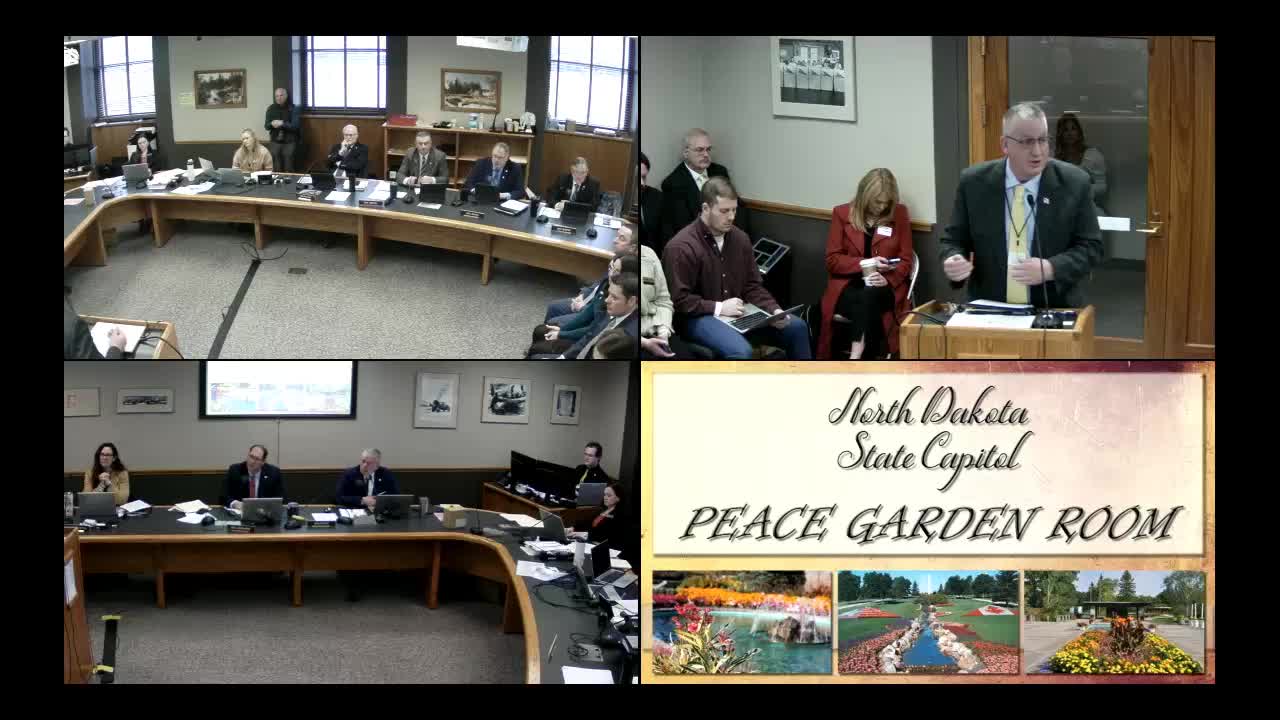
Representative Anna Novak presented House Concurrent Resolution 30-16 to the Senate Energy and Natural Resources Committee, urging state and federal policies that support enhanced oil recovery (EOR) and the use of industrial carbon dioxide as a commodity. Novak said EOR—particularly CO2-EOR—could mobilize additional oil in the Bakken and extend the basin's productive life by decades. "Implementing EOR techniques, particularly those using carbon dioxide, has the potential to unlock several billion additional barrels of oil," Representative Anna Novak said.
Supporters included the Lignite Energy Council and industry representatives who argued that coal-fired power and gasification facilities can capture industrial CO2 and make it available for EOR. Jonathan Fortner of the Lignite Energy Council said coal-based carbon capture could supply CO2 to increase recovery rates and the state's tax revenues, calling coal an important partner in the transition to expanded EOR.
Ron Ness, testifying in support, described the geological basis for CO2-EOR and pointed to existing projects—such as CO2 use from Dakota Gasification to Weyburn, Saskatchewan—and the potential for large additional recoveries if the necessary policy and commercial conditions are in place. "CO2 is a critical component," Ness said, arguing that industrial CO2 could repressurize formations and mobilize oil in ways existing methods cannot.
Opponents and neutral witnesses raised safety, economic and landowner concerns. Lanny Kenner testified in opposition, saying EOR in the Bakken "is not possible at this time" based on EERC findings and warned about pipeline safety and grid impacts. Zach Cassidy of Dakota Resource Councils opposed the resolution, arguing CO2 pipeline projects rely on taxpayer subsidies and strip local landowner and local-government rights. Cassidy asked for a "do not pass" recommendation for the resolution.
Committee members asked technical and policy questions, including how federal incentives (45Q tax credits and changes under recent federal legislation) affect CO2 availability and whether the Dakota Gasification pipeline contract to Weyburn (expiring in 2026) creates opportunities. Witnesses described mixed economics and the need for consistent federal policy; supporters urged a level playing field so captured CO2 is deployed to EOR rather than sequestered for other credits.
The hearing record contains competing views about the technical readiness of CO2-EOR in the Bakken, safety concerns about high-pressure CO2 pipelines and whether the industry's business model depends on federal subsidy structures. The committee closed the hearing with testimony on both sides and no immediate committee action.