Get Full Government Meeting Transcripts, Videos, & Alerts Forever!
Get email alerts on the Pensions topic
No spam. Unsubscribe anytime.
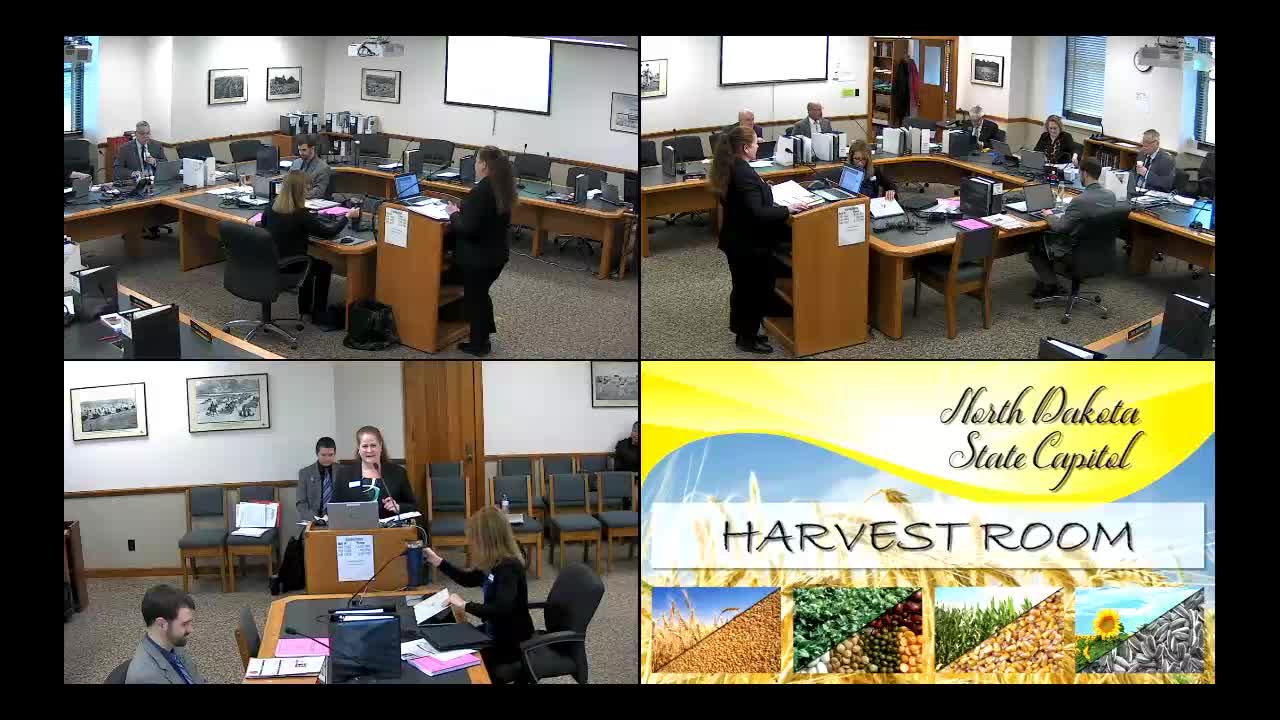
PERS briefs appropriations committee on budget, staffing and pension changes as main plan closes
Summary
The Public Employees Retirement System told the Senate Appropriations Committee Human Resources Division that it is asking for continued special-fund authority and limited staffing and project funding to support a recent conversion from a main defined-benefit plan to a defined-contribution plan and ongoing administration of multiple retirement and insurance programs.
The Public Employees Retirement System told the Senate Appropriations Committee Human Resources Division that it is asking for continued special-fund authority and limited staffing and project funding to support a recent conversion from a main defined-benefit plan to a defined-contribution plan and ongoing administration of multiple retirement and insurance programs.
PERS Executive Director Rebecca Fricke told the committee the agency serves tens of thousands of public employees and retirees and has adjusted operations to accommodate the statutory closure of the main defined-benefit plan that was enacted last session. “Our mission is to champion the health and financial security of our members by providing comprehensive innovation, innovative retirement insurance benefit solutions through collaboration and personalized support,” Fricke said.
Why it matters: PERS administers retirement and group insurance for state and political-subdivision employees and retirees. The agency said the roll-in of the defined-contribution plan, technology upgrades and employer onboarding are immediate priorities; gaps or delays could affect active members’ enrollment, communications and the flow of employer contributions.
Key points from the hearing
- Agency scope and scale: Fricke said PERS administers nine retirement plans, with more than 26,000 active contributing members, about 14,000 retirees, nearly 19,000 deferred members and just under 500 participating employers (figures from a December handout Fricke cited). On group insurance, she reported roughly 18,000 active contracts, more than 7,000 retiree contracts and roughly 59,000 covered lives; she said 225 employers participate in the group insurance program.
- Statutory changes and timelines: Fricke and Chief Operating and Financial Officer Derek Holbein walked the committee through the statutory closure of the main defined-benefit plan, enacted in last sessionas referenced in the hearing as House Bill 1040. Holbein said the agency implemented the conversion on an accelerated schedule and that “we were able to accomplish that in a 15 to 18 month period.” He said the law requires the main plan to be funded on a prescribed schedule and that the board sets actuarially determined contribution rates for the remaining public-safety plans.
- Funding sources and reserves: Holbein explained PERS is funded from special funds, not the general fund. He described multiple revenue streams that pay administrative costs: employer and employee contributions earmarked to trust funds, a $2.80-per-contract administrative charge on group insurance that has not changed since the 1990s, forfeitures in defined-contribution plans, and other program-specific fees. He said the health insurance reserve is about $57 million; $2 million of that is currently earmarked for life insurance-related uses. Holbein told senators the agency is drawing roughly $2 million of one-time reserve money in the current biennium to cover administrative shortfalls and deferred-compensation start-up costs.
- Highway Patrol plan and pending bills: Fricke said one smaller, closed public-safety plan for the highway patrol is projected to need a cash infusion and referenced a pending bill (noted in testimony as Senate Bill 2120) to provide about $35.3 million to improve funding levels. She said the bill passed the Senate and was scheduled for a House committee hearing.
- Vendor and systems work: Holbein described ongoing business-system work, including selection of a new record keeper (named in testimony as Empower) for defined-contribution and deferred-compensation plans and a contract with Sagitec for pension administration software. He outlined a multi-year list of technology projects (new-hire and annual-enrollment "wizards," a retirement-application wizard, and a business-process-management initiative that would automate 58 workflows). The agency asked for one-time funding for additional contracted developers and a project manager to complete those projects and reduce manual workload.
- Deferred compensation and program administration: Holbein described a convoluted current funding approach for the 457 deferred-compensation plan and said the board has proposed a per-participant fee to stabilize administration. He said the board is considering consolidating outside deferred-compensation providers into a single companion plan to simplify reconciliation and oversight; he noted such a change would affect roughly 11,000 participants and could cause significant member disruption.
- Dental bill and carriers: Fricke and Holbein addressed a senators question about House Bill 1481 (dental). They said PERS had shared the bill with the current carrier, Delta Dental, which raised concerns about the bills original loss-ratio provisions; Holbein said the bill was amended in committee and that PERS is monitoring whether the amended requirements would limit carriers willingness to bid on the state plan.
Committee questions and operational detail
Senators asked about board composition (Fricke summarized the board makeup as governor appointees, legislative appointees and elected employee members), the State Investment Boards role (Fricke said statute gives the State Investment Board responsibility for investments while PERS sets investment policy and asset-allocation targets), and the agencys FTE count (Fricke said PERS has 40.5 authorized FTEs, which amounts to 42 bodies because some staff work fewer than 40 hours weekly). Holbein walked the committee through the agencys long-term staffing requests: two onboarding/enrollment FTEs the house added to the budget to support employer onboarding and defined-contribution processing, and continued temporary developer funding to finish business-system work.
Direct quotes
"Our mission is to champion the health and financial security of our members by providing comprehensive innovation, innovative retirement insurance benefit solutions through collaboration and personalized support," Rebecca Fricke, executive director, said when describing agency mission and services.
"We were able to accomplish that in a 15 to 18 month period," Derek Holbein, chief operating and financial officer, said of the implementation timeline for closing the main defined-benefit plan and launching the defined-contribution plan.
Formal actions and votes
No formal committee votes were recorded in the transcript during the PERS presentation. The hearing covered budget requests and informational testimony; related bills discussed (for tracking) included House Bill 1023 (the agency budget request referenced at the hearing), House Bill 1040 (plan closure adopted last session), House Bill 1113 (deferred-compensation funding language heard in committee), House Bill 1481 (dental plan language), and Senate Bill 2120 (highway patrol infusion). The hearing record did not include committee action or final votes on those bills.
What remains pending
Holbein and Fricke said the agency will continue implementation work (employer onboarding, record-keeper transitions and business-system automation) and that several bills the agency is tracking have pending committee hearings. The agency urged continued appropriations of requested temporary developer resources and two FTEs the House included to stabilize operations during the transition.
Ending
PERS staff closed by thanking legislative members for prior support for the plan conversion and for funding that helped the agency meet an accelerated implementation timeline. The committee scheduled further consideration as part of the appropriations process.