Get Full Government Meeting Transcripts, Videos, & Alerts Forever!
Get email alerts on the Creative Districts topic
No spam. Unsubscribe anytime.
Nebraska Arts Council seeks $1M to sustain Creative Districts program; advocates ask for larger investment to meet requests
Summary
The Nebraska Arts Council requested $1 million in additional funding for the Creative Districts program and restoration of a $56,137 staffing item, saying 34 certified districts now compete for limited development grants.
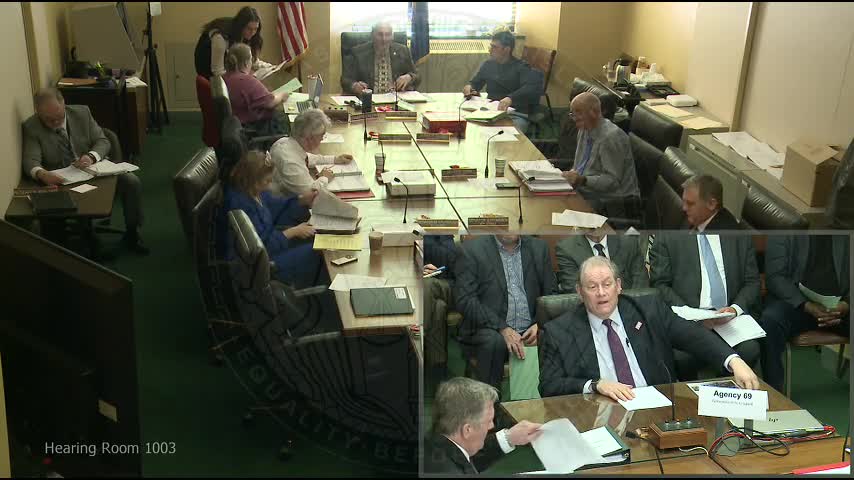
Mike Mierkey, executive director of the Nebraska Arts Council, told the Appropriations Committee the agency seeks an additional $1,000,000 to expand the Creative Districts development grant pool and asked the committee to restore $56,137 that had been reallocated to hire a staffer for program administration.
Mierkey said the Creative Districts program has grown rapidly: “When I sat here two years ago, there were six creative districts. Now, there are 34.” He argued that growth shows public and local commitment but also creates demand: 24 of the 34 districts applied for development grants this cycle and the Arts Council could fund only eight projects with current appropriations.
Why it matters: proponents said Creative Districts have generated small-town and neighborhood economic activity—branding, events, and pilot projects that attract visitors and investment. The Arts Council asked for a much larger target—$5 million—to meet all development requests; with $1 million, Mierkey said districts could expect funding every other year.
Local testimony: district leaders described specific outcomes. Chris Hochstetler, representing Humanities Nebraska, Stewart Museum and Grand Island’s Creative District, said local grants catalyzed public art, student projects and events that drew new customers downtown. Steve Worth from Brownville said the program enabled the renovation of an old high school into a community arts center and enumerated 15 projects in Brownville supported by NAC grants. Dr. Lance Nielsen described statewide programs such as the “Scribe Bus for the Arts” that subsidizes arts field trips for students and a “creative aging” program serving older adults.
Agency request and priorities: the Arts Council asked the committee to fund salary and operating increases from general funds (to stabilize funding where cash and federal streams are unreliable), to add operating dollars for rent and accounting costs, and to increase the creative-district development grant pool. Mierkey noted the Council is leveraging partnerships with tourism, historical society, and economic development for joint initiatives.
Bottom line: arts leaders said modest state reinvestment yields measurable returns for downtowns, tourism and youth engagement. The hearing included several proponents showing local examples and asking the Legislature to expand the development grants program to meet a surge of certified districts.