Get Full Government Meeting Transcripts, Videos, & Alerts Forever!
Get email alerts on the Insurance Regulation topic
No spam. Unsubscribe anytime.
Committee hears LB111 to require OEM parts, disclosures for newer vehicles
Summary
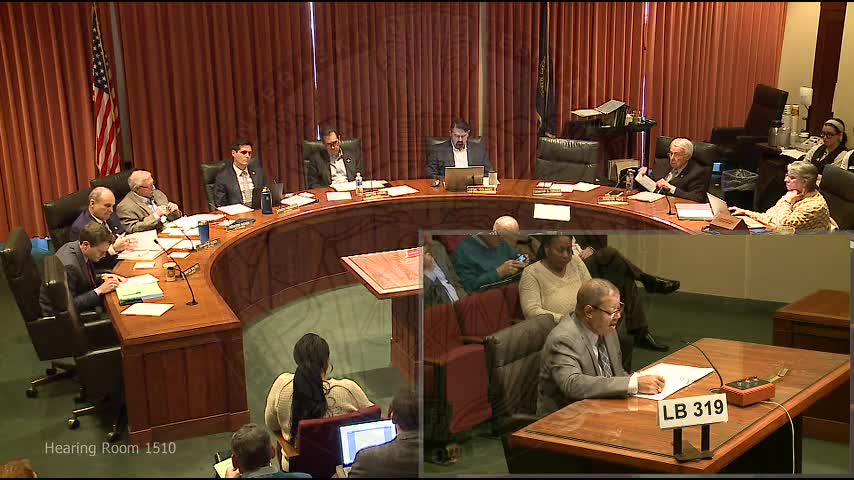
At a public hearing, Senator Dan Quick introduced LB111 to require insurers to use original equipment manufacturer parts for vehicles 36 months or newer and to conspicuously disclose use of non‑OEM parts; supporters cited safety and calibration concerns while industry groups warned of higher costs and said state rules already address many issues.
Senator Dan Quick, a Lincoln-area member of the Nebraska Legislature, introduced LB111 at a public hearing before the Banking, Commerce and Insurance Committee, proposing that insurers be required to use original equipment manufacturer (OEM) parts when repairing vehicles that are 36 months old or newer and to provide conspicuous written notice to insureds when non‑OEM parts would be used.
The bill’s sponsor and multiple collision‑repair shop owners told the committee they view LB111 as a consumer‑protection measure to keep advanced safety systems functioning after a crash. Trade groups and insurers opposed the bill, arguing it would raise repair and insurance costs, reduce consumer choice and duplicate existing Department of Insurance rules.
LB111 would set a 36‑month threshold for mandatory OEM parts in collision repairs and require insurers to disclose in writing when an estimate relies on aftermarket parts. The introducer acknowledged the bill currently contains a criminal penalty—section 8 describes a class 1 misdemeanor for violations—and said he is open to replacing that with a civil enforcement mechanism if the committee prefers.
Supporters told the committee modern vehicles increasingly rely on cameras, radar and other sensors that can be sensitive to differences in replacement parts. Ryan Clark, vice chairman of the Nebraska Auto Body Association and vice president of Eustis Body Shop, said aftermarket parts sometimes fail calibrations and that insurers rarely advertise OEM endorsements: "Please support LB‑111, which will protect consumers and keep Nebraskans safe that are involved in a collision and after their vehicle is repaired," Clark said. Blair McDonald of the Alliance for Automotive Innovation said LB111 would ensure repairs while a vehicle is most likely under warranty return the car to "its true pre‑loss condition." McDonald added the bill allows non‑OEM parts when they are ‘‘equal in fit, quality, and performance.’'
Collision‑repair owners gave detailed examples. Dylan Lapp, co‑owner of Twin Rivers Body Shop in North Platte, described a 2022 Ford Expedition special‑order vehicle he repaired that had under 10,000 miles; his shop’s estimate for repairs was $34,520 on a vehicle originally priced at $87,587, and aftermarket parts were initially unavailable for that model. Sarah Stallahn, manager of Bumper to Bumper Body and Paint in Scottsbluff, cited examples where aftermarket bumpers and sensors caused fit and calibration problems and pointed to a National Highway Traffic Safety Administration inquiry into Ford’s BlueCruise systems as context for concerns about advanced driver‑assist safety.
Opponents urged caution. Todd Moore of the Auto Care Association, which represents the aftermarket industry, warned LB111 would reduce consumer choice and raise prices for vehicle repairs and insurance, noting the aftermarket sector supports thousands of Nebraska jobs and billions in economic activity. Kevin Fisk of LKQ Corporation said alternative parts typically cost 25–50% less than OEM parts and that 20 states recently rejected similar legislation. "We respectfully urge you to vote no on LB111," Moore told the committee.
Insurance industry representatives told the committee that Nebraska already has Department of Insurance rules covering aftermarket parts. Korby Gilbertson, lobbyist for the American Property Casualty Insurance Association, circulated Department of Insurance Chapter 45 aftermarket‑parts rules and said those rules require aftermarket parts be "like kind and quality" and create existing civil penalties (for example, penalties that Gilbertson cited in testimony included $1,000 per violation up to a $30,000 aggregate, with larger penalties for flagrant violations and the potential for further actions by the DOI). Robert Bell of the Nebraska Insurance Federation opposed the bill and noted federal law (Magnuson‑Moss Warranty Act) already prevents manufacturers from voiding a warranty solely because aftermarket parts were used.
Committee members asked about several specifics: how equivalency between aftermarket and OEM parts would be measured, whether the bill’s criminal penalty should be replaced by civil enforcement, and whether insurers already offer optional endorsements that pay for OEM parts. Senator Quick said he would work with stakeholders on language, including considering civil penalties and more precise definitions of the parts covered. The hearing record also included a count of written testimony: two proponent letters and five opponent letters were submitted to the committee.
The committee took testimony but did not vote on LB111 at the hearing. Members indicated follow‑up questions and possible sponsor‑committee work will follow as lawmakers weigh consumer‑safety concerns against affordability and market competition.