Get Full Government Meeting Transcripts, Videos, & Alerts Forever!
Get email alerts on the Taxes Fees topic
No spam. Unsubscribe anytime.
Sen. Clements proposes motor vehicle tax rewrite to cut vehicle taxes, shift funding to counties
Summary
LB714 would change how Nebraska taxes motor vehicles, shrinking the school share and increasing county shares to create revenue counties could use to replace proposed inheritance tax cuts; sponsors and county officials asked for an interim study while school and education groups warned of multi‑year aid impacts.
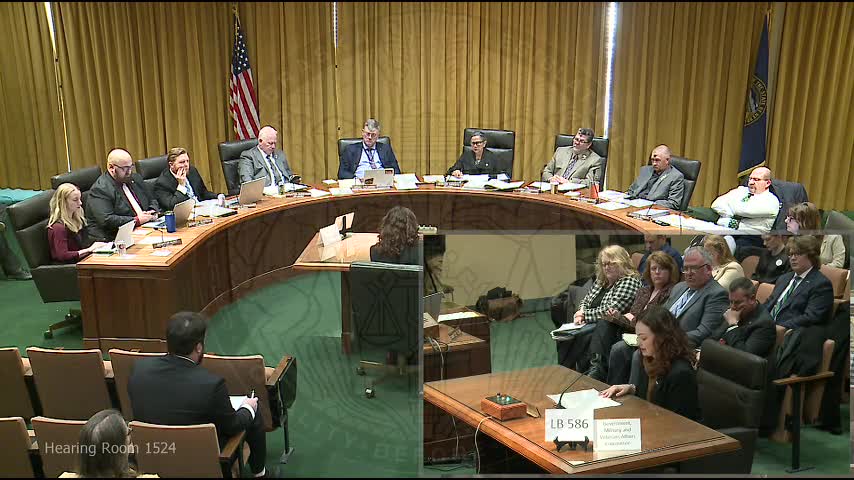
Sen. Rob Clements told the Transportation and Telecommunications Committee that LB714 would restructure motor vehicle taxation and distribution to lower personal property taxes on vehicles and increase county shares of those revenues. "LB 7 14 will reduce motor vehicle taxes by approximately 20% to get us more in line with our neighbors," Clements said in his opening.
Clements described the bill as paired with other inheritance tax proposals and said changes would revise the yearly depreciation fractions used to calculate the vehicle tax base. He said Department of Motor Vehicles modeling showed those fraction changes would produce roughly 18–20% savings and that the bill would reallocate the proceeds so counties would receive a larger share. Clements said the proposal would increase county share from 22% to 40% and reduce the school share from 60% to 37%, and that "at least half of this reduction would be offset for equalized schools through the TEOSA formula."
County officials and the Nebraska Association of County Officials testified in concept support, saying an interim study would help evaluate distribution mechanics and that motor vehicle tax is a familiar county revenue source. Candace Meredith of the Nebraska Association of County Officials said counties look to motor vehicle taxes as a potential diversified revenue base and noted more than one million older vehicles currently pay little or no motor vehicle tax.
Education groups and large school districts urged caution or opposed the bill. Kyle Fairburn of the Greater Nebraska Schools Association said, "This bill has the potential to lessen that amount to school districts by over $45,000,000." Liz Standish of Lincoln Public Schools said district aid changes would lag: "Lincoln Public Schools would be short $9,000,000 each year, for 2 years," reflecting the two‑year data lag in the state aid (TEOSA) calculation.
Clements and committee members discussed fiscal tradeoffs. The sponsor said the bill also contemplates increased motor vehicle fees (roughly doubling some fees) to generate county revenue and to offset lost school flows, and that he expects to pursue an interim study to design a replacement for any school funding loss. He told the committee he did not expect the bill to advance this year until the state identifies funds to backfill potential school impacts.
No committee vote or formal amendment was recorded in the hearing. Supporters requested further study on distributional impacts and school finance hold‑harmless options.