Get Full Government Meeting Transcripts, Videos, & Alerts Forever!
Get email alerts on the Municipal Liability Sewer topic
No spam. Unsubscribe anytime.
Committee advances bill awarding liability protections to municipalities that meet maintenance standards for sanitary sewer operations
Summary
Senate Bill 650 would provide municipalities liability protections from certain nuisance claims related to sewer backups if they meet maintenance and operational standards; sponsors said the change prevents “jackpot” attorney awards that deplete municipal funds, while supporters noted potential impacts on claimants and municipal budgets.
Senate Bill 650, presented by Pro Tem Paxton, would establish maintenance and operational standards for municipal sanitary sewer systems and grant liability protections to municipalities that meet those standards, narrowing the scope of nuisance judgments in sewer-backup cases.
The nut graf: proponents described the bill as a response to a judicial ruling that multiplied punitive damages by household counts and has increased payouts from the Oklahoma Municipal Assurance Group; the bill seeks to limit “jackpot” settlements that deplete municipal resources and divert funds from system upgrades.
Pro Tem Paxton told the committee the bill’s genesis is a judicial change that allowed nuisance awards to multiply by individuals in a household, producing much larger liabilities for municipalities; the Oklahoma Municipal Assurance Group (OMAG) has faced “enormous claims,” he said. Paxton said the bill does not absolve municipal responsibility for significant backups or public-health events and that the measure aims to keep cities focused on system upgrades rather than litigation payouts. He said the bill increases the portion a city could be responsible for property damage by 40% in some sections to balance citizen protections and municipal solvency.
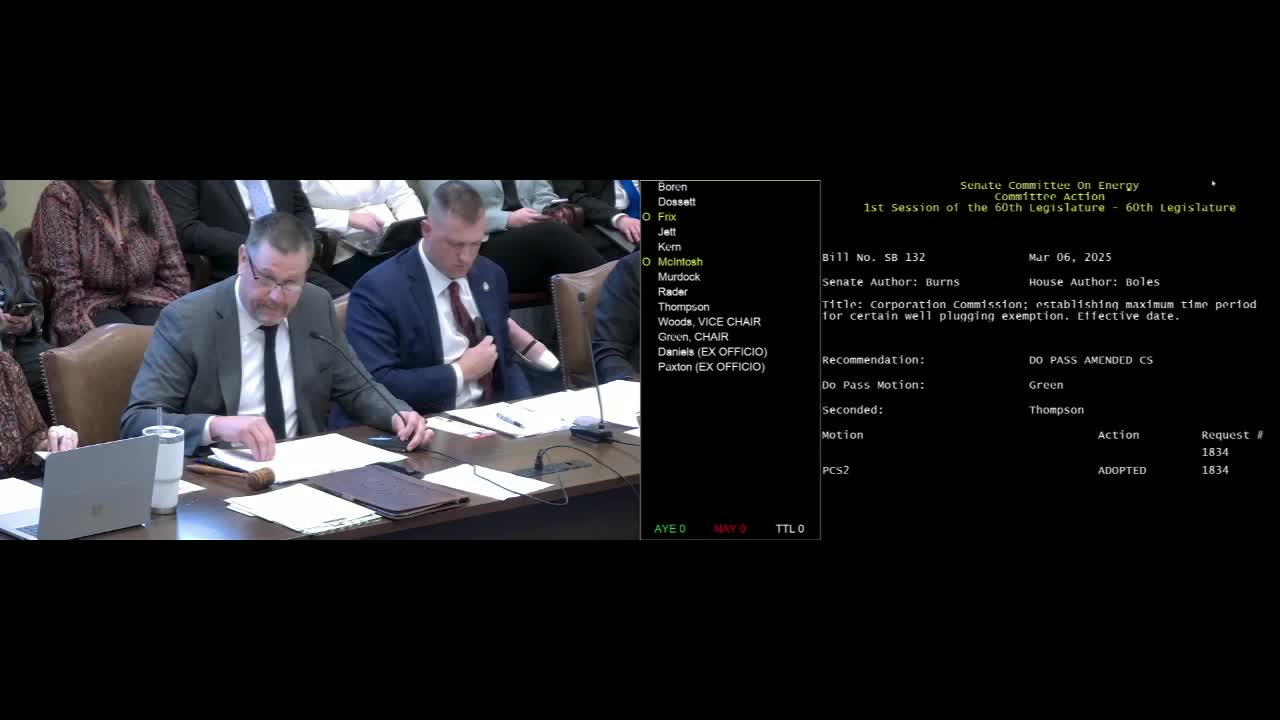
Committee members asked whether the state could provide financial assistance for municipalities short on funds; Paxton said state savings accounts and grant proposals exist but revenue constraints limit broad state support. The committee considered the bill without extended debate and advanced it by recorded vote. The clerk announced 11 ayes and 0 nays; the chair declared the bill passed out of committee. Ending: sponsor said the bill is intended to keep municipal insurance pools solvent so cities can invest in system fixes.