Get Full Government Meeting Transcripts, Videos, & Alerts Forever!
Get email alerts on the Municipal Finance topic
No spam. Unsubscribe anytime.
Sequim finance director: city met legal requirements; general fund reserves exceeded policy maximum
Summary
Finance Director Sue Hagener told the Sequim City Council that the city complied with state law and its own investment, debt and fund balance policies for 2024. The city ended the year with about $28 million in cash and investments and a $3.9 million general fund balance, above the policy maximum of $3.4 million.
Sue Hagener, finance director for the city of Sequim, told the City Council that the city complied with state law and its own cash and investment, debt management and fund balance policies for 2024, while the general fund ended the year with $3.9 million in reserves, above the policy maximum of $3.4 million.
Hagener said the city had about $28,000,000 in cash and investments as of Dec. 31, 2024, down about 15% from the prior year because the city spent cash on capital projects. "It is the policy of the city to invest public funds in a manner which provides the highest investment return with maximum security while meeting the daily cash flow requirements and conforming to all state and local statutes governing the investment of public funds," Hagener said, summarizing the city's cash and investment policy.
The year-end portfolio included roughly $6,000,000 in cash on hand, about $2,500,000 in the Local Government Investment Pool (LGIP) managed by the State of Washington, and approximately $19,000,000 in market investments such as Treasury securities, local government bonds and certificates of deposit. Hagener told the council that the city’s rate of return fell below the policy’s benchmark band for a "fair rate of return" because short-term yields in recent years temporarily outperformed longer-term notes; she said staff has adjusted the investment strategy and expects performance to improve as market rates change.
On debt, Hagener said the city's debt-management policy mirrors statutory requirements. She described the city's outstanding general obligation borrowing as nonvoted debt tied to the Civic Center project and noted the statutory legal limit on general obligation debt of 1.5% of assessed property value in the state. The city reported $13,000,000 in total liabilities on the state auditor's Schedule 9, which lists loans, compensated absences and other obligations. Hagener said compensated absences — the estimated payout if all employees separated — totaled $884,000, down about $91,000 from the prior year.
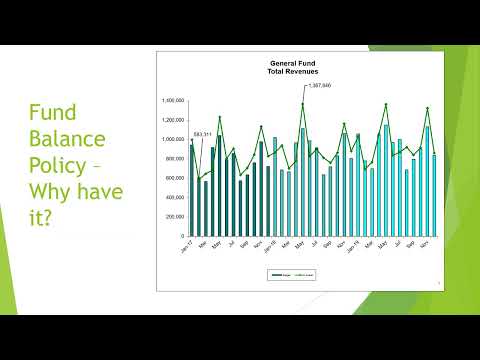
Hagener described the fund balance policy as a tool to provide liquidity and protect the city against revenue fluctuations. The policy sets three reserve elements: minimum fund balance for cyclical operations, an economic uncertainty buffer for unanticipated adverse events, and reserves for future liabilities. For the general fund, the policy target range is a minimum of $2,200,000 and a maximum of $3,400,000; the city’s actual ending general fund balance was $3,900,000. Hagener said streets and water operations were near policy midpoints and sewer operations were toward the top of their target ranges.
Hagener noted American Rescue Plan Act (ARPA) funds included in earlier cash totals were being spent for the city shop improvements and technology projects consistent with the ARPA spending plan approved by council in 2022. She closed by offering to answer council questions about the reports.