Get Full Government Meeting Transcripts, Videos, & Alerts Forever!
Get email alerts on the Electric Generation Accounting topic
No spam. Unsubscribe anytime.
Committee advances bill that offers accounting incentives to encourage natural-gas power plants
Summary
Senate Bill 998 would let utilities recover certain construction costs and defer depreciation for qualifying natural-gas generation, and gives the Corporation Commission authority to order refunds if a project is terminated; supporters call it cost-reducing while critics said it subsidizes fossil fuels.
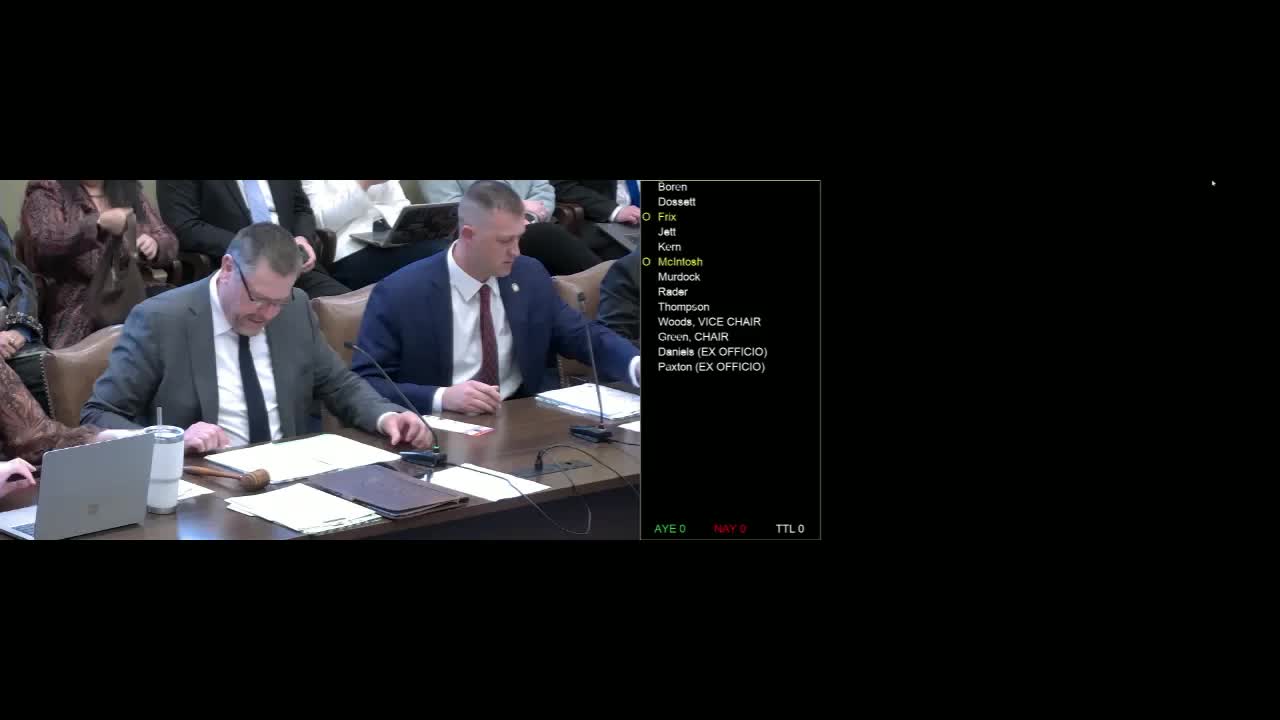
Senate Bill 998, presented to the Senate Energy Committee, would make natural-gas-fired electric generation projects that are procured through a competitive bidding process eligible for accelerated accounting incentives, including allowance to recover construction work-in-progress expenses prior to commercial operation and deferral of 90% of depreciation expenses and return for qualifying plants.
The nut graf: the sponsor and proponents framed the bill as a cost-reduction mechanism that encourages new generation in Oklahoma and protects ratepayers by giving the Corporation Commission authority to require refunds to customers if a project is later terminated; critics said the incentives favor one fuel source over others and amount to a subsidy for fossil fuels.
Senator Gullahar presented the bill, saying the measure “encourages that there is a need for more electric generation in Oklahoma” and described an accounting “pay as you build model” that reduces overall project cost. Senator Bourne objected that the law would privilege natural gas with accounting incentives and described the bill as an example of how “we subsidize natural gas or fossil fuels in Oklahoma.” The sponsor and questioners agreed the bill does not ban other generation types; Senator Raider asked whether the bill would outlaw other sources and the sponsor answered, “No… it’s just encouraging natural gas.”
Committee debate was brief. The chair recorded a voice roll with eight ayes and one nay; the clerk announced the bill passed the committee. Ending: the sponsor thanked the committee.