Get Full Government Meeting Transcripts, Videos, & Alerts Forever!
Get email alerts on the Evidence Authentication topic
No spam. Unsubscribe anytime.
Appeals court pressed on video authentication and whether to await SJC guidance in Commonwealth v. Sigman
Summary
In Commonwealth v. Sigman (24-P-378) the panel questioned authentication of a surveillance video offered at trial and whether the Appeals Court should stay or vacate firearm convictions pending related Supreme Judicial Court decisions about licensure evidence; defense counsel asked the court to await SJC rulings while the Commonwealth said video
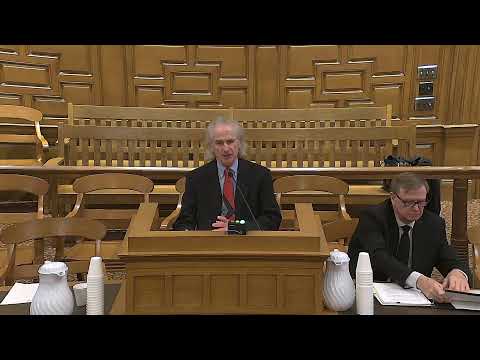
The Massachusetts Appeals Court on March 6 heard argument in Commonwealth v. Sigman (24-P-378), a criminal appeal that raised authentication of surveillance video used at trial and whether two firearm-related convictions should be vacated now or held pending the Supreme Judicial Court’s decisions in related cases.
William Corman, counsel for the defendant, said the jury-waived (bench) trial record included a potential gap in proving the chain of custody and authentication for the video: officers testified they viewed the original video on a homeowner’s device, a copy on a flash drive was later introduced at trial, and the defense disputed whether the Commonwealth took the steps necessary to “button up” the authentication. Corman asked the Appeals Court to wait for the SJC decisions in related Guardado/Zemeni matters because those rulings could affect remedy and retrial issues for firearm licensing evidence.
Assistant District Attorney Aaron Stoudinger represented the Commonwealth and told the court the video was properly authenticated in two independent ways: (1) officers testified about how they retrieved and downloaded the video from the homeowner’s system a few hours after the incident, and (2) the video matched the defendant’s own detailed statements and conduct depicted on camera, creating corroboration and sequence matching. Stoudinger said the court would have to reach the authentication question because one of the convictions charged discharge of a firearm within 500 feet of a dwelling.
The Commonwealth asked the panel to remand or to vacate convictions as appropriate and to consider a stay while the SJC resolves overlapping legal issues about whether evidence of lack of a firearms license is required to sustain certain firearm convictions. The prosecutor said the office believed a new trial would be the likely remedy if the SJC changes the law; defense counsel argued waiting posed no practical harm because the defendant was not in custody and that the SJC rulings could materially affect the outcome.
Ending: The panel took argument and did not rule from the bench. The appeal raises questions about authentication practices for surveillance evidence and whether appellate courts should await higher-court developments that may affect remedies in related criminal cases.